Showing posts with label Carmelo Española. Show all posts

September 10, 2018

Tragedy – Fury

By Craig Hayes. Crust punk titans Tragedy are one of the most revered bands around, and that was recently reaffirmed when the Portland, Oregon-based group’s new EP, Fury, suddenly appeared on Bandcamp. Fury’s arrival was greeted with almost rapturous fervour
By Craig Hayes.


Crust punk titans Tragedy are one of the most revered bands around, and that was recently reaffirmed when the Portland, Oregon-based group’s new EP, Fury, suddenly appeared on Bandcamp. Fury’s arrival was greeted with almost rapturous fervour by diehard fans, myself included, and that wasn’t any kind of overreaction. Tragedy’s music is colossal, concussive, and deeply authentic, and it’s been six long years since the band’s last vitriolic release, 2012’s Darker Days Ahead.

Tragedy’s breakneck, self-titled debut was released in 2000, and the LP was instantly (and rightly) hailed as a crust punk classic. However, Tragedy’s backstory also includes a very important introductory chapter. Tragedy features members who also played in the much-admired crust band His Hero Is Gone, and the sledgehammering noise that band made (before they disbanded in 1999) has had an incalculable influence on the world of thickset punk and metal.

His Hero Is Gone took the brawnier/crustier strain of punk that UK bands like Amebix, Antisect, and Hellbastard had formulated in the 1980s and made it bigger, badder, and even swampier. The band added heftier guitars and distortion, and a neck-wrecking amount of oomph, and that set the template for an entire generation of heavyweight crust bands.

Tragedy have unquestionably carried that tradition on. Their stentorian music has proven to be equally influential, and they've played in front of appreciative audiences the world over. However, Tragedy aren’t only famed for making high-powered music.

The band’s always known for being staunchly DIY and operating well outside the usual ‘music biz’ networks. Tragedy have also shown a complete aversion to social media and online marketing –– so much so that a few hardcore fans will no doubt protest about the band turning up on a platform like Bandcamp.

Appearing on Bandcamp doesn’t radically alter Tragedy’s DIY aesthetic though. If anything, Bandcamp has revolutionised the way underground bands and fans can connect without the need for hyped-up web campaigning. That suits Tragedy’s agenda, which has seen the band self-release their own records, avoid interviews, and deliberately sidestep the grinding wheels of the publicity machine.

In doing all that, Tragedy have become “folk heroes” within the contemporary punk underground. And there’s still a strong element of mystery to the Tragedy mythos, even if the group’s members happen to play in scores of other well-known and well-regarded punk bands.

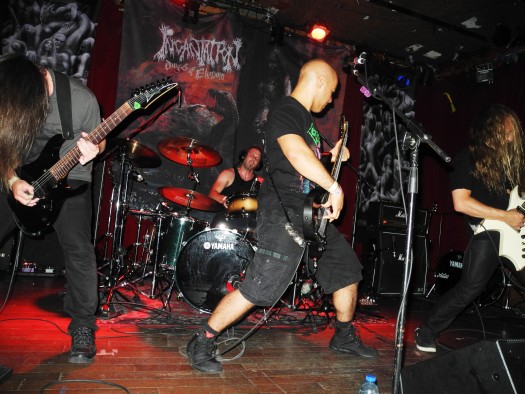
Tragedy 2013. Photos by Carmelo Española.

Tragedy utilising Bandcamp means that tracking down a copy of Fury is that much easier –– and FYI: any punk fan worth their salt should purchase a copy forthwith. Produced by Portland heavyweight music wizard Billy Anderson, Fury features six tracks bursting with belligerent rage. The EP’s running time barely hits the 17-minute mark, but that’s more than enough time to appreciate that no one channels mind-crushing hostility quite like Tragedy.

Fury’s first track, “Leviathan”, roars out of the gate with thundering guitars, guttural barks, and crashing bass and drums. Stampeding hooks are scattered throughout, snagging you and dragging you along, and by the time second track “Enter the Void” kicks in, it’s clear that Tragedy haven’t lost one iota of their passion or potency.

In fact, guitarist/vocalist Todd Burdette, bassist/vocalist Billy Davis, guitarist Yannick Lorrain, and drummer Paul Burdette sound like they’re ready to riot. I’m guessing the band have been inspired by the overwhelming number of end-times headlines that seem to greet us every day. But, speculation aside, it’s simply magnificent to hear the band still sounding so fired up after so many years in the punk rock trenches.

Fans hankering for Tragedy to return to their feral and ferocious roots will be thrilled that tracks like “Kick and Scream” and “Fury” are speedier and more overtly unhinged than the mid-tempo (albeit still savage) tracks on Darker Days Ahead. Ripping guitars and pick-sliding galore cut through Fury’s murky mix, and scorching leads and fist-raising, shout-along choruses arrive with a palpable sense of urgency throughout the EP.

Throttling dirges are trampled by hurtling hardcore on Fury, and the EP’s final tracks, “Swallow the Pill” and “A Life Entombed”, underscore Tragedy’s ability to craft dark and blistering melodies that reflect shattered dreams, nightmare realities, and endless frustrations.

In that sense, with the world in turmoil and anxieties at an all-time high, there’s never been a better time for Tragedy to return. The band bring hope, and relief, delivered in a purging/surging rush of ear-splitting punk, backed by exorcising howls.

Over the years, countless raucous bands have tried to copy the most ferocious elements from Tragedy’s formidable playbook. However, as Fury proves, yet again, few bands exhibit Tragedy’s talent for making primal rage manifest. Even fewer bands can cast out anger with the sheer intensity of Tragedy’s cathartic anthems. And Fury adds six more reasons to stand in fucking awe of Tragedy’s intimidating discography.

November 24, 2017

Thantifaxath - Void Masquerading as Matter

By Justin C. The new Thantifaxath EP, Void Masquerading as Matter, starts with a song called "Ocean of Screaming Spheres." That's all you need to know. Go buy it. O.K., fine, you want more details? I can help you out. This 35-minute "EP" finds
By Justin C.


The new Thantifaxath EP, Void Masquerading as Matter, starts with a song called "Ocean of Screaming Spheres." That's all you need to know. Go buy it.

O.K., fine, you want more details? I can help you out. This 35-minute "EP" finds Thantifaxath once again pushing the boundaries of their dissonant black metal, teetering between the abrasive and the downright chaotic. As with the transition from their self-titled debut to Sacred White Noise, the band makes more strides forward, although "outward" may be a better description. The jagged, off-kilter riffs are still here, as is the audible bass that anchors the songs without pushing too much bottom end. But there's also a new expansiveness. The previously mentioned opener transitions halfway through the song to a slow, somber piano line accompanied by a swarm of angrily buzzing insects. The bass eventually comes back, roughly mimicking the piano line, but ultimately leading into frenzied accelerandos and crescendos as the vocals become more and more desperate.

The second track, "Self-Devouring Womb," uses a similar sense of expansiveness. A mournful section of violin and acoustic guitar puts one in mind of the soundtrack of an old, black-and-white movie. There's a train platform, and the leading man is leaving the love of his life--maybe to join the front lines of World War II--but instead of a bittersweet and predictable ending, seeing the lovers reunite or the woman left behind to mourn him being killed in action, the man throws himself into the machinery of the train before it even leaves the station. Even Thantifaxath's quiet sections lead to a profound sense of unease.

Photos by Carmelo Española.

The performance and compositions are virtuosic--just check out the dizzying guitar lines that run up and down throughout "Cursed Numbers" and enjoy the warm, blissful feeling that comes from part of your brain being liquified and dripping out of your ears. This track is probably, at times, the most traditionally heavy hitting, but there are still bits of what I call in mind "evil twinkling" and a bassoon (or electronic equivalent) adding a plaintive line. The song refuses to be pinned down, nearly falling apart in the middle before moving to full blast again.

And then there's the closing title track--a seven-and-a-half minute choral piece. This isn't unprecedented for the band. The first track of their self-titled debut was also a choral piece, but this one pushes even further into the realms of the bizarre. It's as if the band took Mozart's Requiem and pushed it through some mathematical space just beyond human understanding. The song is punctuated by restless lines in the higher voices, occasionally contrasted with forceful blasts from the low vocalists. As with most of the album, there's often a sense of imminent closure coming up, perhaps in the form of a nice, consonant blast to offset the dissonance, but the song, and the album itself, drift off on a mysterious note rather than ending. A fitting end to another brilliant album for this band at the end of a bizarre, unsettling year.

March 15, 2017

Behexen - By The Blessing of Satan

By Andy Curtis-Brignell. The lazy man’s Behexen review goes like this: use the typical ‘raw black metal’ signifiers; talk for a paragraph or so about the so-called ‘Finnish Filth’ movement; mention Beherit; close. Essentially discussion of Behexen, or at least this period of their existence, is typified by their apparent
By Andy Curtis-Brignell.


The lazy man’s Behexen review goes like this: use the typical ‘raw black metal’ signifiers; talk for a paragraph or so about the so-called ‘Finnish Filth’ movement; mention Beherit; close. Essentially discussion of Behexen, or at least this period of their existence, is typified by their apparent ‘regressiveness’ and primitivism. That’s not what I want to talk about.

I’m consistently fascinated by liminal spaces in music, particularly when one can follow a band through their career and find points of flux - moments of uncertainty or experimentation that add a new dimension to music you are apparently familiar with. When we join the band for By the Blessing of Satan, we land squarely in the midst of one of these locus points. The band’s debut album Rituale Satanum from four years earlier, whilst a satisfying piece of work in its own right, is epitomised by a meat-and-potatoes approach to black metal, with very little beyond simple ferocity distinguishing it from the rest of the early 2000s swell of resurgent Euro-BM. This wasn’t helped by a particularly hollow and generic wind-tunnel production job that made it difficult to pinpoint the songwriting chops displayed on its followup.

By contrast, BTBOS has a thick but granular quality to its sound, conjuring visions of vast, sharp boulders rolling over and over you in the bowels of the earth, while Hoath Torog’s white-noise shrieks ceaselessly peak and crash like the waves of some awful sunless sea. Sonically the album appears to have been far more deliberately engineered to highlight the band’s growing talent in terms of dynamics, pacing and melody - because this is a truly melodic album despite its pace and ferocity.

Behexen 2014. Photos by Carmelo Española.

Whilst there are storming numbers such as the opening title track and the raging "Fist of the Satanist" where speed and intensity approaches Antaeus levels of belligerence, the real meat of the album comes in the mid paced numbers such as "Black Metal Baptism". The melodic interplay displayed on this track in particular is astonishing, with an unusually (for black metal, anyway) prominent bass guitar providing both a dense bedrock for the song and a deeply harmonious counterpoint to the yearningly overdriven guitars. "Black Metal Baptism" resonates with deeply felt emotion, which is all the more remarkable when both the title and lyrics seem to evoke a kind of black metal manifesto:
Black metal baptism opened the gates to darkness
and gave me the powers of sorcerers
The sign of black pentagram burned deep in my heart.
Arguably since the work of depressive pioneers such as Strid black metal has aesthetically been torn in two apparently opposed directions: the melancholy and the furious. The greatest acts are, in my opinion, those who can bridge the gap between the two, smelting something new and complex from an overused forge. With "Black Metal Baptism", Behexen reconcile these two concepts beautifully and crucially this is done seamlessly within the context of the album as a whole. By the Blessing of Satan has all the speed, anger and intensity of the most popular Norsecore but with a sense of pathos and depth of feeling that’s often alien to this strand of the genre. Sadly the main influence that seems to have been borrowed from this period of Behexen’s work seems to be an aping of the bands almost romantic fervour for satan-worship (count how many ‘orthodox’ black metal bands sprung up between 2004-6, Ill wait) rather than focusing on the sincere emotion that lay behind it.

After the success of this album and having become key influencers in the genre, the band would travel further down this melodic path with the followup to this album, My Soul for His Glory. Unfortunately the tradeoff seemed to be unequal hereon out, as the highs and lows of BTBOS are normalised into a more anonymous, if more harmonious, whole. By the Blessing of Satan truly then exists in a liminal space - between chaos and order, triumph and sorrow, hatred and love.

February 17, 2017

Dakhma - Suna Kulto

By Matt Hinch. This is (MI’s) Dakhma. There are many (named) like it but this one is better. This Dakma is not your friend. It is intense. You must listen as intensely as Dakhma plays. Without volume Dakhma is useless. Without Dakhma, your ears are useless. You must listen to Dakhma loud. You must listen to Dakhma louder than the enemy telling you to turn it down.
By Matt Hinch.


This is (MI’s) Dakhma. There are many (named) like it but this one is better.

This Dakma is not your friend. It is intense. You must listen as intensely as Dakhma plays. Without volume Dakhma is useless. Without Dakhma, your ears are useless. You must listen to Dakhma loud. You must listen to Dakhma louder than the enemy telling you to turn it down. You must drown them before they silence you.

You will keep Dakhma at the ready even as you are ready for Dakhma. You will become part of each other.

Before Grind, you must swear this creed. Dakhma and yourself are the defenders of crust. You are the masters of black metal. You are the saviors of ferocity. So be it, until there is catharsis and peace.

Grindin’.

Photos by Carmelo Española.

In recent years there’s been a lot of talk about female-fronted occult doom bands (which I love) but at the other end of the spectrum there seems to be a lot of grind (hybrid) bands with female “singers” tearing heads off like it’s their reason for existing. Cloud Rat slays, Couch Slut has a new release in the works, Fuck the Facts have been at it forever, Closet Witch totally wrecked my brain and now Dakhma has set out to eviscerate with Suna Kulto.

So if having a throat shredder without testes isn’t considered a novelty anymore (which it shouldn’t be) then what is there to set Dakhma apart from the rest? Well, how many grind bands do you know with songs around 20 minutes long? Yeah. (If you answered this with any number above two, get in touch with me.) That’s right. Suna Kulto is two tracks covering a rough and raw 40 minutes.

As you can imagine “Coins” and “East” are more than just blasting away at 1000 bpm for 20 minutes. That would be ludicrous and exhausting even for the listener. Despite being tagged as black/crust/grind one could almost throw “post-” into the mix. But they don’t sound like some sappy band when not pinning you against a wall under a flurry of kidney punches. There’s ample melody mixed in. “East” has a nice long section that occupies the same sonic space as a band like Alcest or even Pelican. “Coins” does too for that matter.

Guitarist Derek seemingly does it all, from blistering grind to atmospheric black metal to introspective melody. Stitching all that together takes vision and he has it. There’s nothing awkward about the transitions between styles. Matching him pound-for-pound is Dylan on the drums. Subtle when he needs to be and explosively violent otherwise, he’s a destructive force bashing away like there’s no tomorrow.

Let’s not forget Claire. Talk about tempest! She screams with reckless abandon, no holding back, no fucks given. But she’s not all over the record. Satan knows what she’s doing when she’s not losing her mind but she lets the songs breathe. The vocals are well placed and make an impact. And at least we know she’s breathing. She’s got quite the set of lungs!

Putting it all together Suna Kulto sounds and feels like a storm. Sometimes you hit the eye, sometimes it lashes and beats you, exhausting your will, and sometimes it rises above the furor and the majesty of the hurricane of aggression is seen from a beautiful vantage point.

Grace, grandeur and scope meet intensity, catharsis and force to make a captivating exercise in pushing boundaries. Don’t let this pass you by.

December 2, 2016

Ash Borer - The Irrepassable Gate

By Justin C. Ash Borer's new full length, The Irrepassable Gate, has been getting a lot of press, so I ended up breaking my rule about reading other reviews before writing my own. I was a bit surprised--there doesn't seem to be a clear agreement among reviewers as to whether this album is a refinement or a broadening of Ash Borer's core sound.
By Justin C.

Artwork by Glyn Smyth of Stag & Serpent.

Ash Borer's new full length, The Irrepassable Gate, has been getting a lot of press, so I ended up breaking my rule about reading other reviews before writing my own. I was a bit surprised--there doesn't seem to be a clear agreement among reviewers as to whether this album is a refinement or a broadening of Ash Borer's core sound. It's almost like a black metal Rorschach test. But that said, everyone seems to agree that it's very good.

From my perspective, The Irrepassable Gate is a refinement. The sound is unmistakably theirs, but to my ears, they've tightened down their template and left some of their experimentation behind, especially when compared to the Bloodlands. The tracks are still long for black metal--with the exception of the two "Lustration" interludes, the shortest song still clocks in at nine and a half minutes--but for the most part the length is a non-issue, as the songs take on an almost hypnotic quality. Ash Borer does a couple of things that make this work: they play fast and slow tempos off of each other, sometimes simultaneously. The opening track starts off at almost a funeral doom pace, but that slow, dirty riff is eventually joined by increasingly frenetic rhythm and tremolo'd guitar underneath, which segues nicely to their other strength: layers upon layers playing off each other, sometimes sliding off of each other and other times propping each other up. These layers collapse back together at around the seven-minute mark, but it's not too long before we're off to the races again. There's a lot of repetition, but there are so many moving parts that you barely notice what's carrying you along.

Ash Borer 2014. Photos by Carmelo Española.

If I had to pick a couple of nits, I'd say that the song length doesn't always work in the band's favor. There's a three-minute-long ambient/noise-type break in the middle of "Lacerated Spirit," and I'm not sure it needs to be there. Tension release is handled very nicely by the shimmering "Lustration I and II" interludes, so I'm not sure any song needs this long of a release valve inside itself. That said, it's still pretty damn exciting when the song kicks back in. I also sometimes found the outro to "Grey Marrow" to be a bit of a drag, making my finger itch to skip ahead. But that's partly tempered by the fact that the next track, "Rotten Firmament," is damn near perfect over its nearly 13-minute length. The riffs are sweeping and majestic, and there's an almost palpable emotional progression through the song, even if you can't always pin simple words down to what the music is making you feel. All is forgiven when a band delivers a track like this.

I'd say that if you found Ash Borer's earlier work a bit too long and ranging a bit too far afield at times, they definitely deserve another listen for this album. I like the approach on this album as well as their earlier work, but this album is a nice demonstration of how a band can progress without re-inventing their musical wheel.

September 27, 2016

Wretch - Wretch

By Karen A. Mann. When Jason McCash of Indianapolis doom legends Gates of Slumber died a few years ago, his bandmate and longtime friend Karl Simon knew that he had to create new music to both honor McCash’s memory and effectively process his own grief. The result is a new band, Wretch, and an eponymous debut
By Karen A. Mann

Cover art by Branca Studio

When Jason McCash of Indianapolis doom legends Gates of Slumber died a few years ago, his bandmate and longtime friend Karl Simon knew that he had to create new music to both honor McCash’s memory and effectively process his own grief. The result is a new band, Wretch, and an eponymous debut (out now on Bad Omen Records) that feels almost overwhelmingly gloomy and visceral in its pain while continuing down Gates of Slumber’s Godforsakenly doomy path.

The album opens with “Running Out of Days,” which begins with a squalling guitar, out of which a heavy grooving riff forms. Recalling the chilling, warning tone of Black Sabbath’s “Hand of Doom,” Simon sings about losing ground, images slipping away, and finally about “a sad song sung again, the needle stole away my friend.”

Photos by Carmelo Española.

The rest of Wretch is equally grief-stricken and confessional, while musically mining old school doom and heavy rock for inspiration. They even include an inspired cover of the early Judas Priest gem “Winter.” Even when Simon isn’t singing, you can feel his sadness, as in the delicate instrumental “Grey Cast Mourning.”

Wretch is at their best when they go full bore with the riffage, which they do magnificently on the Obsessed-inspired “Icebound.” The album ends appropriate with the lumbering, dirgelike “Drown,” which also features some of Simon’s most despairing lyrics.

“Promises that I made were lies, all lies, and the hopes that I had died, they all died,” Simon sings. “Waves that pull me under, I’m going to drown.”

Such raw emotional honesty, coupled with that heavy groove makes Wretch one of the most promising debuts of the year.


June 12, 2016

Phobocosm - Bringer of Drought

By Justin C. If I've learned anything in my brief stint as a metal writer, I've learned that when people describe metal as being "atmospheric," it could mean anything or nothing: maybe it just has some quiet/slow spots, maybe it's more melodic than usual, or maybe it's just peppered with some white noise or field recordings.
By Justin C.


If I've learned anything in my brief stint as a metal writer, I've learned that when people describe metal as being "atmospheric," it could mean anything or nothing: maybe it just has some quiet/slow spots, maybe it's more melodic than usual, or maybe it's just peppered with some white noise or field recordings. Phobocosm, on the other hand, embody atmospheric on their latest, Bringer of Drought. Sure, they use some of the tricks of the trade I mentioned, but more than that, they earn it the hard way: by making the music ooze atmosphere with every note and controlling its build and fall with a deft and delicate touch rarely heard in death metal.

Phobocosm 2014. Photo by Carmelo Española.

For one thing, Phobocosm is great with portion control (which, sadly, most of us Americans are not so skilled at). This is slow, doomy death metal about the end of the world, but the songs are eight, nine, and even six minutes long. Where are the endless, 24-minute slog-fests about the apocalypse? Not here. (The closing track is a long-for-this-album twelve minutes, but I'll come back to why that works so well later.) The opening track, "Engulfing Dust," starts out with a simple, melancholy riff accompanied by the sound of a hot, drying wind. A counterpoint riff joins in, and ultimately the song really starts to rumble with the entrance of the rhythm section. But none of this drags--there are no "Riff 1, repeat 120 times" scrawled on their music. It's a perfectly balanced, two-minute build into the song proper. It's hypnotizing, and they manage this over the course of the whole album. The first time I listened to this album, I played it twice back to back, mesmerized.

Phobocosm 2014. Photo by Carmelo Española.

If the opening track seems like not quite enough to be "real" death metal, don't worry. There's plenty of fury to come in the next tracks, often driven by the excellent bass and drums, pushing the riffs along in waves, which is particularly appropriate for a song called "Tidal Scourge." Both of the middle tracks are great, but that album closer, "Fallen," is a perfect gem. The hypnotic, alternating-note riff that starts the song is revisited, built on, and woven throughout with painstaking craftsmanship. The song is always moving, even if it's done subtly, ultimately to the end and back to its opening riff, punctuated by the lines, "Hide in shame / Limp in pain / End in flames / Fallen." In what might be characterized as the one bit of excess here, the track ends with a bit less than a minute of crackling white noise, but on the other hand, maybe that's appropriate for a song detailing someone's exile from society--and in fact the dissolution of society itself--ending the journey with lonely static from a radio receiving no signal.

January 15, 2016

Lycus - Chasms

By Justin C. If you find funeral doom to be a bit too languid at times, Lycus has the solution to your problems. Their new album, Chasms, is a particularly intense kind of melancholy. Sure, there are the clean chant-like vocals, as found on their last outing,
By Justin C.

Artwork by Paolo Girardi

If you find funeral doom to be a bit too languid at times, Lycus has the solution to your problems. Their new album, Chasms, is a particularly intense kind of melancholy. Sure, there are the clean chant-like vocals, as found on their last outing, Tempest, but there are also growls and blackened rasps. There are plenty of slow-and-low riffs, but there are also high-flying tremolos. There are plenty of drums that sound like a cliffside collapsing, but there are pulsing rhythms and frantic blasts as well. And you'll usually find all of these over the course of any given song.

Lycus 2014. Photo by Carmelo Española.

Listening to Chasms back to back with 2013's Tempest reveals that the band hasn't abandoned any of their strengths or drastically changed their approach, but the song complexity and atmosphere have both been ratcheted up. The opener of "Mirage" is like the soundtrack to a late night drive in a big city, but before the two-minute mark, that car is slowly coasting off the end of a pier. While on fire. "Obsidian Eyes" has some great overlapping guitar lines that almost seem like they're shifting in and out of phase with each other. The ringing guitar and the subtly shifting drums in the opener to the title track would be interesting enough on their own, but they're joined by a cello winding a melody over them. There's an almost-symphonic feel to the compositions, but with all the discordance and crushing heft you need from metal.

Lycus 2014. Photo by Carmelo Española.

I went through a bit of an evolution listening to this album. The monumental heaviness and emotional punch drew me in immediately. I did find myself missing some of the melodic hooks from Tempest that stuck so easily in my ear, but the shifts and complexities in Chasms dig into your brain in a different way. It crawls like funeral doom, but it's restless and ever-changing in a way that might not be apparent on first listen. I find myself wanting to point out all the intricacies that have caught my ear, but you'd be better off discovering those for yourself. 2016 is going to have to be a hell of a good year for funeral doom for anybody to top this one.

December 19, 2015

Music and Meaning: Revenge - Behold.Total.Rejection. and Amber Asylum - Sin Eater

By Craig Hayes. To my mind, no matter what genre we favour, we’re all aiming to satisfy the exact same desire when we listen to music. And I think you can distill that desire, and the myriad reasons why we love music, into one simple word
By Craig Hayes.

To my mind, no matter what genre we favour, we’re all aiming to satisfy the exact same desire when we listen to music. And I think you can distill that desire, and the myriad reasons why we love music, into one simple word. All any of us really want from music is to be moved.

There’s no question that music moves us and takes us places. And whatever our resulting emotional or physical states, it’s from those experiences that we find and construct meaning in our lives. For many of us, the desire to discover music that moves us often finds us searching the extremes of musical expression. We want the heaviest, most ethereal, most beautiful or bitterest music. And that quest is perfectly represented by recent albums from American neoclassical ensemble Amber Asylum, and Canadian black and death metal berserkers Revenge.

I’ll understand if you think the elegant music Amber Asylum makes doesn’t warrant comparison to the hateful and primitive noise that Revenge conjures. (Except as an example of how polar opposite styles of music appeal to a wide swath of metalheads.) Yet, no matter the stylistic gulf between the two bands, Amber Asylum and Revenge share a clear link that’s inextricably tied to music and meaning. Let me explain.


Back in the late 90s, Canadian band Conqueror released their one and only full-length LP, War Cult Supremacy, which was a defining moment for fans of bestial black and death metal––or war metal, as it’s more commonly known. James “J” Read was the drummer on that LP, and he’s been the driving force in Revenge since the band’s first bloodthirsty EP, Attack.Blood.Revenge, was released in 2001. And if there’s one thing that Revenge have become known for, it’s their obliterating sound and vision.

Like all bands in the war metal axis, Revenge play pitiless and bludgeoning music. It’s metal born from viscera-strewn battlefields, throughout time and space, and on plains of existence both real and imaged. The focus is always on intensity and overwhelming brute force, and Revenge’s latest album, Behold.Total.Rejection., the band’s first for new label Season of Mist, is a perfect example of how 10-tonne, chaotic metal moves us.

I’m fully aware that suggesting a band like Revenge “moves us” in any way sounds like a highfalutin way to describe the band’s intent or impact. But that’s what’s happening, nonetheless. Sure, that sense of being moved is delivered via a razor-storm of nihilistic noise. Which, incidentally, is something all of us need to experience. I mean, even if you’re not a fan of Revenge per se, you still need to hear Behold.Total.Rejection. Folks love to use terms like brutal and merciless to describe metal albums aplenty, and Behold.Total.Rejection. is the very definition of those terms.

Revenge 2014. Photos by Carmelo Española.

Behold.Total.Rejection. has no hooks, no handholds, and definitely no safety nets. Tracks like “Scum Defection (Outsider Neutralized)”, “Wolf Slave Protocol (Choose Your Side)” and “Mobilization Rites”, as well as every other barbaric track on the album, are maelstroms of twisted vocals, distorted guitars and blastbeat drumming. Basically, it’s the equivalent of standing in front of a mine-sweeping tank in the heat of battle. All flailing chains and reinforced armour and tracks, followed by ceaseless and decimating barrages.

Behold.Total.Rejection. does what war metal does best––it destroys. But inherent in all the destruction is that sense of being moved. Sure, it’s not wistful emotionality you’re feeling, but you are swept up in the turmoil, and there’s obvious catharsis in having the endless annoyances that drag you down demolished.

In essence, Behold.Total.Rejection. kills. But not your spirit. The album moves us to feel at one with annihilation. It moves us to embrace chaos. To accept that life is a war of all against all––all the fucking time. It’s the experience of ruthless negation and pitiless cruelty, never to be forgotten.


Now, whether any there’s truth to the particular worldview that Revenge seeks to share on Behold.Total.Rejection. is obviously up to you to judge. But everything that’s feral, ferocious and inhuman about the album is perfectly counterpointed by the haunting elegance of Amber Asylum’s latest album, Sin Eater.

Sin Eater marks the 20th anniversary of the San-francisco-based chamber doom band founded by multi-instrumentalist and soprano vocalist Kris Force. Yet, two decades down the line, Sin Eater happens to feature some of most moving and soul-stirring music from Amber Asylum yet. Tracks such as “Perfect Calm”, “Beast Star” and “Harvester” weave post-rock, dark ambient, and neoclassical influences around lush string arrangements and poignant vocals. All of which is shrouded in Amber Asylum’s gothic elegance.

Amber Asylum 2011. Photos by Taylor Keahey.

Sin Eater evokes the solemnity and ritual of the ‘sin eating’ process itself. But what the album also does is take the gravity of that process and render it into a heartbreakingly beautiful experience. Even at its darkest and most ominous, such as on the grim post-metal landscape of “Executioner”, Sin Eater still feels alive. Where Behold.Total.Rejection. is a barbaric challenge that negates life with a pitch-black wall of noise, Sin Eater opens its arms wide open. Yes, the music therein is often dark. But Sin Eater welcomes all into its darkness.

Behold.Total.Rejection. and Sin Eater vividly illustrate that polar opposite types of music often move us in entirely comparable ways. The two albums are clearly yin and yang, yet both speak to us deeply. The former by means of an uncompromisingly nihilistic vision; the latter by inviting us in to experience the beauty in haunting sadness and ceremony. Our desires are stated by music’s ability to take us to places. Some are utterly grotesque. Others are wholly gorgeous. But always, and forever, music remains our lifeblood. Taking us on journeys so that we can find meaning in our lives.

November 25, 2015

Magic Circle - Journey Blind

By Karen A. Mann. Composed of veterans from a slew of well-regarded Boston hardcore bands, Magic Circle are about as unlikely a doom band as you can imagine. They’re also not terribly visible.
By Karen A. Mann.

Artwork by Joe Petagno

Composed of veterans from a slew of well-regarded Boston hardcore bands, Magic Circle are about as unlikely a doom band as you can imagine. They’re also not terribly visible. There’s no Facebook page or dedicated Bandcamp page (you can find some info on their website and the 20 Buck Spin Bandcamp page), and they don’t seem to play live very often. Any publicity about Magic Circle is almost entirely word-of-mouth from dedicated doom fans and blogs. After gaining a lot of underground attention with their 2013 self-titled debut album, they’ve just released Journey Blind on 20 Buck Spin.

Photo by Carmelo Española.

Magic Circle’s music is just as unexpected as their story. The title song begins with a melodic interlude, followed by a slow, lumbering riff that seems firmly inspired by Black Sabbath. It sounds like some funereal doom, and as the song begins to build, it takes on a kind of Pallbearer-ish feel. But then the song stops, and a new, rocking NWOBHM-ish riff with nods to Witchfinder General begins. Magic Circle isn’t planning to plod along forever. They’re going to grab you by the throat and force your fist into the air.

The band does know when to slow it down and give a good dose of molasses-thick melodies, like on “A Ballad for Vultures” and “Grand Deceivers,” and but they never creep for long. Witness the sweet “Metal Gods”-like breakdown in the middle of “Lightning Cage.”

Photo by Carmelo Española.

The real revelation comes when vocalist Brendan Radigan opens up and lets loose with one of the finest doom (or, really, metal in general) voices since Trouble’s Eric Wagner.

Trouble and, and to a lesser extent Saint Vitus, really are major touchstones for Magic Circle, from the riffing to Radigan’s powerful delivery to the introspective, cathartic lyrics. Magic Circle want to take you on a journey through the history of doom, and they don’t need a bong or a copy of Drawing Down the Moon to do it.

September 3, 2015

Disrotted - Disrotted

By Matt Hinch. I’m not sure what Disrotted means (as it concerns the band's completely rotted sound) but I know that in the case of this band and their self-titled album it doesn't mean they're a death metal band or one of the number of grindcore/d-beat Dis- bands. No, this Chicago outfit is all about the doom. Massive, droning, punishing, hateful doom.
By Matt Hinch.


I’m not sure what Disrotted means (as it concerns the band's completely rotted sound) but I know that in the case of this band and their self-titled album it doesn't mean they're a death metal band or one of the number of grindcore/d-beat Dis- bands. No, this Chicago outfit is all about the doom. Massive, droning, punishing, hateful doom. Disrotted is four tracks spread over 43 minutes that push the listener to the edge of endurance.

"Spell of Madness" starts off the lumbering hate with a hammering plod and a spiraling atonality rising from the muck. Deep growls emanate from the depths beckoning death with a slavering malevolence. Turning the gigantic marching pace into something more dynamic, black metallic tremolos (still downtuned as fuck) push the pace and instill a different sense of terror.

Photo by Carmelo Española.

The aptly titled "Brain Death" is a harrowing endeavor with driving notes cracking the ground to send the listener tumbling in slow motion into the abyss, slamming into every outcrop on the way down to be left broken and alone. One can't help but scowl in the face of the way they can manifest such a sense of dread. A scowl more of accomplishment than of displeasure. At this point those not as accepting of molasses thick doom may find their attention wandering but this sort of measured and persistent cadence isn't easy to pull off while creating such sinister and dark atmosphere. Yet it’s the kind of heaving, stunning doom that resonates through the whole body no matter how you choose to experience it.

Photo by Carmelo Española.

"Celestial Empire" seethes with an unstoppable hatred, stomping everything in its path. Noisy feedback makes the blood runs cold. This is far from the traditional sense of doom (Trouble et al.) brought to the fore through lyrics but rather it is brought upon through tone and heaviness. Again, Disrotted move from long, drawn out notes into more blackened ones like cresting a hill and racing down its slope to crash into their instruments making monumental reverberations spread like the sonic break of a nuclear bomb.

Closing out this test of mental stamina is "Restless Death". Again aptly titled as the listener squirms under the relentless plod toward their final end. Strained amps fight to stay together as hints of melody poke through the din. Arresting feedback and growls most foul call an end to the suffering endured with a pleasurable pain.

Photo by Carmelo Española.

Disrotted is simply devastating. The wheel turns, the path is drawn and all those (un)lucky enough to find themselves buried beneath the putrid piles of ultimate doom Disrotted leave in their wake first tremble under the sickening might before succumbing to the rot.

June 16, 2015

False - Untitled (2015)

By Matt Hinch. I like to think that False named their band thusly as a big middle finger to all the agoraphobic pimple-farmers who actually give a shit about trooness. I couldn't give a rat's ass where a band is from or
By Matt Hinch.

Album art by Nicole Sara Simpkins

I like to think that False named their band thusly as a big middle finger to all the agoraphobic pimple-farmers who actually give a shit about trooness. I couldn't give a rat's ass where a band is from or how lo-fi their production is, or whether or not they use keyboards. Okay, maybe I do care about keys but if I like them I like them. And in the context of False, I like them.

As opposed to other, more symphonic bands False know how to utilize the keyboards in a way that compliments the bleak, raging black metal without ever trying to dominate the sound. Those times when the keys do find their way up in the mix are done with purpose and don't overstay their welcome. So when it comes to Untitled (the LP not the EP) it becomes difficult to articulate the glorious majesty the band displays. This release feels more focused (despite epic lengths), more determined, more driven by the cold fire that burns remorselessly into your very soul.

Photo by Carmelo Española.

Swarming across your senses for a hour Untitled's main tone is one of abject desperation and helplessness. Like it needs to escape. It is always in motion, whether that's through furious tremolos or shifting into doomier movement depends on the moment in time. A time which stops completely when False are given the focus they so richly deserve.

As a good opening track should “Saturnalia” encapsulates all the elements that go into the whole album. The manic black metal kicks in hard and early with subtle keyboard washes turning a little bizarre, eventually setting the mood as the track slows to a crawl and the guitars give the keys room to breathe. “Saturnalia” eventually rises from those doldrums (atmospherically speaking) on an even more windswept path. One can feel the power and fight but also a painful intensity that carries into the other four tracks.

Photo by Carmelo Española.

“The Deluge” continues the bleak and chaotic journey with ruthless rhythms yet at times switches from straight-line determination to an almost jaunty feel, like moments of clarity, or rather, the innocence of insanity temporarily dragging you to untold depths of despair and loathing.

The final two tracks “Entropy” and “Hedgecraft” clock in as the longest with the former breaching 15 minutes. It has an easier lead in but still rages as hard as any. It's also one instance of the use of choral vocals, as well as stunning riffs appearing out of nowhere to confound the listener with their ability to not only flatten soundscapes but also build them up.

Photo by Carmelo Española.

The seed of anguish and helplessness is injected deep on “Hedgecraft” with razor-sharp tremolos needling into soft flesh. It's by far the most emotional track. The haunting melodies lurking like shadows in contrast to the phenomenal and frantic percussion are enough to bring one to tears. For all that however it's also bloodthirsty and terrifying. Here, as in general, the emotional weight is held by the instruments but the vocals, however indecipherable, are essential. The reptilian rasps grip like talons around the now completely exposed listener, ready to rip their head off and drink of their flowing essence.

The way the track builds into a heartbreaking and complete catharsis is near overwhelming. Everything comes together in a dense ball of bass-led intensity only to instantaneously unravel and drift into atoms.

Untitled leaves the listener spent but in a state of black metal bliss. Anyone who's followed the Minnesotans already know what they are capable of and False more than deliver to expectations. Melody, atmosphere, menace, speed, turmoil and compelling songcraft position False as leaders in the USBM scene and Untitled as one of 2015's black metal victories.

January 25, 2015

Boddicker - Crime Upheaval

Written by Matt Hinch.

Cover art by Joshua Brettel.

While everyone (including myself) was talking up the latest Trap Them release, Detroit's Boddicker were being criminally ignored. And it's hard to ignore something as unabashedly violent as Crime Upheaval.

Much of what Boddicker embody is right there in the album title. Crime (lyrically and aesthetically) and upheaval, as in how their HM-2 saturated buzzsaw guitars churn up a filthy and intimidating ooze of hardcore aggression.

With 12 songs in around 21 minutes none of these killing blows stick around too long but all are delivered with menace and remorselessness. The shorter shots are quick and deadly while the longer bleeds ring like a shotgun blast beside the ear.

Photos by Carmelo Española.

Boddicker mix tempos with ease from hit and run blasts through heaving, slow beatdowns. The latter a cruel torture akin to holding your hand on a person's face after a serious slap to really make it sting. But that's what gives the album its dynamicism. It would be easy to just hit the gas and mow down anything in the way. Mixing it up makes Crime Upheaval hang around in the old noggin a little longer.

Down-picked riff magic and chaotic violence come together to adrenalize the listener. Bestial growls rally the hatred while spazzed-out guitar complication is forced into competition with bone-breaking, mosh-ready rhythms and enough swing to send elbows and knees off in pendulous motions.

Photos by Carmelo Española.

Moments in tracks such as “Energy Blackmail”, where a lone guitar waits for the rest of the band to explode back in, like a cocked hammer and pulled trigger, are what lend the album extra gravity amid the breakneck pace that barely touches the ground.

It's no surprise that something as violent as Crime Upheaval is a product of Detroit. It's nasty and charged with a relentless energy for destruction. It came out months ago but it's best not to ignore it any longer. You never know what these guys might do.


[Go to the post to view the Bandcamp player]

November 11, 2014

Inter Arma - The Cavern

By Celtic Frosty. Inter Arma’s The Cavern tells the tale of a lost and dying soul in the desert. Our hero eventually comes upon a cave where he awaits his final fate
By Celtic Frosty.


Inter Arma’s The Cavern tells the tale of a lost and dying soul in the desert. Our hero eventually comes upon a cave where he awaits his final fate, and in the end is consoled by a death-like figure who welcomes him into the black. It seems a fitting and somewhat inevitable tale for the likes of Inter Arma. After all, the band’s last album was called Sky Burial, a reference to a Tibetan tradition of laying the dead to rest on a mountaintop to be eaten by birds of prey.

But it’s not the story that makes The Cavern remarkable. From pounding, doom-laden riffs and throaty screams to proggy instrumental passages to clean vocals and violins, Inter Arma is intent on taking the listener through a musical odyssey that captures the imagination and surprises with its ballsy twists and turns. The degree of difficulty here is immense, and the cohesiveness with which Inter Arma pulls it all off is an impressive feat for even the most seasoned of bands.

Photos by Carmelo Española

On a granular level, the musicianship on The Cavern is sublime. The drumming throughout the song’s 45 minutes is expressive on an almost primal level, pounding out the long arc of a solid and massive backbone. The clean instrumental passages that roam the mid-section of the track build patiently toward those exhilarating peaks of masterful, extended guitar solos. Chunky, slow-burning riffs round out the composition, digging the deepest valleys and delivering hooks all the way down that claw their way in and settle for days.

In a way The Cavern seemed inevitable, and it may yet turn out to be Inter Arma’s greatest musical achievement. It’s a statement of refusal to be categorized. The edges of a half dozen genres bleed together in a dark and beautiful tapestry that covers a wide swath of the musical landscape. With this statement, Inter Arma thrust themselves onto metal’s center stage and demand our attention. Nothing left to do except shut up and listen.