Showing posts with label doom metal. Show all posts

October 16, 2020

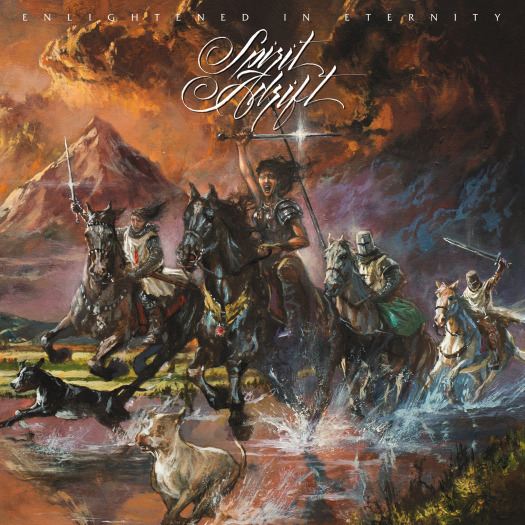
Spirit Adrift - Enlightened in Eternity

By Calen Henry. Despite being written in 2019 Spirit Adrift's fourth album, Enlightened in Eternity, sounds inexorably linked to 2020. By splitting the difference between the somber doom metal of Chained to Oblivion and the righteous classic metal vibe of Divided by Darkness

Spirit Adrift: Enlightened in Eternity cover artwork.
Artwork by Adam Burke.

Despite being written in 2019 Spirit Adrift's fourth album, Enlightened in Eternity, sounds inexorably linked to 2020. By splitting the difference between the somber doom metal of Chained to Oblivion and the righteous classic metal vibe of Divided by Darkness it comes off as hope battling through existential dread, exactly how 2020 has felt for many of us. It also sounds like Nate Garrett and Marcus Bryant simply had a blast recording it. Garrett has a gift for taking a collection of metal riffs and melding them into catchy, anthemic songs that straddle the line perfectly between classic metal and arena rock anthems.

These new songs are more diverse than any single prior album. From the punky intro to "Cosmic Conquest" through the full speed metal banger "Harmony of the Spheres" to the dramatic trudging doom metal of closer "Reunited in the Void". They lay the foundation for some genre hopping classic-metal worship that comes off as reverential, rather than hackneyed. Like with the songs themselves Garrett cherry picks whatever metal bit or piece he pleases and adds some delightfully out there touches from a late track key-change to spooky chains clanking. The lead work fits the feel of every song and twin guitar leads abound. Many of the parts have the air of familiarity from classic metal albums, but nothing (apart from that one riff in "Stronger than your Pain") calls back to a specific band or album. It just feels right, like "comfort metal".

The choruses are as catchy as the riffs, but the lyrics dive a bit deeper than simply arena rock pizazz. A vein of hope runs through the album, but so does death and pain. The same dichotomy of downcast doom metal and triumphant classic metal that runs through the riffs permeates the lyrics. Many of the songs are about hope and triumph, but they're often about hope through pain and darkness and death, and the strength to face them head on. So still pretty metal, but 2020 metal, not 1980 metal.

2020 has been a crazy year and much of my music consumption has been revisiting favourites and discovering classics I'd missed in the metal pantheon so some new music completely fell off my radar Enlightened in Eternity almost did until Max asked me to cover it, and I'm glad he did. It's exactly the metal album my 2020 needed.

May 8, 2020

We Miss Live Music So Much (Hamferð)

Hamferð was the last band I saw before the Covid-19 pandemic shut everything down. With nothing in between, their set has stuck with me to this day. It was a welcome release at the end a somewhat underwhelming festival. It was one of the best sets I have seen and a different experience from most other metal shows.


Hamferð turns the metal band experience on its head. All members dress in jacket and ties. Even the drummer wears a white shirt, a vest, and a tie. When a song stops, the stage lights are immediately turned off. There's no contact with the audience between songs. After our applause we can spend a few seconds contemplating what we just heard before the next one begins. The mood is somehow both solemn and very joyous.

Jón Aldará has both a deep full-throated growl and a majestic clean voice. He sings in Faroese and sounds alternatively like an emissary from Hell or a chanter of otherworldly sacred songs. He's far from the typical extroverted frontman. During the beautiful encore, the person in front of him gets a brief pat on the shoulder, and the rest of us get a quiet "tak." And that's the extent of his interaction with the audience.

The drummer, Remi Johannesen, is more active than most drummers playing music this heavy and sad. There are passages where we're almost in drum solo territory, at least briefly, and it sounds so good. Now and then the lighting is used to great dramatic effect, like the time when Aldará switches from crooning to growling and is instantly bathed in firelight. The sound is just perfect. At times I get so carried away it feels like I'm not touching the ground.


Hamferð is signed to Metal Blade Records. Their second full-length, Támsins likam, and the live EP, Ódn, are on Bandcamp. For their debut EP, Vilst er síðsta fet, and their first full-length, Evst, you can go to the Faroese Tutl Records, and they will ship them to you, literally, aboard a boat from the Faroe Islands. Recently, Aldará was announced as the new vocalist of Metal Bandcamp favorites Iotunn, and I cannot wait to hear how that turns out.

May 4, 2020

We Miss Live Music So Much (A Roundup)

The mass cancellations of metal shows, tours, and festivals due to the Covid-19 pandemic has made me think about what live music means to me. Obviously the bands are hit much harder by this than those of us in the audience - it affects their livelihood directly - but I know I'm not alone in missing that live magic. And THE PIT.
The mass cancellations of metal shows, tours, and festivals due to the Covid-19 pandemic has made me think about what live music means to me. Obviously the bands are hit much harder by this than those of us in the audience - it affects their livelihood directly - but I know I'm not alone in missing that live magic. And THE PIT. This week on Metal Bandcamp will be my small tribute to live music, beginning with this roundup of three recent live releases.

Artwork by Cameron Hinojosa.

This Khemmis EP, Doomed Heavy Metal, is only half-live. There's a newly recorded song, two studio rarities, and three live tracks, one from each of their albums. It takes a confident band to cover a Dio song, but here Khemmis takes their shot with "Rainbow in the Dark." They make it work as a "Khemmis song" without tweaking the original overmuch.

But we're really here for the live tracks. Of particular note is "The Bereaved," the best song from Khemmis's debut album Absolution and always a live favorite. Here's a Shitty Video™ from their set at Maryland Deathfest 2018. It's short and the sound quality is terrible, but the jubilant audience wohooo's when the song kicks in probably tell you better than all my words what it is we're missing.


The Inter Arma live EP takes me to a venue in Copenhagen last year. On record, Inter Arma have passages that sound great, beautiful even. Live, they're an entirely gnarly beast. Even the epic instrumental "The Long Road Home" (which was a bold choice for opener of the set) becomes a part of churning maelstrom of nonstop metal, anchored by the incredible propulsive drumming of T.J. Childers. After the last song of the Copenhagen set, there were a few seconds of stunned silence before somebody said, only slightly slurred, "Could you please play one more, if you don't mind... please?" And they did.

Note that all proceeds from the EP will go to Direct Relief, an organization that provides PPE to healthcare workers in regions affected by the COVID-19 outbreak.


I never saw Porcupine Tree live - they went into hiatus before I started going to shows again in earnest. In March, the band launched a Bandcamp page with a cache of live recordings, making up for what I missed out on. Some of them are pretty rare, like the surprisingly good recording of their first ever live performance in 1993. My favorite is the immaculate Köln 4th Dec 2007 (TV broadcast). It's a nice collection of songs, including a particularly good performance of the 17-minute "Anesthetize" and a beautiful version of "Dark Matter." I guess I am a sucker for songs with that kind of epic build up.

Like Inter Arma, the drumming on these songs is a joy to hear. Take for example the way Gavin Harrison's cymbals start playing double time during the solo in "Dark Matter." He can change the rhythmic feel of a song like no other, and he knows when to add something interesting to the song and when to step back and let it breathe. It's a high quality live recording, you can hear every little fill he does.

Should Porcupine Tree ever tour again I will definitely try to catch them. But for now I am happy that these recordings has found a home on Bandcamp.


April 26, 2020

Witch Mountain - Mobile of Angels

By Megan Scottie Ross. Heavy metal has evolved so much in the forty-four years of its existence that it's all too easy to forget about our roots. With every blast beat and sweep arpeggio, we get further from the dirt that we rose out of, and that dirt is richer than just “rock and roll.”
By Megan Scottie Ross.


Heavy metal has evolved so much in the forty-four years of its existence that it's all too easy to forget about our roots. With every blast beat and sweep arpeggio, we get further from the dirt that we rose out of, and that dirt is richer than just “rock and roll.” That soil of emotion and tension that was necessary for a genre as extreme as metal to arise was The Blues. So when I hear an album that digs into that foundation and turns up the rich, rich loam of blues music I immediately take notice. Mobile of Angels by Portland, Oregon's Witch Mountain is such an album. In fact, one could call Mobile of Angels a blues album just as easily as a doom metal one. Whatever genre lense you choose to view the album through, however, it is phenomenal.

Witch Mountain 2012. Photo © John Mourlas. All rights reserved.

The album isn't long, with only five songs and clocking in just under thirty-nine minutes. Amazingly in that thirty-nine minutes the band never repeats itself. These songs just don't have any traditional verse structure. Rob Wrong spins out amazing solos, and the guitar tone reminds me why a big ol' stack of guitar amps is such a desirable thing. Charles Thompson's bass keeps the sound amazingly fat—these guys aren't detuning to Drop-X, they're just putting pure blues into a heavy metal frame. Nathan Carson in particular impresses. Slow drumming is, in a number of ways, harder than fast drumming. When you're flying along with blasts and double bass, who really cares about your tom work or your cymbal tone? When you're going slow, every stroke is going to be heard. You can listen to this album just focusing on what Nathan does with cymbals and your time will still be well spent.

Witch Mountain 2012. Photo © John Mourlas. All rights reserved.

I'm tempted to say that vocalist Uta Plotkin is the star of the show, as her incredibly expressive voice is an essential part of what makes these songs, but that would be unfair to the rest of the band. Still, she sounds so much more comfortable singing these songs than she did on Cauldron of the Wild, an album that, while not bad, didn't stand out to me among the many other doom releases in 2012. Not this time. The songs dig in and catch you. The start-stop of “Psycho Animundi.” The almost spoken-word beginning of “Can't Settle.” Everything here sounds intensely personal in a way that heavy metal often lacks. “Your Corrupt Ways (Sour the Hymn),” the longest track and centrepiece of the album, in particular highlights this with lyrics like this:

I will wish you all of the best
As I walk away and relish
The sweet relief that I will feel
When I finally put my heels down.

The final two tracks are a bit different. The title track, half as long as the next longest song at only three and a half minutes, is a single drum beat away from being a witch house track. The leslie-drenched organ is absolutely haunting as Uta promises “Oh Dreamer, waking brings no comfort.” The album closer “The Shape Truth Takes” goes back to guitars, drums, and bass, but it's melancholy waltz instead of a gritty doom slammer like “Psycho Animundi.” The song hits an emotional climax that I haven't heard the likes of since Ihsahn's “Undercurrent.” The way the band builds the tension and emotion of the song using tone and volume is just phenomenal. When the guitar solo comes in it always brings tears to my eyes. “The Shape Truth Takes” isn't just the perfect song to close the album, but to close a chapter of the band's existence. It's fitting that this is the last thing that we'll ever hear from this version of Witch Mountain is a song this sad, as Uta Plotkin left the band to pursue other endeavours. I don't envy whoever ends up replacing her in the band, as they will have absolutely massive shoes to fill.

Witch Mountain 2012. Photo © John Mourlas. All rights reserved.

Nearly every time I listen to Mobile of Angels, I immediately restart the album as soon as it's ended. Jumping from “The Shape Truth Takes” back to “Psycho Animundi” is always jarring, but within a few bars I'm back in the music. It's exceptionally rare for me to get so hooked on an album these days that I play it exclusively twice or even three times in a row. With Mobile of Angels it happens nearly every time. I don't know what more to say other than that you should be listening to it right now. You'll never get the next thirty-nine minutes of your life back. You won't regret spending them on Mobile of Angels.

April 24, 2020

Elder - Omens

By Calen Henry. Omens’ cover, by long-time Elder artist Adrian Dexter, seems at first blush a curious departure from Reflections of a Floating World or Lore’s fantastic, vibrant landscapes; a simple broken statue wreathed in fog. A closer look at a larger version reveals details of the statue lost in smaller renderings.
By Calen Henry.

Artwork by Adrian Dexter.

Omens’ cover, by long-time Elder artist Adrian Dexter, seems at first blush a curious departure from Reflections of a Floating World or Lore’s fantastic, vibrant landscapes; a simple broken statue wreathed in fog. A closer look at a larger version reveals details of the statue lost in smaller renderings. It’s crumbling and overgrown with moss. Much less of a departure from the rugged, surreal landscapes that formed the focus of earlier albums than it first looks. Still a surreal still life of nature. This time after humanity, rather than before.

The album itself makes a similarly deceptive first impression. Where Reflections of a Floating World and Lore each led with massive riffs (like the one that just started playing in your head), Omens gently unfurls with ethereal keys. It sounds almost like a different band, one unconcerned with immediately grabbing the listener. And why should it be? Elder have nothing to prove. Since 2015 they’ve been deep down a sound rabbit-hole anchored by singer/guitarist Nick DiSalvo’s unique droning riffs and spiraling leads. They are light years ahead of any other stoner rock, a genre in which they only fit by association at this point. On top of that, even within their unique sound they've never made the same record twice. From Dead Roots Stirring each album has moved towards closer towards progressive rock while always maintaining their signature riffing.

After a few listens Omens fits into the Elder catalog. It's easy to hear how the softer elements from The Gold & Silver Sessions blend with the big riffs and circuitous leads. Despite the fit within Elder canon, the approach on Omens isn’t without risk. It’s a much gentler album than any before it. The guitar fuzz is toned back, making the HiWatt amp driven sound even more Pink Floyd-ian, accompanied by keys that are far more prevalent and varied. Reflections of a Floating World flirted with keys, mostly the iconic Mellotron patch “3 violins”, and sometimes slightly awkwardly. Here the keys are woven completely into the compositions giving the album a classic prog rock sound to which the band never fully committed before.

Obviously Omens was recorded before the global pandemic, but this calmer version of Elder is a perfect counterpoint to all the stresses we're coping with. The record ebbs and flows naturally, polishing the harder edges of older releases while still maintaining Elder's almost mystical ability to structure long songs so they feel short and are constantly engaging. It's even mastered more dynamically than before (DR 8), making it a warm, easy-to-listen-to proggy blanket in which to wrap yourself and ride things out. It's the perfect version of Elder for right now.

March 24, 2020

Planet of the Dead - Fear of a Dead Planet

By Calen Henry. I love Beastwars so imagine my surprise when an album from a Wellington-based stoner doom band boasting a wicked sci-fi album cover surfaced on Bandcamp and it wasn’t them. Surprise turned to delight when I hit play on Planet of the Dead's Fear of a Dead Planet. While they certainly Obey the Riff, they set themselves well apart from New Zealand’s apocalyptic doom phoenix.
By Calen Henry.

Artwork by Jonathan Guzi.

I love Beastwars so imagine my surprise when an album from a Wellington-based stoner doom band boasting a wicked sci-fi album cover surfaced on Bandcamp and it wasn’t them. Surprise turned to delight when I hit play on Planet of the Dead's Fear of a Dead Planet. While they certainly Obey the Riff, they set themselves well apart from New Zealand’s apocalyptic doom phoenix.

Planet of the Dead draws deep from the well of stoner metal and 90’s alt-rock to create a menacing atmosphere then whips up a sci-fi sandstorm. With lyrics drawing from well-known fantasy and sci-fi as well as a few deep cuts - bonus points to them for having lyrics on their Bandcamp page.

The album opens with "The Eternal Void". It's drawn out intro creates the perfect ominous vibe for vocalist Mark Mundell’s melodic howl to tell the tale of the advance of the White Walkers. He then drops into a menacing growl with echoes of stoner metal godfather Matt Pike. The vocal shift kicks the instruments into a lumbering staccato shuffle, showing their hand for the rest of the album. Their “trademark” sound is the juxtaposition of sinister semi-clean vocals and more guttural howls over a similar juxtaposition of slow, menacing passages and extremely groovy, choppy fast riffs.

Album standout "Mind Killer" is the grooviest of all. Opening with a sample of the Mentat Mantra from David Lynch’s Dune, the band then shifts into a groove that sounds like Queens of the Stone Age filtered through High on Fire. With Mark turning the Mantra into the first verse and the Bene Gesserit Litany Against Fear into a glorious chorus reminiscent of Trent Reznor. The rest of the verses weave in the band’s own lyrics about Paul Atreides’ choice between the machinations of the Bene Gesserit and the logic of the Mentat way.

Shifting to a stomping rhythm weirdly reminiscent of Silverchair’s largely forgotten hit "Freak", the band completes the sci-fi / fantasy hat trick with another Dune track. "A Million Deaths" focuses on Paul’s visions of death, his fear of them coming to pass, and his inability to prevent them on his current path.

"Nashwen" goes deep with nerd cred (full disclosure: I didn’t figure this one out myself) for another groovy track with 90’s NIN sounding vocals, this time about Speedball 2: Brutal Deluxe. It’s also the first track on the album to feature an extended guitar lead and it’s pretty killer over top of the bands crunchy riffs.

The rest of the track list carries on the band’s formula of groove vs trudge, but the back half of the album has fewer direct sci-fi references and is slower, on balance. "Walk the Earth" bears special mention, though, as it’s inspired by Dawn of the Dead and thereby calls back to the band’s name (though the main inspiration for the name is the Electric Wizard track Funeralopolis). The subject matter is a great fit for the band’s sound. Much like the album opener the slow riffing is a perfect fit for the creeping dread of a George A. Romero inspired song.

Planet of the Dead’s slow/fast formula creates a great signature sound considering Fear of a Dead Planet is only their first full length. It does, however, have the odd recycled riff, but the feeling of deja-vu never lasts long before they do something creative and switch things up. Plus it sounds great, especially for a debut. The master is more dynamic than average for stoner doom coming in at DR 8 and it really shows. Everything sounds massive and the bass really comes through to drive the huge grooves.

Planet of the Dead are unlikely to convert staunch detractors of their chosen style but stoner metal lovers will find a lot to love here, and a surprisingly original take on an overdone sound in what I consider to be the best stoner metal debut since Ordos’ House of the Dead.

March 14, 2020

Tints of Obsidian - EP Edition

By Justin C. Once again, we present some takes on black metal bands--which of course has nothing to do with some other site’s black metal roundups. Any resemblance in name or purpose are purely coincidental. Black-death-doom-other band Lychgate has been making wild, hard-to-categorize metal for close to a decade now
By Justin C.

Once again, we present some takes on black metal bands--which of course has nothing to do with some other site’s black metal roundups. Any resemblance in name or purpose are purely coincidental.

Artwork by Khaos Diktator Design.

Black-death-doom-other band Lychgate has been making wild, hard-to-categorize metal for close to a decade now, and over three full lengths and their new EP, Also Sprach Futura, they’ve made music to fire up your mind and body. This EP doesn’t diverge too much from the singular sound they’ve developed--including the unmistakable strains of a pipe organ--but they do what they do so well that it doesn’t really matter. The spooky, almost-jazzy interlude in “Progeny of the Singularity” makes for a subtle break from the chaos, but album-closer “Vanity Ablaze,” with its staccato shouts over artillery drumming, will get your engine revving again. If you haven’t checked out this band, this EP makes for a more manageable intro to their dense sound.


Artwork by Aghy Purakusuma.

Pure Wrath self-identifies as melancholic black metal, and the label is particularly apt for their newest EP, The Forlorn Soldier. Although there are only three tracks here, the emotional impact is high. The EP deals with the 1965 genocide in Indonesia, part of a Western-backed anti-communist purge, a mass murder in which an international panel found that the U.S., the U.K., and Australia were all complicit in. Pure Wrath’s musical take matches that darkness. “When a Great Man Dies” might come charging out of the gate like standard, high-energy melodic black metal, but anything “standard” about this track goes out the window with the addition of an off-kilter piano riff that suddenly comes out of nowhere. The heavy emotional toll quickly becomes clear, and it’s amplified in the long, closing track, “With Their Names Engraved.” The track, at times, feels more like funeral doom than black metal, at least in spirit, allowing for rage and quiet mourning to coexist. Another highly recommended entry in this band’s catalog, and possibly one of their most affecting.

February 14, 2020

Konvent - Puritan Masochism

By Calen Henry. Copenhagen based newcomers Konvent are billed as death doom. From the first huge guitar note, however, their blown out fuzz assault is more reminiscent of manic sludge punks Mantar than the likes of Hooded Menace and Runemagick. The trudging pace is certainly reminiscent of those two, though, making for an intriguing sludge doom mix.
By Calen Henry.


Copenhagen based newcomers Konvent are billed as death doom. From the first huge guitar note, however, their blown out fuzz assault is more reminiscent of manic sludge punks Mantar than the likes of Hooded Menace and Runemagick. The trudging pace is certainly reminiscent of those two, though, making for an intriguing sludge doom mix.

Puritan Masochism is the band’s first full length, though they’ve been together since 2015. The result sounds confident, purposeful, and extremely focused. The women in Konvent know exactly what they’re doing: Bludgeoning melodic riffs, guttural growls, witch rasps. Rinse. Repeat.

Such a no frills approach is a bit of a gamble in an increasingly saturated metal world but the band draws enough from doom, death metal, and sludge to create a signature sound while backing it up with good riffs and good vocals It does mean there isn’t a lot to say about them, though. But what more do you need than: Turn on, Tune in, drop into a continuous slow head bang.

February 6, 2020

The Doomed Concept - Bull Elephant, Howling Giant, and Bushwhacker

By Calen Henry. Last year saw the release of three great doomy concept albums, all of which I either initially missed or glossed over and all of which are worth revisiting both for music and stories. Anonymous UK collective Bull Elephant dropped their self-titled debut in November. They go all in on their concept telling the story of a slaughtered African elephant reanimated by Nazi occultists
By Calen Henry.

Last year saw the release of three great doomy concept albums, all of which I either initially missed or glossed over and all of which are worth revisiting both for music and stories.

Cover art by all4band.com.

Anonymous UK collective Bull Elephant dropped their self-titled debut in November. They go all in on their concept telling the story of a slaughtered African elephant reanimated by Nazi occultists to further their war effort, only to be interrupted by a witch-shaman and turned on its killers. Elder forces, having other plans for the beast, intercede through time and space. They realize that no matter which side prevails, the earth is doomed to a slow cycle of degradation as humans, a mere cosmic footnote, wage their slowly escalating war on nature. After the great pachyderm falls in battle against its captors and killers, these elder gods raise it for one final battle to catalyze humanity’s ruin and reset the cosmic balance.

Backing up the story is a wall of doom/sludge that constantly churns through riffs, leads, and vocal styles. At first listen the heavier side dominates; thundering drums, crushing guitar riffs and guttural vocals. Ultimately, though, the vocals unlock the album’s potential. The vocalist(s) run the gamut from guttural death metal growls, to black metal rasps, gritty mid-range, and a manic falsetto that just pushes into distorted without turning into a shriek.

The instruments lock in with all these changes, always the right sonic palette for the vocals. They effortlessly slip from psychedelic clean guitar passages into crushing doom riffs, and soaring guitar leads, even dropping into full-on HM-2 fueled OSDM for “Corrupted Truth”. The swirling musical shifts match not only the vocal changes, but the scenes in the story. As the story moves from terrestrial to celestial happenings, and into the future and back the musical backdrop always matches. It makes following the story with the included PDF lyrics sheet thoroughly enthralling.

The icing is that, though Bull Elephant are anonymous and independent, they’ve gone to great lengths to perfect their album. It sounds amazing. No matter how airy, busy, or dirty it is at a given point it always sounds just right. Everything comes through and nothing gets lost.

By delivering the full package of ridiculous kitchen-sink metal concept album Bull Elephant have set the bar high on their debut and are allegedly already working on Bull Elephant II...


Cover Art by Lindsey Camelio.

The Space Between Worlds is Howling Giant's first full length after a series of pulp science fiction themed EPs. This time the Nashville trio has gone full sci-fi concept album. The overarching story is that of a huntress on a journey through the metaphysical realm of humanity’s collective dreamscape. In it she must confront a dream eater in an attempt to stop it devouring dreamers and destabilizing the dimension itself. The actual story is told completely within the dream realm and plays out more like a classic fantasy yarn as the huntress traverses the land on the way to the dream eater’s citadel for the final confrontation.

In contrast to Bull Elephant’s prog doom melting pot Howling Giant play extremely melodic stoner rock. The closest touch-point is ASG (Jason Shi even provides some guest vocals). All the vocals are clean with lots of harmonized parts and the guitar tone is warm and fuzzy. It’s an extremely easy album to listen to, and indeed, I glossed over it on my first listen. Underneath the easily digestible sound the band have written a selection of great songs full of hooks and ear-worm sing-along choruses. Instead of falling into the common stoner rock trap of stringing together some huge riffs and calling it an album, the songs feel intentionally structured to both support the story and come out as good songs. They keep things moving along, rarely riding a riff for very long and often working in 6/8, so that when they do drop into a huge “slow headbang” stoner metal riff it always hits hard.

Like The Sword’s sci-fi concept period (Warp Riders and Apochryphon) Howling Giant aren’t reinventing the wheel. But The Space Between Worlds deliver an exciting concept that’s well executed with a signature sound that’s immediately approachable, but continually rewarding.


Cover Art by Adam Burke.

Originally hailing from Canada’s Klondike, Vancouver’s Bushwhacker go full cowboy concept metal on A Fistful of Poison. It chronicles the downfall of a drug addicted band of desperadoes, tricked by a local barkeep into seeking out a cult rumoured to grow their chosen drug and worship the ancient Egyptian crocodile-headed god Sobek. Matt over at Can This Even Be Called Music delves deep into the story better than I possibly could, and it really requires that level of immersion because the narrative drives the whole album and is essential to its success.

The narrative drives everything from the radio-drama style vignettes to the flow of the music itself. The vignettes are over the top, but so is the whole concept so it works. They unambiguously deliver the core story, letting the lyrics deliver the metaphorical and psychological side of the desperadoes' doomed journey. Between these the musical content of A Fistful of Poison leans heavily on long atmospheric instrumental sections to fully develop the story's pervasive feeling of manic desperation. Bushwhacker take the framework pioneered by Sleep of lengthy passages dominated by a single riff, slowly building and shifting, and employ it in service of the narrative. It's a perfect match for the vocals. The incantation-like delivery, a rhythmic chanting, escalates in parallel with the instruments to an unhinged rasp at key story moments.

Bushwhacker are all in on the storytelling and A Fistful of Poison is a fantastic soundtrack to an engrossing narrative, but without delving into both it risks falling flat. That may make it a polarizing album, but it's well worth the effort to unpack and unlike almost any other.

January 31, 2020

Former Worlds - Iterations of Time

By Justin C. Some metal, especially in the sludgy-doom arena, can be deceptive. An album starts with a furnace blast to your face, filled with SUFFOCATING ANGUISH. You’re immediately sucked in, but then about 35 minutes later--which is only the second song--you sheepishly raise your hand and say, “I’ve anguishly suffocated enough, thank you.”
By Justin C.

Artwork by Erin Severson from Former Worlds.

Some metal, especially in the sludgy-doom arena, can be deceptive. An album starts with a furnace blast to your face, filled with SUFFOCATING ANGUISH. You’re immediately sucked in, but then about 35 minutes later--which is only the second song--you sheepishly raise your hand and say, “I’ve anguishly suffocated enough, thank you.” Everything’s dialed to 11, and there’s little to differentiate one passage from the next.

Enter Former Worlds, who deftly avoid this trap on their first full-length, Iterations of Time. How do they manage it? Sure, the opener, “Spectre,” comes out blasting just as I described above, but listen to that rhythm section. They’ve got a filthy, slow-motion groove going on that carries the song along. Nobody’s going to mistake this for dance music, but might it be the rarely heard sludgy funk? (I hereby dub this microgenre Slunk™) It’s low and slow, but with a contradictory high energy and propulsion.

Add to that the songwriting skill--knowing when to bruise and when to step back to give the listener a little breathing room--and you have a four-song, 41-minute slab of doominess that holds your attention instead of abusing it. See “Variations on a Cave” for some of the band’s slick moves. There’s a higher-pitched line hanging eerily over the chugging, and vocalist Erin Severson mixes some lovely cleans in with her predominantly harsh bellows. I hate ending reviews with a negative, so I’ll say now there’s one point where the band slips, just a little. In the otherwise excellent “Widow Moon,” the closing track and the album’s longest, there’s an extended, quiet interlude in the middle that, although meditative and beautifully done, does have the effect of unmooring the song a bit. But this is a nitpick on an otherwise solid track.

If you’re looking for some genuinely inventive sludgy doom to kick off your year, you’d be hard pressed to do better than Iterations of Time. I knew I was going to write about this album halfway through the first listen, which is a testament to how hard this band can grab you and draw you in.

January 26, 2020

Alunah - Violet Hour

By Matt Hinch. Let's get some formalities out of the way. Since Alunah's last full-length the band has seen some significant turnover. After Solennial, vocalist Sophie Day left to pursue other endeavours. Guitarist David Day stayed for Amber and Gold, the EP that introduced us to new vocalist Siân Greenaway.
By Matt Hinch.

Artwork by Felipe Froeder/Arcano XV.

Let's get some formalities out of the way. Since Alunah's last full-length the band has seen some significant turnover. After Solennial, vocalist Sophie Day left to pursue other endeavours. Guitarist David Day stayed for Amber and Gold, the EP that introduced us to new vocalist Siân Greenaway. However, new LP Violet Hour finds the guitarist spot now occupied by Diamond Head bassist Dean Ashton. The rhythmic backbone has stayed intact in drummer Jake Mason and bassist Daniel Burchmore. As such, despite a 50% turnover the band still sounds like the Alunah I know and love yet the evolution of their sound leaves no doubt the players are different

I tried to keep the compare and contrast to a minimum while both listening and writing but I couldn't shake it entirely. No one would mistake one vocalist for the other but both work for the material. Live performances have shown that Greenaway doesn't sound out of place handling older material and on Violet Hour she definitely takes the vocals as her own. The version of Alunah that evolved up to what we heard on Solennial felt slower overall as well as more doomed and earthy, suiting Sophie's delivery perfectly. Violet Hour immediately has a different edge on opener "Trapped and Bound". Harder, edgier, with a different force behind it compared to the softer, hazy, more natural feel of old. There seems to be a shift in tone towards "hard rock with doom" rather than "doom with hard rock". It's not really a drastic change but it's powered by different elements. There's a swagger and a more rollicking feel at times.

As the album progresses it settles into darker places. By the time we get to "Hunt" familiar feelings start to come forth. The darkness of "Dance of Deceit" bleeds into the "classic" plodding riff that headlines "Hunt". It feels decidedly like traditional doom bringing to mind Trouble, or even Candlemass.

"Hypnotized" and the title track further display their evolving sound. The former is pretty doomy but still more uptempo. Greenaway's vocals are the smooth and haunting sort the band is known for while in the latter she brings a real power to match the riffier aspects of the track. It's like riding the album rather than sinking right into it. "Unholy Disease" feels like a sprint compared to some of their work both old and new. It's through these middle tracks where the solos highlight the stylistic difference. Definitely more rock oriented. Speaking of solos, during the solo on the smooth-moving "Velvet" the bass lurches into a more prominent recognition with a growl and the whole album is better for it. This is the track that sealed the deal for me. It's very reminiscent of previous albums and Greenaway gets truly bewitching and haunting. A definite high point.

Album closer "Lake of Fire" is my favourite track on the album though. The keys at the opening add more atmosphere. The bass is featured and the smooth cadence warms my soul. The chorus is huge and magnificent with a riff you can really get behind. Greenaway opens right up to captivate the listener. Even the solos have a quality to them that embraces the listener. It's massive and epic and the perfect way to end the album.

There's more comparison above than I wanted but it is what it is. Despite the new lineup this still sounds like Alunah. It's still doomy. The vocals still soar and the rhythm section is still rock solid. Violet Hour will really start to bury itself in your head after a brief and painless adjustment period. It's catchy, man! There's a little more muscle in the delivery but we all need to get a little stronger in some way. The band has always been evolving. Violet Hour just skipped a couple steps in the process of what they'll become. Come along for the ride.

December 23, 2019

Doom and Gloom for the Holidays

By Calen Henry. Holiday music tends to start a bit early and maybe you've had your fill by now. If you need something a bit gloomier for the final stretch, here's a triple dose of doom to bring you down and pull you through.
By Calen Henry.

Holiday music tends to start a bit early and maybe you've had your fill by now. If you need something a bit gloomier for the final stretch, here's a triple dose of doom to bring you down and pull you through.

Artwork by Paolo Girardi.

Perennially underrated death doom stalwarts Runemagick dropped their thirteenth album in late October. Into Desolate Realms, true to its name, album number, and release just before Halloween is all about doom and desolation.

It’s laser focused right from the cover art; an erupting volcano, flanked by the moon and a red sun, surrounded by jagged mountain peaks. The lyrics detail ruined civilizations, arcane rituals, awakening horrors, and creeping dread and they're delivered in a low, but intelligible growl. The songs are predominantly made up of ominous chromatic riffs, and writhing tremolo leads, supported by drum fills to move from riff to riff, rarely settling into straightforward chugging. Most tracks are fundamentally a mid-tempo trudge but within a relatively narrow death doom framework Runemagick keep the songs going with near constant movement in the guitars or drums. It’s a fascinating approach reminiscent of the most recent Hooded Menace, but rather than coming across as Gothic decrepitude there’s a constant oppressive feeling permeating the album giving it a bit of the edge of HM-2 driven old school death metal.

Straddling so close to the line between death metal and doom metal may put off fans leaning more towards one camp over the other. Additionally the album length can be a bit intimidating, but it’s worth noting that the final three tracks (totaling about 20 minutes) are taken from the band’s EP, The Opening of Dead Gates, and are a nice bonus but the album flows better when “After the Sepulchral Lava” is the actual closer.


Artwork by John Gallo.

Ruins of Eternity is only Orodruin’s second album, and it comes 16 years after their debut putting them in an odd place; little known veterans returning to a genre that has since exploded in popularity. The closest modern touch points are Crypt Sermon and Khemmis but Orodruin sounds much more vintage than the former, and more purely traditional doom than the latter. The guitar, both the tone and the playing, set Orodruin apart the most from the pack.

The tone is much mellower than a lot of doom metal, far more vintage tube overdrive than modern distortion. Even the amount of drive is dialed back closer to 60's and 70's rock and proto-metal than full fledged doom metal. The mellow drive doesn’t hinder the riffs though; they still crush, but occasionally breaks into faster galloping metal riffs and fuzzed out leads. The bass and drums fill out the sound nicely, with thumping clean bass supporting the guitars and nice variety in the drums leading from riff to riff. The soft edge to the guitar attack works well with the purely clean vocals to deliver a compelling spin on what, at first may seem like a fairly standard doom record.

That might explain why it seems to have gotten somewhat glossed over, which is a shame, because Orodruin have made one of the better doom records this year, and one that gets even better every time I spin it.


Lord Dying, having put out two albums of Savannah Sludge metal akin to bands like Black Tusk, Baroness, and Kylesa, released something completely different for their new opus Mysterium Tremendum. Looking backwards to 70's prog rock for inspiration, and inwards through personal tragedy, the band deliver a prog infused conceptual sludge opus dealing with the terrible mystery (mysterium tremendum in Latin) that is death.

Catalysed by personal tragedy it's a conceptual record about the inevitability of death, reconciling that with the desire to live life to the fullest giving it a note of hope within the heavy themes.

To address the mastodon in the room, no, it’s not the first time a sludge metal band have reinvented themselves by looking back to classic prog rock to address tragedy, and there are certainly similarities. Lord Dying's abrupt shift to prog over one album contrasts with Mastodon's slow ascend to the prog zenith and where Crack the Skye took a maximalist approach with layer upon layer of instruments, Mysterium Tremendum is austere by prog standards.

Whether it's swirling, droning, leads, quieter acoustic passages or the stomping sludge sections that make up the albums's musical push/pull, the band mostly limits themselves to a bass groove, a guitar groove, and a lead over top. It keeps things approachable, and helps mesh the prog and sludge parts. It also means that, near the end of Mysterium Tremendum where they start to layer the sound and bring in synths, it hits harder and makes the overall album flow extremely well.


[This is the last post on Metal Bandcamp in 2019. See you again next year.]

December 20, 2019

Varaha - A Passage for Lost Years

By Master of Muppets. Doom isn't for everyone. The plodding paces and subsequently stretched out song lengths replete throughout the doomisphere don't always appeal to fans looking for a quick riff fix. Its frequent incorporation of prog and ambient stylings likewise can be seen as a turn-off for the trve/br000tal crowd, and for some strange reason
By Master of Muppets.

Artwork by Travis Smith.

Doom isn't for everyone. The plodding paces and subsequently stretched out song lengths replete throughout the doomisphere don't always appeal to fans looking for a quick riff fix. Its frequent incorporation of prog and ambient stylings likewise can be seen as a turn-off for the trve/br000tal crowd, and for some strange reason many people find that melancholic doesn't make them happy. Baffling. The rest of us, though, know doom to be a rich environment for immersive, emotional experiences beyond the possibilities offered by, say, Goatpenis; to those about to doom, I salute you, and I now present you with one of 2019's absolute best tidings of doom: Varaha's A Passage for Lost Years.

Astute readers have likely gleaned that A Passage for Lost Years is hardly a chaotic affair. There are plenty of aggressive moments and blackened bits, but by and large Lost Years' greatest strength lies in its gentle embrace of clean guitars and violin melodies. Atmosphere is everything here, and Varaha successfully instill and sustain a sombre sense of gravity via masterful utilization of the lighter side of sound. Vocalist and guitarist Fabio Brienza is right in his element amidst this balanced melancholy, shifting from delicate crooning to agonized shrieks with deft aplomb. Think modern Katatonia only lighter and heavier, and you'll be on the right track.

While the compositional ghost of Katatonia present haunts the great cold distance of Lost Years' atmospheric reach, the guitars are largely possessed by the weeping spirit of Viva Emptiness. From the scales used to the ghostly tone of the guitars, the mournful melodies found on A Passage for Lost Years are of an achingly familiar caliber that the Norrman brothers themselves would be proud of. Tracks like "Refrained" or "My World and Yours" recall Last Fair Deal Gone Down with better production and more ambitious songwriting, and if you need to read any more than that to compel you to explore Lost Years then you probably didn't need to be reading this in the first place.

For all the power Varaha wield by guiding listeners with a less-than-heavy hand, make no mistake: these Chicagoans know how to bring the noise. After all, the reason the peaceful presence of bassoon, cello and viola works so well is because it consistently yields explosive, blackened payouts. The transition from morose placidity to death-doom aggression during the first few moments of opener "Severance" makes it clear that Varaha understand balance, and things only become more mesmerizing from there. Lost Years shudders, weeps and crawls forth with organic sincerity, lashing out exactly when it needs to in a feat of expert compositional momentum.

To describe A Passage for Lost Years as the best elements of each incarnation of Katatonia would do a slight disservice to Varaha's own distinct sound, and yet it would hardly be unfair - or anything less than a heartfelt compliment. The tonal duality of Lost Years is as impressive as it is enjoyable, and the album propels itself along with a deceptive grace that completely belies its 68+ minute run time. Simply put: if doom is your thing, A Passage for Lost Years is your thing, and if Katatonia are your thing then you have no business not knowing this thing.

December 18, 2019

Blackwood - Of Flies

By Ulla Roschat. Blackwood is one of Eraldo Bernocchi's several experimental musical and artistic projects (Sigillum S, Simm, Obake...) and Of Lies is Blackwood's second release, an EP of 3 tracks with an overall playing time of about 20 minutes. That's time enough for Bernocchi to get you hooked on this relentlessly crushing Doom Dubmospheres.
By Ulla Roschat


Blackwood is one of Eraldo Bernocchi's several experimental musical and artistic projects (Sigillum S, Simm, Obake...) and Of Lies is Blackwood's second release, an EP of 3 tracks with an overall playing time of about 20 minutes. Time enough for Bernocchi to get you hooked on this relentlessly crushing Doom Dubmospheres. Even more so since he's supported by two greatly talented vocalists who lend their unique touch of eeriness to two of the three songs, Emilia Moncayo of Minipony and Stefania Alos Pedretti of OvO.

Emilia Moncayo's vocals appear on the first song "Of Flies". They are beastly gnarls and incantations complementing the minimalistic rhythms that sluggishly pound their way through the song. The vocals and the wailing guitar melody are kept quite low compared to the omnipresent sub bass lines and drone sounds, and this combination is as terrifying as it is creepy.

The structures and rhythms get increasingly disintegrated on "Seclusion". Word samples like shreds of communication, overlaying effects and especially the oscillating sounds, create a chaotic and nauseating atmosphere. The powerful beats drench everything in an oppressing slow motion nightmare.

And finally Stefania Alos Pedretti's vocals on "Infraworld" provide a very special mood. She uses her vocals as an additional sound effect. There are no words, only sounds... sounds like cries of demons and ghosts echoing from the deepest void where words seem meaningless, anyway. Waves of dark sounds swathe you into a trance like state.

The all-encompassing slow beats and sub bass lines on Of Lies capture you right from the start and take you to an obscure alien place. The minimalistic structures, deconstructed rhythms, all the sound effects and the unusual use of vocals make this place all the more uncanny and scary. It’s a place where dark meditative primeval rituals meet dystopian nightmares, where the beginning of all worlds synchronize with the end of all worlds in a buzzing vibrating tension... greatly disturbing and electrifying.

November 26, 2019

From The Metal Archives Vol. 8 - Soulseller Records

[When I add labels to the Metal Labels on Bandcamp page I usually scan their releases looking for anything interesting I might have missed. The reviews on The Metal Archives are a great help when doing this: a couple of great reviews
By the reviewers from The Metal Archives.

[When I add labels to the Metal Labels on Bandcamp I usually scan their releases looking for anything interesting I might have missed. The reviews on The Metal Archives are a great help when doing this: a couple of great reviews means an album I should probably check out. With this series I'd like to share some of my finds - in this edition we feature three releases from Soulseller Records, two classics and a hard rocker of recent vintage, but with a soul of the classics.]

Cover art by Lise.

[The Metal Archives reviewer Thamuz said]
The compositions evolve eloquently, often displaying several dynamic shifts per song, combined with a neo-classical spirit that entails subtle evolutions within. The opener “I Sang With The Swans” is an excellent example of this, starting with a minimalistic melody surrounded by subtle atmospheric drum-beats before slowly progressing and building up to climatic proportions, before settling in back to the original tempo. This is only the first three minutes, before a vocal has even been sung - the start of a recital of epic proportions.
[read Thamuz' full review here]


[The Metal Archives reviewer dismember_marcin said]
I don't think there were that many new bands and albums, which came out in new millennium of 2000's that made such a big impact on the death metal scene as Repugnant's "Epitome of Darkness" did. Sincerely I think this band and album, together with Daniel Ekeroth's "Swedish death metal" book is responsible for influencing a bunch of youngsters to play this obscure style with passion and style, which haven't been seen since the early 90's! Repugnant and "Epitome of Darkness" probably also directed them to take the image of cult horror movie freaks, with all the empty tombs, zombies and stench of cadaver around it, by writing some cool, horror lyrics and using an adequate front covers.
[read dismember_marcin's full review here]


Cover art by Joe Petagno.

[The Metal Archives reviewer CHAIRTHROWER said]
Erik Sugg's (also active with Lightning Born) eerily wobbling vocals are as groovy as ever while the battery comprised of bassist Paul Walz and drummer Bill Eagen certainly doesn't play second fiddle to Sugg and Larry Burlison's heady, melodic chops and bluesy showmanship, as attested by its dominance on the late 60s/Jefferson Airplane & The Doors sounding title track and all-around solidity, from the opening, triplet based "The Waters and the Wild" to the swinging and twirling Black Sabbath evoking closer "Mourning Son", which halfway in devolves into a super nostalgic, Mountain/Leslie West sounding wind-down.
[read CHAIRTHROWER's full review here]

November 6, 2019

Sunn O))) Monoliths and Opinions: Part XIX - Pyroclasts

By Craig Hayes. Critics often point to drone’s snail-like momentum and supposedly flavorless ingredients as the genre’s major stumbling blocks. Obviously, there’s no getting around the fact that drone creeps and crawls rather than sprints or gallops, and drone can definitely be bland and unimaginative.
By Craig Hayes.

Artwork by Samantha Keely Smith.

Critics often point to drone’s snail-like momentum and supposedly flavorless ingredients as the genre’s major stumbling blocks. Obviously, there’s no getting around the fact that drone creeps and crawls rather than sprints or gallops, and drone can definitely be bland and unimaginative. Even worse, drone can be unbearably monotonous. Laboring at the same point, over and over again.

That’s why truly sublime drone should be treasured, which is where Sunn O)))’s enthralling synthesis of crushing metal and sound art enters the frame. Sure, the band’s music is slow moving and often comprised of minimal components. But all of Sunn O)))’s releases have traversed different audio terrain.

The band’s core creative duo, Greg Anderson and Stephen O'Malley, have explored new and often inventive pathways with every Sunn O))) release. Sometimes those pathways have been shrouded in darkness. Sometimes they’ve been bathed in light. But they’ve never been featureless or one-dimensional.

Case in point, Pyroclasts, the latest colossal release from Sunn O))). It wasn’t that long ago that I was writing about Sunn O)))’s last album, Life Metal, which was the band's most rapturous release yet. It’s a testament to Sunn O)))’s forever-evolving nature that I’ve yet to exhaust my vocabulary about them. In fact, this is the 19th edition of this Monoliths and Opinions series, and I’m not remotely tired of writing about Sunn O)))’s adventures.

Reason being, Sunn O)))’s music always feels so ripe for interpretation, from myriad perspectives. In Pyroclasts’ case, one interpretation points to it being Sunn O)))’s most curious release yet. In a nutshell, Pyroclasts is unrehearsed but still heavily conceptualized and purposeful. It features immense mood pieces, as you’d expect, but they’re off-the-cuff drones, where musicians seek each other out on a higher creative plane.

In practical terms, Pyroclasts is the result of daily practice. Every morning or evening during the two-week recording sessions for Life Metal (at Electrical Audio), Sunn O))) and co-collaborators –– Tim Midyett, Tos Nieuwenhuizen, and Hildur Guðnadóttir –– would work their way through a 12-minute “improvised modal drone”. The aim was to (re)connect and focus energies, and everyone involved immersed themselves in oceans of sound and aligned their creative chakras via meditative means.

As a whole, Pyroclasts is a vast introspective and contemplative work. Digest the lot in one sitting, and you’re in for a transcendent treat. The album’s four lengthy drones merge into one monumental teeth-rattling suite, with gargantuan slabs of noise being channeled in deeply devotional ways. (And, as always, Sunn O)))'s inner space explorations are offset by celestial escapades.)

Of course, Pyroclasts is a companion piece to Life Metal, which is scrupulously assembled and arranged. Pyroclasts is far more impulsive, but both releases share a similar ambience, with molten riffs that are as dense, intense and heavy as collapsing stars. Mesmerizing tracks “Frost (C)” and “Kingdoms (G)” look to the heavens, but they also shake the membranes, memories, and anchors that maintain our place in time and space. Massive chords collide and coalesce, altering our perceptions, which is what Sunn O))) have always done at their best.

In towering tracks “Ampliphædies (E)” and “Ascension (A)”, huge shifts in sound spark equally intoxicating shifts in emotional states. Mantric musical movements see pulverizing tones rise and fall, with subtle melodies lurking beneath the crashing waves of trance-inducing drone. “Ampliphædies (E)” and “Ascension” also have a far more intimate impact, which is just as powerful as their earth-shaking presence.

Like its volcanic namesake, Pyroclasts is a slow-motion eruption. But for all the album’s brawn, Pyroclasts is one of Sunn O)))’s most reflective releases. Perhaps that comes down to the close connections forged as everyone involved sought to find common ground through instinctual and unscripted drones. Whatever the case, much like Life Metal, there’s a brightness and even euphoria to the heavyweight dirges here –– and a similarly mercurial sense of adventurousness.

Sunn O))) have noted that Pyroclasts can be viewed as a lens to “re-experience the complexity" of Life Metal, and you're free to press play and scrutinize Pyroclasts’ contextual (and textural) relationship to Life Metal. What's most interesting, though, is that Life Metal underscored that Sunn O)))’s ultimate creative destination remains unknown, while Pyroclasts highlights some of the experimental footsteps along the way.

In the past, Sunn O)))’s creative preparations have remained hidden from sight. But Pyroclasts grants us a view of the band and their collaborators bonding and scouting potential routes. In doing so, Pyroclasts becomes a profoundly soul-stirring voyage unto itself. Revealing a band eager to explore new artistic methods as well as new creative avenues. Sunn O)))’s artistic journey has made for an enthralling odyssey thus far. Long may their expeditions into the hinterlands of sound continue.


The Sunn O))) Monoliths and Opinions series.

October 29, 2019

Spaceslug - Eye the Tide

By Hera Vidal. It’s taken me a while to finally get to Spaceslug’s Eye the Tide, a slow burn of an album that eventually seeps into your skin. First track “Obsolith” is an easy starter that lazily drags along the surface. Heavy blues-tinged guitars create a comfortable, consistent rhythm that makes you want to groove and move your body to the beat.
By Hera Vidal.

Artwork by Maciej Kamuda.

It’s taken me a while to finally get to Spaceslug’s Eye the Tide, a slow burn of an album that eventually seeps into your skin.

First track “Obsolith” is an easy starter that lazily drags along the surface. Heavy blues-tinged guitars create a comfortable, consistent rhythm that makes you want to groove and move your body to the beat. The song exudes a sensuality that I tend to associate with post-metal. It feels like touching a live wire whose current emits a warmth that feels intimate.

The layered vocals sounds like a unified voice. All members sing on the album, but if you listen closely, you can hear all the different timbres. For the most part though, the music focuses on the instruments, as if the band recorded this while they were jamming out in someone’s basement. The use of reverb and tone throughout the album seems to also be a character in itself, coming and going when it pleases. There isn’t a focus on it, but when it comes, you will hear it and be swept by it.

As the album continues the vibe seems to shift, going from that relaxed, intimate atmosphere to something a little more sinister. In the third track “Eternal Monuments” the repetitiveness heard in “Obsolith” begins to combine with lower guitar tones. The beat slows and fades away into the next track, “Words Like Stones”, where the music becomes more aggressive with harsh vocals and even blast beats. Like a drug-taking experience, where the psychedelia kicks in about halfway through and then you can only bask in it. The music also tend to drone in the latter half, as the atmosphere ebbs and flows between laziness and mania.

I found myself coming back to Eye the Tide at different times throughout the past year, each time liking it more. Spaceslug's blend of stoner doom is a delight we all need to hear.

September 28, 2019

Abyssal - A Beacon in the Husk

By Steven Leslie. The best music takes you somewhere. Whether it’s a windswept fjord on a pitch black winter night, a glorious battle for the future of the human race deep within the heart of space, or even deep within yourself as you come face to face with personal
By Steven Leslie.

Artwork by Elijah Tamu.

The best music takes you somewhere. Whether it’s a windswept fjord on a pitch black winter night, a glorious battle for the future of the human race deep within the heart of space, or even deep within yourself as you come face to face with personal traumas that drove you to a life filled with depression and anxiety – great music takes you there and provides the backdrop for your imagination and emotions to run wild. For me personally, no matter what mood I am in, I can throw on a personal favorite and immediately be transported not just to another place, but a completely different emotional state. Sadly, as much as I love the genre, blackened death metal often provides the journey, but lacks the emotional resonance that I crave in music. Enter black/death/doom/ambient UK crew Abyssal with their fourth album in as many years to flip my expectations for the genre on its head and set a new benchmark for emotional impact in this dark artform.

If you are unfamiliar with the band and are wondering what to expect, the band name should clue you in – this is a trip to the heart of darkness, an endless descent into the void. Building upon a base of cavernous, chaotic blackened death metal (similar to Aussie nutcases like Impetuous Ritual or Portal) and injecting elements of funeral doom and dark ambient, Abyssal propels the genre forward with a unique and compelling sound. Album opener ‘Dialogue’ sets the tone for the next hour, opening with a few seconds of ominous ambience before sending the listener careening into a maelstrom of vicious blasts and crushing, trem-picked madness, from which a dissonant and unsettling riff rises to the fore, all against a backdrop of colossal, inhumanely deep funeral doom styled bellows. While the core components will be familiar to most listeners versed in extreme music, the way in which Abyssal commands them and weaves them together is both methodical and compelling. Throughout the track--hell the whole album--there is an unsettling feeling as your mind and emotions are taken over by some diabolical, omnipotent force.

The minds behind Abyssal have harnessed the void itself and used it to create a sonic black hole that drives the listener on an inescapable journey that scars the listener’s mind, in the best way possible. While it’s possible to break down the album track by track, I would be doing the band a disservice, as this is one cohesive piece and should be experienced as such. Heard individually, tracks can be enjoyable, but heard in the context and flow of the album, their true impact reveal themselves. While this makes for a demanding and emotionally draining experience, each subsequent exposure reveals new secrets and insights into the artist's vision, making repeat listens not just compelling, but essential.

I also have to note the excellent pacing and production choices the band have made. While it is very easy for this type of music to become monotonous due to the sheer relentlessness of sound, Abyssal wisely integrates dark ambient and doom into more traditional blast fests to create a constantly shifting landscape of sound. There is a real flow to this monster that keeps the listener engaged without ever allowing their mind to drift away from the journey. The production provides just enough space in the blasting sections to make Abyssal’s colossal riffs stand out and differentiate themselves from movement to movement and song to song. While A Beacon in the Husk is by no means an easy listen, it offers boundless rewards to those willing to give themselves over to the void.