Showing posts with label Calen Henry. Show all posts

October 16, 2020

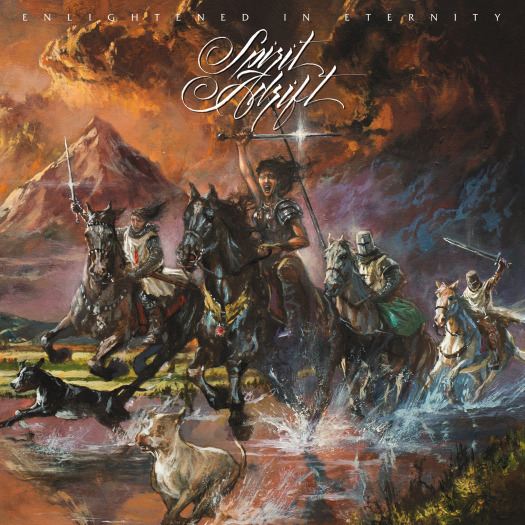
Spirit Adrift - Enlightened in Eternity

By Calen Henry. Despite being written in 2019 Spirit Adrift's fourth album, Enlightened in Eternity, sounds inexorably linked to 2020. By splitting the difference between the somber doom metal of Chained to Oblivion and the righteous classic metal vibe of Divided by Darkness

Spirit Adrift: Enlightened in Eternity cover artwork.
Artwork by Adam Burke.

Despite being written in 2019 Spirit Adrift's fourth album, Enlightened in Eternity, sounds inexorably linked to 2020. By splitting the difference between the somber doom metal of Chained to Oblivion and the righteous classic metal vibe of Divided by Darkness it comes off as hope battling through existential dread, exactly how 2020 has felt for many of us. It also sounds like Nate Garrett and Marcus Bryant simply had a blast recording it. Garrett has a gift for taking a collection of metal riffs and melding them into catchy, anthemic songs that straddle the line perfectly between classic metal and arena rock anthems.

These new songs are more diverse than any single prior album. From the punky intro to "Cosmic Conquest" through the full speed metal banger "Harmony of the Spheres" to the dramatic trudging doom metal of closer "Reunited in the Void". They lay the foundation for some genre hopping classic-metal worship that comes off as reverential, rather than hackneyed. Like with the songs themselves Garrett cherry picks whatever metal bit or piece he pleases and adds some delightfully out there touches from a late track key-change to spooky chains clanking. The lead work fits the feel of every song and twin guitar leads abound. Many of the parts have the air of familiarity from classic metal albums, but nothing (apart from that one riff in "Stronger than your Pain") calls back to a specific band or album. It just feels right, like "comfort metal".

The choruses are as catchy as the riffs, but the lyrics dive a bit deeper than simply arena rock pizazz. A vein of hope runs through the album, but so does death and pain. The same dichotomy of downcast doom metal and triumphant classic metal that runs through the riffs permeates the lyrics. Many of the songs are about hope and triumph, but they're often about hope through pain and darkness and death, and the strength to face them head on. So still pretty metal, but 2020 metal, not 1980 metal.

2020 has been a crazy year and much of my music consumption has been revisiting favourites and discovering classics I'd missed in the metal pantheon so some new music completely fell off my radar Enlightened in Eternity almost did until Max asked me to cover it, and I'm glad he did. It's exactly the metal album my 2020 needed.

August 14, 2020

Bull Elephant - Created From Death

By Calen Henry. Anonymous UK collective Bull Elephant's sophomore album picks up where the debut left off and this time the band are less cagey about the subject matter, giving a pretty clear overview of Created From Death's narrative.


Anonymous UK collective Bull Elephant's sophomore album picks up where the debut left off and this time the band are less cagey about the subject matter, giving a pretty clear overview of Created From Death's narrative.

The album's eight songs switch between the story of the eponymous Bull Elephant, now in human form, and the build up of tensions during World War II, both on conventional and unconventional fronts. The Cult of the Black Sun, self-professed descendants of a corrupted god, seek to re-enlist the bodies buried in mass graves as an unending undead army. To combat such unholy creations the creature goes "from beast to human to beast again". From reborn human flesh, the essence of the creature known as Bull Elephant is transferred into the form of a great whale, and on that note the album ominously ends. They'll have to go far to top Mastodon's Leviathan for "battle whale concept album" but I'll definitely be along for the ride.

Just as the the story for Created from Death is a bit more succinct than Bull Elephant so is the music. This time around the band digs deeper into groovy doom-sludge, leaning more on the melodic "almost-a-scream" style of vocals and keeping the really heavy and really atmospheric sections for key story moments. The change makes for a more cohesive album than Bull Elephant. Created From Death flows better, has deeper grooves, and more memorable riffs but owes a great deal to the debut. The sequel wouldn't work without the set up from the first album. Bull Elephant introduced the whole mythos, where Created From Death gets to dive right into the next chapter.

The ridiculous multi-album concept (there's clearly going to be at least one more part) may not be for everyone, but Bull Elephant deliver the goods, both in riffs and concept. Sign me up for album no. 3.

August 8, 2020

Mesarthim - The Degenerate Era

By Calen Henry. The meta is extremely consistent for Mesarthim albums. A new one drops with no warning, giving no information, with a title referencing an esoteric cosmic concept. It always musically iterates on the last album but remains extremely divisive in the metal community and it always gets a nice dynamic master.
By Calen Henry.


The meta is extremely consistent for Mesarthim albums. A new one drops with no warning, giving no information, with a title referencing an esoteric cosmic concept. It always musically iterates on the last album but remains extremely divisive in the metal community and it always gets a nice dynamic master. The Degenerate Era is no different. It's the band's space trance metal at its finest and this time the cosmic concept refers to the cosmic era after the current one, when protons will decay leaving nothing but black holes, presumably what is shown in the album art.

Despite being the opener, the three part "Laniakea" is the album's centerpiece. The title refers to the Laniakea supercluster of galaxies, of which the Milky Way is part. The movements refer to the Great Attractor, the central gravitational point in the supercluster, the Zone of Avoidance, the portion of the cluster that is obscured from view from earth, and Dark Energy that is hypothesized to ultimately tear apart the Laniakea supercluster.

Underneath these cosmic trappings The Degenerate Era continues the shift towards more epic lead-guitar driven songs that started on Ghost Condensate while also harkening back to the more symphonic sound of .- -​.​.​. .​.​. . -. -​.​-​. .(Absence). Track length also splits the difference between those two albums with one 14 minute suite and four tracks ranging in length from four to almost nine minutes. Though the shift and references back through the band's catalog are almost seamless, there are a few transitions on The Degenerate Era that seem to lean to far on stop time, with just a fraction of a second too much space before the next passage begins, something I didn't hear on any prior releases. It can't hold back the album's epic heights, though, with great riffs and leads and the return of pick slides giving it a weird, but great, space punk edge.

Though it's impossible to discern the actual lyrics for a Mesarthim album, there's clearly a cohesive concept. From the album title through the "Laniakea" suite to the album closer "618" (a reference to one of the largest known supermassive black holes) complete with a Morse code message spelling out "Planet Nine Located", there are mysteries yet to discover in The Degenerate Era and the dynamic master (DR 12) makes repeated listens a joy.

July 10, 2020

Osyron - Foundations

By Calen Henry. A press release in my inbox announcing Osyron's new album Foundations was the first I heard of them. The Calgary band’s album was billed as a symphonic power prog metal album “exploring Canadian history and identity”. As a proud Canadian from their neck of the woods with a penchant for over the top conceptual metal
By Calen Henry.


A press release in my inbox announcing Osyron's new album Foundations was the first I heard of them. The Calgary band’s album was billed as a symphonic power prog metal album “exploring Canadian history and identity”. As a proud Canadian from their neck of the woods with a penchant for over the top conceptual metal, I knew I had to write about it.

Somewhat in contrast to the lofty promise of the press release, Foundations is under half an hour but manages to pack a cohesive conceptual arc into that short run time. Through the five tracks of down-tuned, "Djent-ey", melodic prog metal the band weave tales of conquest and glory in battle that, at times, verge on rock opera bombast. The music is epic with down-tuned chugging, belted out choruses with melodies doubled by hard rock guitar lines, and even a few forays into blast beats and rasped vocals. The album, though, is more than grandiose glory-peddling.

Underneath the album’s raucous tropes of the glory of colonization, battle, and sacrifice runs an undercurrent of pathos and regret. The lyrics reckon with the actual cost of colonialism and unending conquest. They delve into the human and social cost of colonization. What starts as stories of grandeur in conquest ends up bringing in the cost of war, mourning the loss of friends and comrades, and ultimately the realization that Canada was built on blood and genocide and we must reckon with that in order to move forward.

I came for the promise of Symphonic prog Canadiana and stayed for the skillful melding of genres and a cohesive lyrical arc packed into fewer than thirty Heritage Minutes.

May 13, 2020

We Miss Live Music So Much (Beastwars)

By Calen Henry. "Damn the Sky" was the first song where I got Beastwars. From that single track I was hooked and tore through their discography just in time, unfortunately, for them to go on hiatus then announce that singer Matt Hyde was (ultimately successfully) battling cancer.
By Calen Henry.


"Damn the Sky" was the first song where I got Beastwars. From that single track I was hooked and tore through their discography just in time, unfortunately, for them to go on hiatus then announce that singer Matt Hyde was (ultimately successfully) battling cancer.

After all that their announcement of a surprise comeback album, last year's IV, was the most exciting musical moment of 2019 for me. The anticipation was well founded; it ended up being my favourite album last year. It turns out that wasn't the only surprise the band had up their sleeve.

On May 1, Bandcamp's second "all proceeds to artist" day since global COVID-19 quarantine efforts began and bands faced a cascade of gig cancellations, the boys in Beastwars decided to drop a live album. Not just any set either, their entire comeback concert from July 2018 at Wellington NZ's San Fran. As a Canadian fan who is unlikely to be able to catch the band live, it's an incredible gift. Not just a comeback album, but their comeback show, professionally recorded and mixed. It's even got some nice dynamic headroom with a master clocking in at DR8.


Being a year before the release of IV the setlist is made up entirely of songs from their trilogy. They start the set with the Beastwars song "Damn the Sky". From there they rip through some of the best tracks from the three albums in largely chronological order though they save two tracks from the first album, the savage stomp of "Red God" and mantra-like "Daggers" as the one-two punch to end the set. "Daggers" is such a perfect note on which to end the set, with its repeated refrain

Play that song
Play that one we know
Play it loud
Play that one we love

They sound like a different band from the snapshot of despair, grief, and hope captured on IV. By time they got back to the stage Matt was back to full demon-bellowing capacity and the set is a band with fire in their bellies ripping through their back catalog for their hometown crowd. It's magical and kind of perfect for a band with so much mysticism in their lyrics to hear the moment they hit the stage after so much turmoil and a rebirth. To top it off the band have been kind enough to ask for absolutely nothing in return. It's Name Your Price on the band's Bandcamp page.

April 24, 2020

Elder - Omens

By Calen Henry. Omens’ cover, by long-time Elder artist Adrian Dexter, seems at first blush a curious departure from Reflections of a Floating World or Lore’s fantastic, vibrant landscapes; a simple broken statue wreathed in fog. A closer look at a larger version reveals details of the statue lost in smaller renderings.
By Calen Henry.

Artwork by Adrian Dexter.

Omens’ cover, by long-time Elder artist Adrian Dexter, seems at first blush a curious departure from Reflections of a Floating World or Lore’s fantastic, vibrant landscapes; a simple broken statue wreathed in fog. A closer look at a larger version reveals details of the statue lost in smaller renderings. It’s crumbling and overgrown with moss. Much less of a departure from the rugged, surreal landscapes that formed the focus of earlier albums than it first looks. Still a surreal still life of nature. This time after humanity, rather than before.

The album itself makes a similarly deceptive first impression. Where Reflections of a Floating World and Lore each led with massive riffs (like the one that just started playing in your head), Omens gently unfurls with ethereal keys. It sounds almost like a different band, one unconcerned with immediately grabbing the listener. And why should it be? Elder have nothing to prove. Since 2015 they’ve been deep down a sound rabbit-hole anchored by singer/guitarist Nick DiSalvo’s unique droning riffs and spiraling leads. They are light years ahead of any other stoner rock, a genre in which they only fit by association at this point. On top of that, even within their unique sound they've never made the same record twice. From Dead Roots Stirring each album has moved towards closer towards progressive rock while always maintaining their signature riffing.

After a few listens Omens fits into the Elder catalog. It's easy to hear how the softer elements from The Gold & Silver Sessions blend with the big riffs and circuitous leads. Despite the fit within Elder canon, the approach on Omens isn’t without risk. It’s a much gentler album than any before it. The guitar fuzz is toned back, making the HiWatt amp driven sound even more Pink Floyd-ian, accompanied by keys that are far more prevalent and varied. Reflections of a Floating World flirted with keys, mostly the iconic Mellotron patch “3 violins”, and sometimes slightly awkwardly. Here the keys are woven completely into the compositions giving the album a classic prog rock sound to which the band never fully committed before.

Obviously Omens was recorded before the global pandemic, but this calmer version of Elder is a perfect counterpoint to all the stresses we're coping with. The record ebbs and flows naturally, polishing the harder edges of older releases while still maintaining Elder's almost mystical ability to structure long songs so they feel short and are constantly engaging. It's even mastered more dynamically than before (DR 8), making it a warm, easy-to-listen-to proggy blanket in which to wrap yourself and ride things out. It's the perfect version of Elder for right now.

March 24, 2020

Planet of the Dead - Fear of a Dead Planet

By Calen Henry. I love Beastwars so imagine my surprise when an album from a Wellington-based stoner doom band boasting a wicked sci-fi album cover surfaced on Bandcamp and it wasn’t them. Surprise turned to delight when I hit play on Planet of the Dead's Fear of a Dead Planet. While they certainly Obey the Riff, they set themselves well apart from New Zealand’s apocalyptic doom phoenix.
By Calen Henry.

Artwork by Jonathan Guzi.

I love Beastwars so imagine my surprise when an album from a Wellington-based stoner doom band boasting a wicked sci-fi album cover surfaced on Bandcamp and it wasn’t them. Surprise turned to delight when I hit play on Planet of the Dead's Fear of a Dead Planet. While they certainly Obey the Riff, they set themselves well apart from New Zealand’s apocalyptic doom phoenix.

Planet of the Dead draws deep from the well of stoner metal and 90’s alt-rock to create a menacing atmosphere then whips up a sci-fi sandstorm. With lyrics drawing from well-known fantasy and sci-fi as well as a few deep cuts - bonus points to them for having lyrics on their Bandcamp page.

The album opens with "The Eternal Void". It's drawn out intro creates the perfect ominous vibe for vocalist Mark Mundell’s melodic howl to tell the tale of the advance of the White Walkers. He then drops into a menacing growl with echoes of stoner metal godfather Matt Pike. The vocal shift kicks the instruments into a lumbering staccato shuffle, showing their hand for the rest of the album. Their “trademark” sound is the juxtaposition of sinister semi-clean vocals and more guttural howls over a similar juxtaposition of slow, menacing passages and extremely groovy, choppy fast riffs.

Album standout "Mind Killer" is the grooviest of all. Opening with a sample of the Mentat Mantra from David Lynch’s Dune, the band then shifts into a groove that sounds like Queens of the Stone Age filtered through High on Fire. With Mark turning the Mantra into the first verse and the Bene Gesserit Litany Against Fear into a glorious chorus reminiscent of Trent Reznor. The rest of the verses weave in the band’s own lyrics about Paul Atreides’ choice between the machinations of the Bene Gesserit and the logic of the Mentat way.

Shifting to a stomping rhythm weirdly reminiscent of Silverchair’s largely forgotten hit "Freak", the band completes the sci-fi / fantasy hat trick with another Dune track. "A Million Deaths" focuses on Paul’s visions of death, his fear of them coming to pass, and his inability to prevent them on his current path.

"Nashwen" goes deep with nerd cred (full disclosure: I didn’t figure this one out myself) for another groovy track with 90’s NIN sounding vocals, this time about Speedball 2: Brutal Deluxe. It’s also the first track on the album to feature an extended guitar lead and it’s pretty killer over top of the bands crunchy riffs.

The rest of the track list carries on the band’s formula of groove vs trudge, but the back half of the album has fewer direct sci-fi references and is slower, on balance. "Walk the Earth" bears special mention, though, as it’s inspired by Dawn of the Dead and thereby calls back to the band’s name (though the main inspiration for the name is the Electric Wizard track Funeralopolis). The subject matter is a great fit for the band’s sound. Much like the album opener the slow riffing is a perfect fit for the creeping dread of a George A. Romero inspired song.

Planet of the Dead’s slow/fast formula creates a great signature sound considering Fear of a Dead Planet is only their first full length. It does, however, have the odd recycled riff, but the feeling of deja-vu never lasts long before they do something creative and switch things up. Plus it sounds great, especially for a debut. The master is more dynamic than average for stoner doom coming in at DR 8 and it really shows. Everything sounds massive and the bass really comes through to drive the huge grooves.

Planet of the Dead are unlikely to convert staunch detractors of their chosen style but stoner metal lovers will find a lot to love here, and a surprisingly original take on an overdone sound in what I consider to be the best stoner metal debut since Ordos’ House of the Dead.

February 14, 2020

Konvent - Puritan Masochism

By Calen Henry. Copenhagen based newcomers Konvent are billed as death doom. From the first huge guitar note, however, their blown out fuzz assault is more reminiscent of manic sludge punks Mantar than the likes of Hooded Menace and Runemagick. The trudging pace is certainly reminiscent of those two, though, making for an intriguing sludge doom mix.
By Calen Henry.


Copenhagen based newcomers Konvent are billed as death doom. From the first huge guitar note, however, their blown out fuzz assault is more reminiscent of manic sludge punks Mantar than the likes of Hooded Menace and Runemagick. The trudging pace is certainly reminiscent of those two, though, making for an intriguing sludge doom mix.

Puritan Masochism is the band’s first full length, though they’ve been together since 2015. The result sounds confident, purposeful, and extremely focused. The women in Konvent know exactly what they’re doing: Bludgeoning melodic riffs, guttural growls, witch rasps. Rinse. Repeat.

Such a no frills approach is a bit of a gamble in an increasingly saturated metal world but the band draws enough from doom, death metal, and sludge to create a signature sound while backing it up with good riffs and good vocals It does mean there isn’t a lot to say about them, though. But what more do you need than: Turn on, Tune in, drop into a continuous slow head bang.

February 6, 2020

The Doomed Concept - Bull Elephant, Howling Giant, and Bushwhacker

By Calen Henry. Last year saw the release of three great doomy concept albums, all of which I either initially missed or glossed over and all of which are worth revisiting both for music and stories. Anonymous UK collective Bull Elephant dropped their self-titled debut in November. They go all in on their concept telling the story of a slaughtered African elephant reanimated by Nazi occultists
By Calen Henry.

Last year saw the release of three great doomy concept albums, all of which I either initially missed or glossed over and all of which are worth revisiting both for music and stories.

Cover art by all4band.com.

Anonymous UK collective Bull Elephant dropped their self-titled debut in November. They go all in on their concept telling the story of a slaughtered African elephant reanimated by Nazi occultists to further their war effort, only to be interrupted by a witch-shaman and turned on its killers. Elder forces, having other plans for the beast, intercede through time and space. They realize that no matter which side prevails, the earth is doomed to a slow cycle of degradation as humans, a mere cosmic footnote, wage their slowly escalating war on nature. After the great pachyderm falls in battle against its captors and killers, these elder gods raise it for one final battle to catalyze humanity’s ruin and reset the cosmic balance.

Backing up the story is a wall of doom/sludge that constantly churns through riffs, leads, and vocal styles. At first listen the heavier side dominates; thundering drums, crushing guitar riffs and guttural vocals. Ultimately, though, the vocals unlock the album’s potential. The vocalist(s) run the gamut from guttural death metal growls, to black metal rasps, gritty mid-range, and a manic falsetto that just pushes into distorted without turning into a shriek.

The instruments lock in with all these changes, always the right sonic palette for the vocals. They effortlessly slip from psychedelic clean guitar passages into crushing doom riffs, and soaring guitar leads, even dropping into full-on HM-2 fueled OSDM for “Corrupted Truth”. The swirling musical shifts match not only the vocal changes, but the scenes in the story. As the story moves from terrestrial to celestial happenings, and into the future and back the musical backdrop always matches. It makes following the story with the included PDF lyrics sheet thoroughly enthralling.

The icing is that, though Bull Elephant are anonymous and independent, they’ve gone to great lengths to perfect their album. It sounds amazing. No matter how airy, busy, or dirty it is at a given point it always sounds just right. Everything comes through and nothing gets lost.

By delivering the full package of ridiculous kitchen-sink metal concept album Bull Elephant have set the bar high on their debut and are allegedly already working on Bull Elephant II...


Cover Art by Lindsey Camelio.

The Space Between Worlds is Howling Giant's first full length after a series of pulp science fiction themed EPs. This time the Nashville trio has gone full sci-fi concept album. The overarching story is that of a huntress on a journey through the metaphysical realm of humanity’s collective dreamscape. In it she must confront a dream eater in an attempt to stop it devouring dreamers and destabilizing the dimension itself. The actual story is told completely within the dream realm and plays out more like a classic fantasy yarn as the huntress traverses the land on the way to the dream eater’s citadel for the final confrontation.

In contrast to Bull Elephant’s prog doom melting pot Howling Giant play extremely melodic stoner rock. The closest touch-point is ASG (Jason Shi even provides some guest vocals). All the vocals are clean with lots of harmonized parts and the guitar tone is warm and fuzzy. It’s an extremely easy album to listen to, and indeed, I glossed over it on my first listen. Underneath the easily digestible sound the band have written a selection of great songs full of hooks and ear-worm sing-along choruses. Instead of falling into the common stoner rock trap of stringing together some huge riffs and calling it an album, the songs feel intentionally structured to both support the story and come out as good songs. They keep things moving along, rarely riding a riff for very long and often working in 6/8, so that when they do drop into a huge “slow headbang” stoner metal riff it always hits hard.

Like The Sword’s sci-fi concept period (Warp Riders and Apochryphon) Howling Giant aren’t reinventing the wheel. But The Space Between Worlds deliver an exciting concept that’s well executed with a signature sound that’s immediately approachable, but continually rewarding.


Cover Art by Adam Burke.

Originally hailing from Canada’s Klondike, Vancouver’s Bushwhacker go full cowboy concept metal on A Fistful of Poison. It chronicles the downfall of a drug addicted band of desperadoes, tricked by a local barkeep into seeking out a cult rumoured to grow their chosen drug and worship the ancient Egyptian crocodile-headed god Sobek. Matt over at Can This Even Be Called Music delves deep into the story better than I possibly could, and it really requires that level of immersion because the narrative drives the whole album and is essential to its success.

The narrative drives everything from the radio-drama style vignettes to the flow of the music itself. The vignettes are over the top, but so is the whole concept so it works. They unambiguously deliver the core story, letting the lyrics deliver the metaphorical and psychological side of the desperadoes' doomed journey. Between these the musical content of A Fistful of Poison leans heavily on long atmospheric instrumental sections to fully develop the story's pervasive feeling of manic desperation. Bushwhacker take the framework pioneered by Sleep of lengthy passages dominated by a single riff, slowly building and shifting, and employ it in service of the narrative. It's a perfect match for the vocals. The incantation-like delivery, a rhythmic chanting, escalates in parallel with the instruments to an unhinged rasp at key story moments.

Bushwhacker are all in on the storytelling and A Fistful of Poison is a fantastic soundtrack to an engrossing narrative, but without delving into both it risks falling flat. That may make it a polarizing album, but it's well worth the effort to unpack and unlike almost any other.

December 23, 2019

Doom and Gloom for the Holidays

By Calen Henry. Holiday music tends to start a bit early and maybe you've had your fill by now. If you need something a bit gloomier for the final stretch, here's a triple dose of doom to bring you down and pull you through.
By Calen Henry.

Holiday music tends to start a bit early and maybe you've had your fill by now. If you need something a bit gloomier for the final stretch, here's a triple dose of doom to bring you down and pull you through.

Artwork by Paolo Girardi.

Perennially underrated death doom stalwarts Runemagick dropped their thirteenth album in late October. Into Desolate Realms, true to its name, album number, and release just before Halloween is all about doom and desolation.

It’s laser focused right from the cover art; an erupting volcano, flanked by the moon and a red sun, surrounded by jagged mountain peaks. The lyrics detail ruined civilizations, arcane rituals, awakening horrors, and creeping dread and they're delivered in a low, but intelligible growl. The songs are predominantly made up of ominous chromatic riffs, and writhing tremolo leads, supported by drum fills to move from riff to riff, rarely settling into straightforward chugging. Most tracks are fundamentally a mid-tempo trudge but within a relatively narrow death doom framework Runemagick keep the songs going with near constant movement in the guitars or drums. It’s a fascinating approach reminiscent of the most recent Hooded Menace, but rather than coming across as Gothic decrepitude there’s a constant oppressive feeling permeating the album giving it a bit of the edge of HM-2 driven old school death metal.

Straddling so close to the line between death metal and doom metal may put off fans leaning more towards one camp over the other. Additionally the album length can be a bit intimidating, but it’s worth noting that the final three tracks (totaling about 20 minutes) are taken from the band’s EP, The Opening of Dead Gates, and are a nice bonus but the album flows better when “After the Sepulchral Lava” is the actual closer.


Artwork by John Gallo.

Ruins of Eternity is only Orodruin’s second album, and it comes 16 years after their debut putting them in an odd place; little known veterans returning to a genre that has since exploded in popularity. The closest modern touch points are Crypt Sermon and Khemmis but Orodruin sounds much more vintage than the former, and more purely traditional doom than the latter. The guitar, both the tone and the playing, set Orodruin apart the most from the pack.

The tone is much mellower than a lot of doom metal, far more vintage tube overdrive than modern distortion. Even the amount of drive is dialed back closer to 60's and 70's rock and proto-metal than full fledged doom metal. The mellow drive doesn’t hinder the riffs though; they still crush, but occasionally breaks into faster galloping metal riffs and fuzzed out leads. The bass and drums fill out the sound nicely, with thumping clean bass supporting the guitars and nice variety in the drums leading from riff to riff. The soft edge to the guitar attack works well with the purely clean vocals to deliver a compelling spin on what, at first may seem like a fairly standard doom record.

That might explain why it seems to have gotten somewhat glossed over, which is a shame, because Orodruin have made one of the better doom records this year, and one that gets even better every time I spin it.


Lord Dying, having put out two albums of Savannah Sludge metal akin to bands like Black Tusk, Baroness, and Kylesa, released something completely different for their new opus Mysterium Tremendum. Looking backwards to 70's prog rock for inspiration, and inwards through personal tragedy, the band deliver a prog infused conceptual sludge opus dealing with the terrible mystery (mysterium tremendum in Latin) that is death.

Catalysed by personal tragedy it's a conceptual record about the inevitability of death, reconciling that with the desire to live life to the fullest giving it a note of hope within the heavy themes.

To address the mastodon in the room, no, it’s not the first time a sludge metal band have reinvented themselves by looking back to classic prog rock to address tragedy, and there are certainly similarities. Lord Dying's abrupt shift to prog over one album contrasts with Mastodon's slow ascend to the prog zenith and where Crack the Skye took a maximalist approach with layer upon layer of instruments, Mysterium Tremendum is austere by prog standards.

Whether it's swirling, droning, leads, quieter acoustic passages or the stomping sludge sections that make up the albums's musical push/pull, the band mostly limits themselves to a bass groove, a guitar groove, and a lead over top. It keeps things approachable, and helps mesh the prog and sludge parts. It also means that, near the end of Mysterium Tremendum where they start to layer the sound and bring in synths, it hits harder and makes the overall album flow extremely well.


[This is the last post on Metal Bandcamp in 2019. See you again next year.]

December 4, 2019

Priestess - Prior to the Fire

By Calen Henry. In 2007 Priestess' straightforward hook-filled hard rock caught the attention of Neversoft, developers of the Guitar Hero series. The Montreal band became a flash in the pan when “Lay Down”, from their debut album Hello Master was featured in Guitar Hero 3
By Calen Henry.


In 2007 Priestess' straightforward hook-filled hard rock caught the attention of Neversoft, developers of the Guitar Hero series. The Montreal band became a flash in the pan when “Lay Down”, from their debut album Hello Master was featured in Guitar Hero 3. But by that point the franchise was just past its peak so Priestess didn’t get the exposure a band like The Sword did with Guitar Hero II, the series’ apex.

Priestess' much overlooked 2009 follow up, Prior to the Fire, saw the band mixing their hooky, driving hard rock with progressive rock and filling the album with fantasy and sci-fi themes. The final product was such a departure from the radio-ready Hello Master that the band ended up parting ways with their US label, delaying the album's American release until they signed with Tee Pee Records.

The differences from its predecessor, though, are why it’s such an excellent record and why, even ten years later, nothing quite sounds like it. Mastodon’s Crack the Skye is often cited as the pinnacle of rock, metal, and prog’s modern coalescence, and rightly so. It’s my favourite album, but Priestess were right there too adding a heavy dose of prog to hard rock without losing any of the energy. They expertly combined hard driving rhythms with serpentine riffs, time signature changes, and unpredictable song structures, all with vintage sounding production for something unequaled ten years later.

Axemen Mikey Heppner and Dan Watchorn really set the sound for the album with custom stacks made by boutique Montreal outfit Richtone. The warm tube driven crunch was ever present, never spilled over into full-blown distortion and was a great fit for the natural drum sound. Mikey’s vocals were a touch gravelly as well, giving the whole album a tour-tested grit that feels classic even though the songs are about everything from Jack the Ripper and werewolves to Robocop, Lone Wolf and Cub, and Dragonball Z. It’s nerd rock with swagger.

You can even still grab the translucent green/orange double LP and a t-shirt from Bandcamp, which is a bit sad since that seems to mean physical sales were low enough they're still selling the first run of LPs ten years later. As for the present, the band has been on hiatus since 2012 and, though I long for more from them, it seems unlikely. For the rest of you, who may have missed out on one of my favourite albums of all time, it’s right there on Bandcamp. 

November 22, 2019

Angel Sword - Neon City

By Calen Henry. I love Angel Sword but I wasn’t sure on them at first. Their mix of rough, melodic, mid-paced heavy metal and gravelly Lemmy inspired vocals can take a bit to get into, but it’s chock full of hooks and sing-along choruses. They sound authentic and like they’re having a ton of fun
By Calen Henry.

Artwork by Art by Bring

I love Angel Sword but I wasn’t sure on them at first. Their mix of rough, melodic, mid-paced heavy metal and gravelly Lemmy inspired vocals can take a bit to get into, but it’s chock full of hooks and sing-along choruses. They sound authentic and like they’re having a ton of fun. The odd mix of vocals and musical style really set them apart from the heavy metal crowd.

Much to my delight, Angel Sword’s second full length, Neon City, dropped over the weekend with little warning or fanfare. It continues the heavy metal journey started on their first album, Rebels Beyond the Pale. The titular city is, in fact, pictured on the back cover for their last record and it's the urban counterpoint to the previous album which featured songs focusing on heavy metal, Mad Max inspired highways, and heroes fighting against authority.

The anti-authority sentiment continues, but, as is immediately apparent from Neon City’s cover, it takes it’s cues from Cyberpunk building up the story of a thought-controlled surveillance city-state policed by brainwashed cyborgs and the fight against total control. The liner notes are perfect for their retro brand of Cyberpunk metal. Included with the download are digital liner notes all designed to look like a DOS terminal displayed on a glowing green CRT monitor. They’ve even given file extensions to the track (.trk), production (.job) and band member (.mem) lists and the lyrics sheet separates lines with /// and uses REPEAT CHORUS. It’s pitch perfect.

There is also a bit of a musical shift keeping the theme cohesive. Jerry Razors’ vocals are largely unchanged but the band is a bit tighter and cleaner sounding this time with some speedier sections of double kick and metal gallop propelling things along. Some may miss the messier sound from Rebels, but the tighter, cleaner sound is perfect for the Cyberpunk vibe permeating the album. As a bonus, the master is DR 11 so you get the full retro metal sound with nice retro dynamics giving the low end a great thump and compelling you to crank it up.

November 18, 2019

Epic Metal Roundup

By Calen Henry. Earlier in the month Wilderun released their epic third album Veil of Imagination so it’s a great time to continue the legend and break out some other epic metal. Metal is a genre prone to drama and grandiosity, in other words, it’s epic. Historically, though, epic didn’t simply mean larger than life
By Calen Henry.

Earlier in the month Wilderun released their epic third album Veil of Imagination so it’s a great time to continue the legend and break out some other epic metal. Metal is a genre prone to drama and grandiosity, in other words, it’s epic. Historically, though, epic didn’t simply mean larger than life, it referred to a specific long form of poetry best known through Homer’s Odyssey and Iliad (both of which have been the subject of multiple metal songs). Some albums tell stories in a dramatic fashion befitting the literary meaning of epic be they historical, fantasy, or science fiction. Epic also manifests in the modern sense with bombastic arrangements and long-form multi-part songs. Some albums may even pull off both. Here’s a trio of albums that each approach epic in different and interesting ways.

Artwork by Jana Heidersdorf.

Xanthochroid are top of the heap for high concept epic fantasy metal to the point that they’ll likely turn off some listeners. All of their albums take place in Etymos, a fantasy realm of their own creation. Their website even has a lore section. Of Erthe and Axen is the two-part prequel to their previous album Blessed He with Boils. In brief, it tells the story of two brothers vying for power, the love of a woman, and control of ancient forbidden magic. The concept is engrossing and involved enough that the albums include completely justified listening guides. They lay out not only lyrics but the full-fledged story complete with character dialog and a narrative connecting all the verses and songs together. The songs are so much related that the titles make up the final lyrics of Part II, tying everything together:

Open the gates, O forest keeper
To lost and ancient gardens
To higher climes where few might stand
To souls distant and dreaming

In deep and wooded forests of my youth
The sound of hunger rises
The sound of a glinting blade
The sound which has no name 

Reveal thy shape, O formless one
Of aching, empty pain
Of gods bereft of grace
Of strength, and the lust for power

Walk with me, O winged mother
Through caverns old and yawning
Through chains that drag us downward
Toward truth and reconciliation

Musically it’s symphonic black metal meets Alan Menkin for what really feels like a metal Disney musical. There is as much classical instrumentation (with a delightful amount of oboe) as metal and it features male/female vocal duets telling the characters’ stories throughout. It may not be every metal fan’s cup of tea and it may be too metal for die hard musical fans, but anyone who likes metal, fantasy, and musicals would be remiss not to check it out especially since all their albums are Name Your Price.


Though not particularly epic in the narrative sense, Lör are musically way over the top. They play what is best described as “turbo folk metal”. Though lacking much of the traditional folk instrument backbone featured in many “folky” metal bands they’re folk by nature of their compositions. Many of their songs start with rhythms and motifs from traditional instrumental folk music then crank up the speed, layer face-melting solos over top, and underpin it with machine gun double kick. There’s a classic thrash feel to it that brings to mind early 90’s power metal thanks to the high clip of the riffs, the guitar tone, and the way the synths sound unabashedly like keyboard patches rather than like a real orchestra. It’s a singular sound and one that took me a bit to get into, but man, does it rip.


Nechochwen present a different and somber version of epic. Hearkening back to historical epic poetry, Heart of Akamon tells stories of displaced indigenous people in eastern America and their journeys to find a place to belong and preserve their traditions. To accomplish this the band play a blend of visceral melodic black metal and folk. But even reducing the music to those genre demarcations is a bit disingenuous. Every track on the album is different from the last and each creates a singular mood that beautifully and terribly conveys each story and theme. The album comes with images of the CD booklet that I found to be essential to understanding and connecting with the album. Not only are the lyrics contained therein, but the band has written about the historical context of each song on the album. The album starts with first contact with Europeans in the ominous “The Serpent Tradition” and traverses themes of life, loss, violence, grief and ultimately hope on the album closer "Kišelamakong". Putting it all together with the lyrics and concepts reveals one of, if not the single best, folk metal album I have ever heard.

November 1, 2019

Wilderun - Veil of Imagination

By Calen Henry. Wilderun's sophomore album Sleep at the Edge of the Earth garnered a grassroots cult following with its unlikely mix of Appalachia-tinged Americana and epic progressive melodic death metal. Four years later they're back with Veil of Imagination
By Calen Henry.

Artwork by Adrian Cox.

Wilderun's sophomore album Sleep at the Edge of the Earth garnered a grassroots cult following with its unlikely mix of Appalachia-tinged Americana and epic progressive melodic death metal. Four years later they're back with Veil of Imagination, an album that's both a departure and a refinement of their last.

Sleep at the Edge of the Earth’s centrepiece was the four-part "Ash Memory". It used leitmotifs to create a majestic folk metal suite moving from acoustic Americana to grandiose symphonic metal and back. Veil of Imagination’s fourteen minute album opener “The Unimaginable Zero Summer” plays out much the same way, starting acoustic and building through movements but it merely opens the album, rather than being a self-contained suite. Throughout the album it’s apparent that Wilderun have improved both their composition and performance chops. Fading transitions are all-but gone, replaced with dramatic stop time, smooth transitions between passages, and meaningful builds into sections.

Veil of Imagination partly accomplishes cohesion by digging into bombastic metal while eschewing most of the Americana making for tighter and still grandiose songs. There’s still a folky vein running through the album, but the resonator guitar, dulcimer, banjo (frailing on the intro aside), and mandolin are all but gone leaving only symphonic metal with a tinge of folk. Much as I’m loathe to admit it makes for a more focused if less unique album.

The orchestral parts are gorgeous and the metal parts have more bite, with more tremolo leads and dissonant chords underpinning the dramatic orchestrations. Vocals are improved as well with more variety on display. Cleans range from low, soft accompaniment for quiet passages to belted choruses and chorale vocals the most grandiloquent this side of the Red Army Choir. The growls have more bite as well, sometimes raspy, sometimes more guttural shifting from Akerfeldt inspired to Swanö. Though not a concept album the lyrics are thematic and focused. Wrapped in the trappings of fantasy the album grapples with the dichotomy of action versus inaction, the desire for control pitted against the fear of inaction. The lyrical focus adds another layer holding the album together as a whole, rather than a collection of songs.

The one pitfall is Jens Bogren's crushing master (DR 6) of Dan Swanö’s excellent production, especially compared to Sleep at the Edge of the Earth which sounded more dynamic than it’s DR 7 mastering score. Veil of Imagination is more dramatic and overblown with layer upon layer as pieces build and when blasts, tremolo picking, chorale vocals, and symphonic elements all come in these parts feel flat and the low end gets lost. It’s especially evident against more sparse sections where the bass and drums are clearly audible. It’s nowhere near many other albums in terms of loudness with no audible clipping and it sounds quite good overall, but an album so lush and detailed cries for more dynamic range to maximize all the different components of the music.

Veil of Imagination's move away from Americana, in some ways makes Sleep at the Edge of the Earth more special but it shows undeniable growth from the band and for 68 minutes of progressive metal to be this cohesive, dramatic, immediate, and layered is truly wonderful. Those prone to deriding epic, dramatic metal as overblown may come away unmoved but Wilderun, by dialing up the bombast, are clearly unconcerned and invite everyone else to pierce the veil of their imaginations.

October 21, 2019

Mesarthim - Ghost Condensate

With no advance warning Mesarthim, Australia’s highly prolific anonymous space black metal duo, recently released Ghost Condensate, their fourth full length in five years. Despite the speed of their releases Mesarthim’s quality has remained consistent and their sound has evolved considerably
By Calen Henry.


With no advance warning Mesarthim, Australia’s highly prolific anonymous space black metal duo, recently released Ghost Condensate [Editor's note: the review was written in April], their fourth full length in five years. Despite the speed of their releases Mesarthim’s quality has remained consistent and their sound has evolved considerably without losing their signature (and divisive) sound.

The group's 2015 debut, Isolate, introduced the duo’s mix of atmospheric black metal, howling vocals, and spacey synths evoking vintage science fiction and science documentaries. Subsequent releases added to that sound expanding the sonic palette with full blown techno interludes and more melodic lead work on the metal side.

Ghost Condensate furthers this evolution. It draws the most inspiration from their 2016 EP, The Great Filter where they first really dove into the epic. The result is more vintage space opera than science documentary. Ghost Condensate is rife with epic guitar riffs and leads, even breaking out a pick scrape into a face-melting solo, not to mention some truly epic twin guitars. The band’s trademark synths support the guitars while also being given time to shine in ambient and techno interludes

Their fourth album delivers exactly what fans expect from Mesarthim, without rehashing previous releases. Those that object to their mix of synth and metal won’t be won over, but fans of less atmospheric metal that weren’t convinced by their earlier work should check out their current incarnation.

August 6, 2019

Arctic Sleep - Kindred Spirits

By Calen Henry. Arctic Sleep’s seventh full length, Kindred Spirits, is something uncommon for a metal album. It is comforting and inviting. The production is natural, the drums sound full, the guitars are tuned low and driven warm, and the vocals are a deeply melodic and harmonies abound.
By Calen Henry.

Artwork by Jennifer Weiler.

Arctic Sleep’s seventh full length, Kindred Spirits, is something uncommon for a metal album. It is comforting and inviting. The production is natural, the drums sound full, the guitars are tuned low and driven warm, the vocals are deeply melodic and harmonies abound. Even the fret-less bass glissandos sound warm and inviting. It is also an album about death catalyzed by the passing of sole permanent member Keith D’s cat Yoda. The lyrics go deep and complement the instrumental sound to make it into a pastoral rumination on death, life, moving on, and letting go as well as an elegy for Yoda.

Album opener "Meadows" sticks close to the melodic doom sound of 2014’s Passage of Gaia until the song’s last section, where it opens up the sonic palette with a cello drop then some truly soaring vocals. As Kindred Spirits progresses the it continues to open up and explore more genres. Melodic doom metal shares the spotlight with extended range chugging, fuzzed out Smashing Pumpkins style accents, middle eastern tinged tapping, a djembe accompanied acoustic instrumental track, post-punk-ish driving bass, and Jesu-ey walls of warm distortion before going full drone on album closer “Old Soul”. It is an unexpectedly perfect conclusion; the sound of birds accompanying washes of guitar before multi-tracked cat purring closes out the album in what I can only interpret as “kitty heaven”.

Despite all the genre changes the album has excellent flow and the 69 minute run-time flies by, likely due to Keith's singular vision; the songs and lyrics were written by him and he plays all instruments, save drums. He's joined by Nick Smalkowski on drums (that he made!), after being absent for Passage of Gaia and a couple of guest vocalists to complete the sound.

For such a slim cast of characters the result is astounding. The album is bursting with ideas and sounds, though all delivered at a relaxed doomy pace. Despite a fairly loud (DR 6) master, details of the different instruments come through and the whole record sounds great.

Despite my familiarity with the band I managed to completely miss the kickstarter for Kindred Spirits and was unaware of it until release day. Don't make my mistake. Get on this. It's fantastic.

June 30, 2019

Windthrow - Treacherous Beckonings

By Calen Henry. Windthrow is a one-man black metal band from Sweden. Behind Treacherous Beckonings’ unassuming cover, though, lurks something a bit special that shines through the haze of bedroom black metal proliferating on Bandcamp. It’s a great little debut that showcases the band’s sound, never overstays its welcome, and hints at where the band could go next.
By Calen Henry.


Windthrow is a one-man black metal band from Sweden. Behind Treacherous Beckonings’ unassuming cover, though, lurks something a bit special that shines through the haze of bedroom black metal proliferating on Bandcamp. It’s a great little debut that showcases the band’s sound, never overstays its welcome, and hints at where the band could go next.

Windthrow doesn’t exactly do anything new, but the influences it brings together work extremely well. Riffs are split between blistering black metal tremolos and galloping heavy metal. Though the album itself is quite short the songs and riffs are long and epic, twisting and turning into and out of solos and twin lead guitar passages.

The performances by lone member Robin Petterson are very good. The riffs all hit and the leads are epic and memorable, even the nyckelharpa interlude is well done. Drums are what really set Windthrow apart from the pack. Lots of single member black metal bands use programmed drums and, unless they’re very well programmed or the artist wants the cold, clinical sound of drum samples, it can detract from the music. Petterson plays real drums on Treacherous Beckonings, and it brings the whole package together.

To top things off is a lovely dynamic master for the digital (DR 10). I’m sure the limited LP run sounds fantastic with a master like that but, thankfully, those of us going digital aren’t left out in the cold.

The most interesting part of Treacherous Beckonings is that it stands as a good debut, but also screams out for where Petterson can go with the project. He’s got the riffs, the chops, the leads, a cool folk instrument and, most importantly for a one man band, the ability to edit. All the pieces are there to develop something a touch longer, integrating the nyckelharpa into the metal songs and giving the whole project its own sound completely.

June 27, 2019

Beastwars - IV

By Calen Henry. Beastwars never promised a fourth album. After going on hiatus upon completing their apocalyptic trilogy, followed by singer Matt Hyde’s Non-Hodgkin lymphoma diagnosis, more from the trio seemed even less likely. Matt’s diagnosis, it turns out, catalyzed creativity.
By Calen Henry.

Artwork by Nick Keller.

Beastwars never promised a fourth album. After going on hiatus upon completing their apocalyptic trilogy, followed by singer Matt Hyde’s Non-Hodgkin lymphoma diagnosis, more from the trio seemed even less likely. Matt’s diagnosis, it turns out, catalyzed creativity. Booking studio time straight after Hyde’s chemo treatment ended, the band recorded IV; a harrowing journey inwards through guilt, fear, regret, and hope.

IV brings together the sound of each album in the trilogy; the straight up riff worship of Beastwars, the more angular riffing of Blood Becomes Fire, and the psychedelia tinged, slow burning riffs of The Death of All Things. The longer songs and component riffs on IV often bring all these parts together in a single track while solos twist and turn leading from heavy passages into ambient sometimes post-rock tinged sections. It feels more like a journey than before due in part to the frequent compound metering that drives songs forward, but it also sounds grungier, adding more guitar effects, and doubling down on the loud/quiet verse/chorus structure. The core approach of huge riffs supported by fuzzed out bass remains the same.

Matt’s vocals have changed, though. His quiet, seething vocals still drip with menace, but his huge rafter-rattling howl is thinner, more pained. It’s pleading, bleeding emotion. It could be confronting mortality, recording an album straight after chemo, the crushing weight of torment that pours forth, or it could be all of that. Matt’s performance is gripping. It’s his most nakedly emotional performance and this from the man who opens the band’s catalog with "Damn the Sky," a howling sermon to a dying world.

"Raise the Sword" opens the album on a note of hope and defiance. A short feedback build crashes into a trademark trudging guitar riff supported by fuzz bass with a howling verse before breaking into a quiet bass-led chorus. The verses focus on the toll of regret and guilt, while the chorus frames it with hope,

Breathe long
Breathe wise
Don't fall
Raise the Sword

The song’s bridge breaks into a sample from “The Quiet Earth”, about science in the wrong hands which, at first, seems incongruous with the themes of guilt and hope, but its inclusion becomes clear over the course of the album as Matt couples personal guilt with deep guilt and regret over the state of the earth.

An ambient interlude then brings back the main riff, underscoring another hopeful verse, before a chorus reprise into an unresolved chord while Matt howls “Raise the Sword” one last time. A perfect set-up for the album, hope and defiance in the lyrics, with the unresolved chord emphasizing the beginning of something, not the end.

"Wolves and Prey" opens with effect drenched drums, before the heaviness starts. Again centering on regret, it begins to introduce the colossal societal guilt hinted at in "Raise the Sword". Not only personal guilt, but guilt at the state of the earth and what it means for future generations,

Speak of old kings
Hands of your loss
Let everyone say
What have we done

The song’s bridge introduces a new permutation of the band’s sound; their characteristic extended, stomping bass-led sections underneath long, lyrical guitar leads lending the album an introspective and dream-like quality.

"Storms of Mars", with it’s wah drenched intro, hearkens back to The Death of All Things, before launching into the one of the fastest riffs on the album supporting dual guitar leads with lyrics adopting classical and sci-fi imagery to beg for more time,

Let me live
Give me ten more years
Let the child grow
Let me see new Rome

At the same time it warns not to repeat the mistakes of the past,

A refugee
A world as cruel as the last
Remember thee old Gods
Remember their rage

The song shifts into crunchy bass-led riffing, reminiscent of Blood Becomes Fire, and back before an ambient interlude, led by Matt’s bubbling mid-range rage builds to the song’s climax, over top of octave doubled tremolo riffing he begs to “let the child live, to build new Rome”.

"This Mortal Decay" opens with a classic mid-tempo riff, supported by faster than average drumming, and confronts death more directly, describing looking down from a mountain to see what humanity has wrought, and how despite it all, we can’t give up or give in, or escape our “mortal decay”. The vocals hit a sweet spot with the lurching guitar line; never quite out of control, but never settling down to the simmering rage of the more menacing passages on the album. The only exception is after a string swell to support the song’s bridge, an indictment of reckless technological advancement, where the vocal intensity perfectly matches the instruments

Oh God, oh God
Bring us your neon cross
Oh God, oh God
Drive your speed machine

"Omens", the album’s lead single, opens with a pseudo-gallop reminiscent of “Damn the Sky”, and is classic Beastwars through and through, but with flashes of the more psychedelic from the pre-chorus wah guitar to the almost post-rock outro. It was an extremely well chosen single to show fans the band’s triumphant return as well as their subtle sonic shift both instrumentally and lyrically with lyrics that are more esoteric and closer to the band’s older material than the rest of the album

After brief ambiance, "Sound of the Grave" is a torturous guilt-trip driven by rumbling, fuzzed out bass as the guitars build into the fury of the chorus underneath Matt’s seething sermon on forgiveness, death, and nothingness. The consistent rumbling riffs match the off-kilter tone of the lyrics, wondering what it’s worth in the end,

And I try for forgiveness
In the time of the damned
And nothing is better
Than being in the ground

"The Traveller" may be the album's most tortured vocal showcase. Matt wails over nothing but a solo guitar track until the laid back groove kicks before switching to a classic New Wave drum beat supporting a wicked lyrical twin guitar line through the chorus. It leads into a dissonant, chorus-drenched guitar solo ripped straight from the Nirvana playbook before (again, Nirvana-style) the song gets heavier and almost falls apart as Matt intones,

Blessed is the world
And we all must leave

"Like Dried Blood", in contrast to it’s morbid title, starts with clean vocals accompanied by piano and drums before the typical Beastwars (circa Death of All Things) sound bursts forth then parts and brings piano back to lead. Lyrically it bookends the album; ending the fight started with "Raise the Sword" but far more general with Matt saying his great war is over, but

Like all this blood
It will wash away

IV is a towering achievement. Beastwars have always been darker than average for stoner rock, dealing obliquely with environmental ruin and existential angst. IV turns the lens deeply inward and delivers their most emotionally raw and engrossing album yet. It’s as harrowing as it is addicting to listen to and it’s my favourite album of 2019.

May 13, 2019

Dreadnought - Emergence

By Calen Henry. Dreadnought’s fourth elemental themed album, Emergence, carries on the band’s signature sound while tightening it up. Pulling back from the dizzying density of A Wake in Sacred Waves, it's the band's most direct album but it doesn't sacrifice any of their intensity.
By Calen Henry.

Artwork by Mark Facey

Dreadnought’s fourth elemental themed album, Emergence, carries on the band’s signature sound while tightening it up. Pulling back from the dizzying density of A Wake in Sacred Waves, it's their most direct album but it doesn't sacrifice any of their intensity.

Emergence is still, at its core, piano-heavy blackened progressive rock. The driving tremolo riffs and shrieked vocals are still prominent, as are Kelly Schilling and Laura Vieira’s lovely piano-accompanied clean vocals and Jordan Clancy's intricate drumming. Flute, saxophone, and keys all make appearances, as with earlier releases, but Dreadnought sound more focused than ever before.

Photos by Kyle Gaddo.

Their first three albums showed ever-ascending progress towards the progressive zenith of A Wake in Sacred Waves, their busiest, heaviest, jazziest, and most dense album. It eschewed some of the dynamic push/pull between heavy and ambient found on Bridging Realms but lost some of the impact of their sound on that album. Emergence brings it back and does it better than on Bridging Realms. There is more defined separation between the band’s main styles; metal, piano-driven rock, and ambient. The sections are also less meandering than on previous albums giving the record a more immediate, less ethereal quality. Sections are more defined, making them stand out so, upon repeated listens, they build familiarity faster than before. The whole album is more immediately gripping while still giving a lot for the listener to dig into. Songs are still long, the compositions are still dense, but it all works and flows better than anything else in the band’s catalog.

Emergence is an excellent entry point into Dreadnought's catalog as well as a refreshing refinement of their formula, but anyone new to the band would do well to check out their other albums. Even though Emergence is their best work they haven’t released anything less than “extremely” compelling.

May 10, 2019

Spirit Adrift - Divided by Darkness

By Calen Henry. Nate Garrett’s solo doom-project-turned-touring-band, Spirit Adrift, returns with their third album, Divided by Darkness, and it’s a stunner. Curse of Conception was one of my favourite albums of 2017 and Divided by Darkness makes it seem like
By Calen Henry.

Artwork by Joe Petagno

Nate Garrett’s solo doom-project-turned-touring-band, Spirit Adrift, returns with their third album, Divided by Darkness, and it’s a stunner. Curse of Conception was one of my favourite albums of 2017 and Divided by Darkness makes it seem like a test-run.

It transcends prior efforts and genres altogether into simply "heavy metal", but not in the modern traditional metal sense. Rather, it embodies heavy metal’s history to make something new. There’s the plodding doom of the first album, and the faster death-adjacent traditional metal from the second, but it's mixed with a newly front-and-centre 80’s sound; laced with synths and organ (even the Mellotron's signature 3 Violins patch), the guitar tone hearkens back with faintly reverbed cleans and squealing leads. It's even got mid-solo key changes and a Vibraslap. The pieces all fit together wonderfully, playing not as a rehash but a modern ode to classic metal.

On top of that the riffs, solos, and hooks slay. Songs are almost “anti-progressive” and mostly feature a verse/chorus structure with a bridge and a solo. Each part is impeccably composed and performed making the straightforward structure really work. All the instruments lock in and drive everything forward, giving way to searing leads, but Nate’s vocals really seal the deal. His slightly nasally and a bit raspy vocals have always had that timeless 80's metal quality, but this time they’re huge, even more varied and the instruments have gone back to the 80's with them. The big choruses are absolutely belted out, and the quiet parts are cleaner and fuller. There’s not a line out of place on the album.

My one minor quibble is that the mastering is decidedly modern and brickwalled, though well produced. It only slightly hampers the result, but a huge metal record like this, so indebted to the 80’s, deserves a wide open 80's master. That being said, the usual first casualty of a loud master, the bass, is loud and clear and things sound good all around.

Divided by Darkness it phenomenal. It's the best album the Spirit Adrift have released and the best metal album I've heard this year. Play it loud.