Showing posts with label sludge metal. Show all posts

June 26, 2020

Bell Witch and Aerial Ruin - Stygian Bough Volume I

By Justin C. You’d be forgiven for thinking Stygian Bough Volume 1 was a split, since it does list both Bell Witch and Aerial Ruin as artists, but it’s a bit more complicated than that. This album features Erik Moggridge, who plays dark, acoustic folk under the name Aerial Ruin, playing with Dylan Desmond and Jesse Shreibman, the duo that makes up Bell Witch.
By Justin C.

Artwork by Adam Burke.

You’d be forgiven for thinking Stygian Bough Volume 1 was a split, since it does list both Bell Witch and Aerial Ruin as artists, but it’s a bit more complicated than that. This album features Erik Moggridge, who plays dark, acoustic folk under the name Aerial Ruin, playing with Dylan Desmond and Jesse Shreibman, the duo that makes up Bell Witch. It’s not a new band, per se--it’s not even a new idea, since Moggridge contributed vocals to Bell Witch’s monstrous album Mirror Reaper. It’s a collaboration. Or, given that the music often drifts into tempos so slow that metronomes can’t measure them, a funereal relay race, with both musical entities passing ideas back and forth.

Maybe the clearest example are the songs “Heaven Torn Low I (the passage)” and “Heaven Torn Low II (the toll).” Part I is mostly Aerial Ruin’s show, featuring Moggridge’s inimical clean vocals and acoustic guitar. But as the song progresses, Bell Witch begins to creep in around the edges, giving Moggridge’s sound the epic swell that’s usually implied in Aerial Ruin’s music, but not actually present.

Bell Witch and Aerial Ruin live. Photos by Nessie Spencer (licence).

As Part I slowly fades, Part II roars to life with the distorted bass and slow-moving melodicism that’s unmistakably Bell Witch. Moggridge continues to provide vocals, but massive, distorted bass notes stretch out and break into howls. The songs clearly take heavy emphasis from Aerial Ruin and Bell Witch, in that order, but it would be a mistake to say that Part I is “Aerial Ruin’s song” and Part II belongs to Bell Witch. One often takes center stage, but the other is always supporting and expanding.

There’s a lot of heart-breaking beauty in this album, and even though it’s just over an hour--which is pretty tame by funeral doom standards--it has the effect of dilating time. I listened to this album during a long drive, the first in a long time, and the light, pandemic-affected traffic on top of the music made me feel as if I were being pulled into some other realm. The album feels endless at times, but not in a tedious or tiring way. Timothy Leary’s old drug-addled adage of “turn on, tune in, and drop out” applies in a weird way, but no LSD is needed here. The artistry itself that takes you away.

May 13, 2020

We Miss Live Music So Much (Beastwars)

By Calen Henry. "Damn the Sky" was the first song where I got Beastwars. From that single track I was hooked and tore through their discography just in time, unfortunately, for them to go on hiatus then announce that singer Matt Hyde was (ultimately successfully) battling cancer.
By Calen Henry.


"Damn the Sky" was the first song where I got Beastwars. From that single track I was hooked and tore through their discography just in time, unfortunately, for them to go on hiatus then announce that singer Matt Hyde was (ultimately successfully) battling cancer.

After all that their announcement of a surprise comeback album, last year's IV, was the most exciting musical moment of 2019 for me. The anticipation was well founded; it ended up being my favourite album last year. It turns out that wasn't the only surprise the band had up their sleeve.

On May 1, Bandcamp's second "all proceeds to artist" day since global COVID-19 quarantine efforts began and bands faced a cascade of gig cancellations, the boys in Beastwars decided to drop a live album. Not just any set either, their entire comeback concert from July 2018 at Wellington NZ's San Fran. As a Canadian fan who is unlikely to be able to catch the band live, it's an incredible gift. Not just a comeback album, but their comeback show, professionally recorded and mixed. It's even got some nice dynamic headroom with a master clocking in at DR8.


Being a year before the release of IV the setlist is made up entirely of songs from their trilogy. They start the set with the Beastwars song "Damn the Sky". From there they rip through some of the best tracks from the three albums in largely chronological order though they save two tracks from the first album, the savage stomp of "Red God" and mantra-like "Daggers" as the one-two punch to end the set. "Daggers" is such a perfect note on which to end the set, with its repeated refrain

Play that song
Play that one we know
Play it loud
Play that one we love

They sound like a different band from the snapshot of despair, grief, and hope captured on IV. By time they got back to the stage Matt was back to full demon-bellowing capacity and the set is a band with fire in their bellies ripping through their back catalog for their hometown crowd. It's magical and kind of perfect for a band with so much mysticism in their lyrics to hear the moment they hit the stage after so much turmoil and a rebirth. To top it off the band have been kind enough to ask for absolutely nothing in return. It's Name Your Price on the band's Bandcamp page.

April 3, 2020

Errant - Errant

By Justin C. O.K., I’m not even gonna pretend I’m not a big fan of Immortal Bird (see, for example, here and here). So when I found out vocalist Rae Amitay was doing a solo project, I expected to like it. Sure, she could have done an album of deathcore-stye Prince covers that might have been hard to learn to love, but I had higher expectations.
By Justin C.


O.K., I'm not even gonna pretend I'm not a big fan of Immortal Bird (see, for example, here and here). So when I found out vocalist Rae Amitay was doing a solo project, I expected to like it. Sure, she could have done an album of deathcore-stye Prince covers that might have been hard to learn to love, but I had higher expectations.

Her self-titled album errant does not disappoint. Playing all the instruments, she brings the fire, feeling, and pathos from Immortal Bird, but shows it to us from a different angle. Album opener "The Amorphic Burden" starts on a subdued, doomy note, but it's not long before the song explodes into a very satisfying, full-tilt riff accompanied by Amitay's unmistakable rasps and growls. Not content to stop there, the song morphs again into an almost sunny-sounding, blackgaze vibe. It's a four-and-a-half minute song with at least three distinct movements. Pretty much what you'd expect from someone of Amitay's compositional skills. (And of course, Amitay still knows her way around a drum kit, throwing in a little off-kilter rhythm here and there to spice things up.)

The second track, "A Vacillant Breath," answered the question I immediately had when I heard about this project: Will Amitay do clean vocals? She does indeed, and she does them extremely well. Not long after I heard this track for the first time, I made a pandemic-terror-run to the grocery store and heard Heart's "These Dreams" over the store's sound system. The fact that I could hear a bit of the Wilson sisters' in Amitay's voice should say a lot about just how good her singing is. (This is also my humble request for a Heart cover on her next album.) The lyrics of "A Vacillant Breath" are a tour through a personal hell of self-loathing, with lines like "If there is a method to hide how deeply I have failed / I've yet to learn it,", but the emotion laid bare in both the clean and harsh vocals elevate the track well above a mere inventory of misery.

She may not cover Heart this time around, but we do get a cover of Failure's excellent track "Saturday Savior." If you don't know Failure, that's understandable because they never got the attention they deserved, but let this cover be an introduction. Amitay does a pitch-perfect take on Ken Andrews's vocals, and although the track isn't as ferocious as the EP's other three songs, the mood it sets is a fitting closure to a damn-near perfect debut. I want more of this. A lot more. Please?

March 24, 2020

Planet of the Dead - Fear of a Dead Planet

By Calen Henry. I love Beastwars so imagine my surprise when an album from a Wellington-based stoner doom band boasting a wicked sci-fi album cover surfaced on Bandcamp and it wasn’t them. Surprise turned to delight when I hit play on Planet of the Dead's Fear of a Dead Planet. While they certainly Obey the Riff, they set themselves well apart from New Zealand’s apocalyptic doom phoenix.
By Calen Henry.

Artwork by Jonathan Guzi.

I love Beastwars so imagine my surprise when an album from a Wellington-based stoner doom band boasting a wicked sci-fi album cover surfaced on Bandcamp and it wasn’t them. Surprise turned to delight when I hit play on Planet of the Dead's Fear of a Dead Planet. While they certainly Obey the Riff, they set themselves well apart from New Zealand’s apocalyptic doom phoenix.

Planet of the Dead draws deep from the well of stoner metal and 90’s alt-rock to create a menacing atmosphere then whips up a sci-fi sandstorm. With lyrics drawing from well-known fantasy and sci-fi as well as a few deep cuts - bonus points to them for having lyrics on their Bandcamp page.

The album opens with "The Eternal Void". It's drawn out intro creates the perfect ominous vibe for vocalist Mark Mundell’s melodic howl to tell the tale of the advance of the White Walkers. He then drops into a menacing growl with echoes of stoner metal godfather Matt Pike. The vocal shift kicks the instruments into a lumbering staccato shuffle, showing their hand for the rest of the album. Their “trademark” sound is the juxtaposition of sinister semi-clean vocals and more guttural howls over a similar juxtaposition of slow, menacing passages and extremely groovy, choppy fast riffs.

Album standout "Mind Killer" is the grooviest of all. Opening with a sample of the Mentat Mantra from David Lynch’s Dune, the band then shifts into a groove that sounds like Queens of the Stone Age filtered through High on Fire. With Mark turning the Mantra into the first verse and the Bene Gesserit Litany Against Fear into a glorious chorus reminiscent of Trent Reznor. The rest of the verses weave in the band’s own lyrics about Paul Atreides’ choice between the machinations of the Bene Gesserit and the logic of the Mentat way.

Shifting to a stomping rhythm weirdly reminiscent of Silverchair’s largely forgotten hit "Freak", the band completes the sci-fi / fantasy hat trick with another Dune track. "A Million Deaths" focuses on Paul’s visions of death, his fear of them coming to pass, and his inability to prevent them on his current path.

"Nashwen" goes deep with nerd cred (full disclosure: I didn’t figure this one out myself) for another groovy track with 90’s NIN sounding vocals, this time about Speedball 2: Brutal Deluxe. It’s also the first track on the album to feature an extended guitar lead and it’s pretty killer over top of the bands crunchy riffs.

The rest of the track list carries on the band’s formula of groove vs trudge, but the back half of the album has fewer direct sci-fi references and is slower, on balance. "Walk the Earth" bears special mention, though, as it’s inspired by Dawn of the Dead and thereby calls back to the band’s name (though the main inspiration for the name is the Electric Wizard track Funeralopolis). The subject matter is a great fit for the band’s sound. Much like the album opener the slow riffing is a perfect fit for the creeping dread of a George A. Romero inspired song.

Planet of the Dead’s slow/fast formula creates a great signature sound considering Fear of a Dead Planet is only their first full length. It does, however, have the odd recycled riff, but the feeling of deja-vu never lasts long before they do something creative and switch things up. Plus it sounds great, especially for a debut. The master is more dynamic than average for stoner doom coming in at DR 8 and it really shows. Everything sounds massive and the bass really comes through to drive the huge grooves.

Planet of the Dead are unlikely to convert staunch detractors of their chosen style but stoner metal lovers will find a lot to love here, and a surprisingly original take on an overdone sound in what I consider to be the best stoner metal debut since Ordos’ House of the Dead.

January 31, 2020

Former Worlds - Iterations of Time

By Justin C. Some metal, especially in the sludgy-doom arena, can be deceptive. An album starts with a furnace blast to your face, filled with SUFFOCATING ANGUISH. You’re immediately sucked in, but then about 35 minutes later--which is only the second song--you sheepishly raise your hand and say, “I’ve anguishly suffocated enough, thank you.”
By Justin C.

Artwork by Erin Severson from Former Worlds.

Some metal, especially in the sludgy-doom arena, can be deceptive. An album starts with a furnace blast to your face, filled with SUFFOCATING ANGUISH. You’re immediately sucked in, but then about 35 minutes later--which is only the second song--you sheepishly raise your hand and say, “I’ve anguishly suffocated enough, thank you.” Everything’s dialed to 11, and there’s little to differentiate one passage from the next.

Enter Former Worlds, who deftly avoid this trap on their first full-length, Iterations of Time. How do they manage it? Sure, the opener, “Spectre,” comes out blasting just as I described above, but listen to that rhythm section. They’ve got a filthy, slow-motion groove going on that carries the song along. Nobody’s going to mistake this for dance music, but might it be the rarely heard sludgy funk? (I hereby dub this microgenre Slunk™) It’s low and slow, but with a contradictory high energy and propulsion.

Add to that the songwriting skill--knowing when to bruise and when to step back to give the listener a little breathing room--and you have a four-song, 41-minute slab of doominess that holds your attention instead of abusing it. See “Variations on a Cave” for some of the band’s slick moves. There’s a higher-pitched line hanging eerily over the chugging, and vocalist Erin Severson mixes some lovely cleans in with her predominantly harsh bellows. I hate ending reviews with a negative, so I’ll say now there’s one point where the band slips, just a little. In the otherwise excellent “Widow Moon,” the closing track and the album’s longest, there’s an extended, quiet interlude in the middle that, although meditative and beautifully done, does have the effect of unmooring the song a bit. But this is a nitpick on an otherwise solid track.

If you’re looking for some genuinely inventive sludgy doom to kick off your year, you’d be hard pressed to do better than Iterations of Time. I knew I was going to write about this album halfway through the first listen, which is a testament to how hard this band can grab you and draw you in.

December 23, 2019

Doom and Gloom for the Holidays

By Calen Henry. Holiday music tends to start a bit early and maybe you've had your fill by now. If you need something a bit gloomier for the final stretch, here's a triple dose of doom to bring you down and pull you through.
By Calen Henry.

Holiday music tends to start a bit early and maybe you've had your fill by now. If you need something a bit gloomier for the final stretch, here's a triple dose of doom to bring you down and pull you through.

Artwork by Paolo Girardi.

Perennially underrated death doom stalwarts Runemagick dropped their thirteenth album in late October. Into Desolate Realms, true to its name, album number, and release just before Halloween is all about doom and desolation.

It’s laser focused right from the cover art; an erupting volcano, flanked by the moon and a red sun, surrounded by jagged mountain peaks. The lyrics detail ruined civilizations, arcane rituals, awakening horrors, and creeping dread and they're delivered in a low, but intelligible growl. The songs are predominantly made up of ominous chromatic riffs, and writhing tremolo leads, supported by drum fills to move from riff to riff, rarely settling into straightforward chugging. Most tracks are fundamentally a mid-tempo trudge but within a relatively narrow death doom framework Runemagick keep the songs going with near constant movement in the guitars or drums. It’s a fascinating approach reminiscent of the most recent Hooded Menace, but rather than coming across as Gothic decrepitude there’s a constant oppressive feeling permeating the album giving it a bit of the edge of HM-2 driven old school death metal.

Straddling so close to the line between death metal and doom metal may put off fans leaning more towards one camp over the other. Additionally the album length can be a bit intimidating, but it’s worth noting that the final three tracks (totaling about 20 minutes) are taken from the band’s EP, The Opening of Dead Gates, and are a nice bonus but the album flows better when “After the Sepulchral Lava” is the actual closer.


Artwork by John Gallo.

Ruins of Eternity is only Orodruin’s second album, and it comes 16 years after their debut putting them in an odd place; little known veterans returning to a genre that has since exploded in popularity. The closest modern touch points are Crypt Sermon and Khemmis but Orodruin sounds much more vintage than the former, and more purely traditional doom than the latter. The guitar, both the tone and the playing, set Orodruin apart the most from the pack.

The tone is much mellower than a lot of doom metal, far more vintage tube overdrive than modern distortion. Even the amount of drive is dialed back closer to 60's and 70's rock and proto-metal than full fledged doom metal. The mellow drive doesn’t hinder the riffs though; they still crush, but occasionally breaks into faster galloping metal riffs and fuzzed out leads. The bass and drums fill out the sound nicely, with thumping clean bass supporting the guitars and nice variety in the drums leading from riff to riff. The soft edge to the guitar attack works well with the purely clean vocals to deliver a compelling spin on what, at first may seem like a fairly standard doom record.

That might explain why it seems to have gotten somewhat glossed over, which is a shame, because Orodruin have made one of the better doom records this year, and one that gets even better every time I spin it.


Lord Dying, having put out two albums of Savannah Sludge metal akin to bands like Black Tusk, Baroness, and Kylesa, released something completely different for their new opus Mysterium Tremendum. Looking backwards to 70's prog rock for inspiration, and inwards through personal tragedy, the band deliver a prog infused conceptual sludge opus dealing with the terrible mystery (mysterium tremendum in Latin) that is death.

Catalysed by personal tragedy it's a conceptual record about the inevitability of death, reconciling that with the desire to live life to the fullest giving it a note of hope within the heavy themes.

To address the mastodon in the room, no, it’s not the first time a sludge metal band have reinvented themselves by looking back to classic prog rock to address tragedy, and there are certainly similarities. Lord Dying's abrupt shift to prog over one album contrasts with Mastodon's slow ascend to the prog zenith and where Crack the Skye took a maximalist approach with layer upon layer of instruments, Mysterium Tremendum is austere by prog standards.

Whether it's swirling, droning, leads, quieter acoustic passages or the stomping sludge sections that make up the albums's musical push/pull, the band mostly limits themselves to a bass groove, a guitar groove, and a lead over top. It keeps things approachable, and helps mesh the prog and sludge parts. It also means that, near the end of Mysterium Tremendum where they start to layer the sound and bring in synths, it hits harder and makes the overall album flow extremely well.


[This is the last post on Metal Bandcamp in 2019. See you again next year.]

July 5, 2019

Immortal Bird - Thrive on Neglect

By Justin C. Immortal Bird’s self-description of “crusty blackened proggy deathgrind” may be tongue-in-cheek, but I think it actually reveals a nugget of truth. As I’ve listened to their newest, Thrive on Neglect, on nearly endless repeat these past few weeks,
By Justin C.


Immortal Bird’s self-description of “crusty blackened proggy deathgrind” may be tongue-in-cheek, but I think it actually reveals a nugget of truth. As I’ve listened to their newest, Thrive on Neglect, on nearly endless repeat these past few weeks, I realized that the key to their addictive sound is rooted in duality. They offer up ever-mutating songs, shifting tempo and feel, playing with oblique angular sounds and quick-change ups that will tickle your noggin while maintaining an emotional and musical immediacy from more straightforward realms of metal, making sure you’re not ignoring your feels in the face of the intellectual challenges of the music. Yes, the previous bit may be one of the most pretentious paragraphs I’ve ever written about music, but bear with me, because I promise that it gets to the heart of what I think makes this band so special, and what makes Thrive on Neglect their best album yet.

Vocalist Rae Amitay and bassist John Picillo are joined on this album by two new friends, Nate Madden on guitars and Matt Korajczyk on drums. The core of their sound from previous albums remains the same, but it’s refined and sharpened here. “Vestigial Warnings” takes twisty turns through blasty grind and slower, doomier fare, only to return to a primal stomp at the end. But balancing that, there are moments like the beginning of “House of Anhedonia,” where Amitay opens the song by screaming “We are cursed!”, moments that offer an immediacy that bores right into your brain. “Avolition” is long by Bird standards, coming in over 7 minutes, but it has a telescoping guitar riff that’s one of the favorite things I’ve heard in a while--and of course they fade out with a version of the same riff with harmonics, and I’m a sucker for harmonics. Technically interesting, but still grab-you-by-your-shirtfront direct. Add to that a high, slinky bass riff, and any instrumental music itch I have is well and truly scratched.

The instrumental prowess is matched by emotionally raw lyrics that describe, well, let’s say human relationships that perhaps aren’t operating at their peak. The beginning of “Avolition” offers twisty, dark word play in its first line, “Infatuated with not being alone.” Amitay lets her voice range from low growls to a higher rasp, but her voice never does anything that doesn’t bleed rage and honesty. In album opener “Anger Breeds Contempt,” she percussively bellows “You are. Infection. If. I turn. To face you. I. Know I’ll. Become salt.” adding a nice Biblical allusion thrown in for good measure. If you didn’t know before, her rhythmic delivery here shows her split life between vocalist and drummer.

As of late, we’ve all read a sickening amount of bullshit justification about why shit like stupid Nazi-inspired lyrics somehow “keeps metal dangerous,” but Immortal Bird shows a different, better way. This music is dangerous because it’s musically challenging and emotionally direct and raw. Confronting your inner demons is always more dangerous than lame shock tactics, and adding musical complexity and immediacy in such a fine balance shows Immortal Bird at the top of not only their game, but the whole damn metal game.

June 27, 2019

Beastwars - IV

By Calen Henry. Beastwars never promised a fourth album. After going on hiatus upon completing their apocalyptic trilogy, followed by singer Matt Hyde’s Non-Hodgkin lymphoma diagnosis, more from the trio seemed even less likely. Matt’s diagnosis, it turns out, catalyzed creativity.
By Calen Henry.

Artwork by Nick Keller.

Beastwars never promised a fourth album. After going on hiatus upon completing their apocalyptic trilogy, followed by singer Matt Hyde’s Non-Hodgkin lymphoma diagnosis, more from the trio seemed even less likely. Matt’s diagnosis, it turns out, catalyzed creativity. Booking studio time straight after Hyde’s chemo treatment ended, the band recorded IV; a harrowing journey inwards through guilt, fear, regret, and hope.

IV brings together the sound of each album in the trilogy; the straight up riff worship of Beastwars, the more angular riffing of Blood Becomes Fire, and the psychedelia tinged, slow burning riffs of The Death of All Things. The longer songs and component riffs on IV often bring all these parts together in a single track while solos twist and turn leading from heavy passages into ambient sometimes post-rock tinged sections. It feels more like a journey than before due in part to the frequent compound metering that drives songs forward, but it also sounds grungier, adding more guitar effects, and doubling down on the loud/quiet verse/chorus structure. The core approach of huge riffs supported by fuzzed out bass remains the same.

Matt’s vocals have changed, though. His quiet, seething vocals still drip with menace, but his huge rafter-rattling howl is thinner, more pained. It’s pleading, bleeding emotion. It could be confronting mortality, recording an album straight after chemo, the crushing weight of torment that pours forth, or it could be all of that. Matt’s performance is gripping. It’s his most nakedly emotional performance and this from the man who opens the band’s catalog with "Damn the Sky," a howling sermon to a dying world.

"Raise the Sword" opens the album on a note of hope and defiance. A short feedback build crashes into a trademark trudging guitar riff supported by fuzz bass with a howling verse before breaking into a quiet bass-led chorus. The verses focus on the toll of regret and guilt, while the chorus frames it with hope,

Breathe long
Breathe wise
Don't fall
Raise the Sword

The song’s bridge breaks into a sample from “The Quiet Earth”, about science in the wrong hands which, at first, seems incongruous with the themes of guilt and hope, but its inclusion becomes clear over the course of the album as Matt couples personal guilt with deep guilt and regret over the state of the earth.

An ambient interlude then brings back the main riff, underscoring another hopeful verse, before a chorus reprise into an unresolved chord while Matt howls “Raise the Sword” one last time. A perfect set-up for the album, hope and defiance in the lyrics, with the unresolved chord emphasizing the beginning of something, not the end.

"Wolves and Prey" opens with effect drenched drums, before the heaviness starts. Again centering on regret, it begins to introduce the colossal societal guilt hinted at in "Raise the Sword". Not only personal guilt, but guilt at the state of the earth and what it means for future generations,

Speak of old kings
Hands of your loss
Let everyone say
What have we done

The song’s bridge introduces a new permutation of the band’s sound; their characteristic extended, stomping bass-led sections underneath long, lyrical guitar leads lending the album an introspective and dream-like quality.

"Storms of Mars", with it’s wah drenched intro, hearkens back to The Death of All Things, before launching into the one of the fastest riffs on the album supporting dual guitar leads with lyrics adopting classical and sci-fi imagery to beg for more time,

Let me live
Give me ten more years
Let the child grow
Let me see new Rome

At the same time it warns not to repeat the mistakes of the past,

A refugee
A world as cruel as the last
Remember thee old Gods
Remember their rage

The song shifts into crunchy bass-led riffing, reminiscent of Blood Becomes Fire, and back before an ambient interlude, led by Matt’s bubbling mid-range rage builds to the song’s climax, over top of octave doubled tremolo riffing he begs to “let the child live, to build new Rome”.

"This Mortal Decay" opens with a classic mid-tempo riff, supported by faster than average drumming, and confronts death more directly, describing looking down from a mountain to see what humanity has wrought, and how despite it all, we can’t give up or give in, or escape our “mortal decay”. The vocals hit a sweet spot with the lurching guitar line; never quite out of control, but never settling down to the simmering rage of the more menacing passages on the album. The only exception is after a string swell to support the song’s bridge, an indictment of reckless technological advancement, where the vocal intensity perfectly matches the instruments

Oh God, oh God
Bring us your neon cross
Oh God, oh God
Drive your speed machine

"Omens", the album’s lead single, opens with a pseudo-gallop reminiscent of “Damn the Sky”, and is classic Beastwars through and through, but with flashes of the more psychedelic from the pre-chorus wah guitar to the almost post-rock outro. It was an extremely well chosen single to show fans the band’s triumphant return as well as their subtle sonic shift both instrumentally and lyrically with lyrics that are more esoteric and closer to the band’s older material than the rest of the album

After brief ambiance, "Sound of the Grave" is a torturous guilt-trip driven by rumbling, fuzzed out bass as the guitars build into the fury of the chorus underneath Matt’s seething sermon on forgiveness, death, and nothingness. The consistent rumbling riffs match the off-kilter tone of the lyrics, wondering what it’s worth in the end,

And I try for forgiveness
In the time of the damned
And nothing is better
Than being in the ground

"The Traveller" may be the album's most tortured vocal showcase. Matt wails over nothing but a solo guitar track until the laid back groove kicks before switching to a classic New Wave drum beat supporting a wicked lyrical twin guitar line through the chorus. It leads into a dissonant, chorus-drenched guitar solo ripped straight from the Nirvana playbook before (again, Nirvana-style) the song gets heavier and almost falls apart as Matt intones,

Blessed is the world
And we all must leave

"Like Dried Blood", in contrast to it’s morbid title, starts with clean vocals accompanied by piano and drums before the typical Beastwars (circa Death of All Things) sound bursts forth then parts and brings piano back to lead. Lyrically it bookends the album; ending the fight started with "Raise the Sword" but far more general with Matt saying his great war is over, but

Like all this blood
It will wash away

IV is a towering achievement. Beastwars have always been darker than average for stoner rock, dealing obliquely with environmental ruin and existential angst. IV turns the lens deeply inward and delivers their most emotionally raw and engrossing album yet. It’s as harrowing as it is addicting to listen to and it’s my favourite album of 2019.

May 30, 2019

Sâver - They Came With Sunlight

By Matt Hinch. When “Dissolve to Ashes” first started playing on a new release playlist I was a little taken aback by this Sâver band. Who are they and what is the futuristic synth stuff doing here? The percussion and bass kept my attention long enough for the Deftones-ish
By Matt Hinch.


When “Dissolve to Ashes” first started playing on a new release playlist I was a little taken aback by this Sâver band. Who are they and what is the futuristic synth stuff doing here? The percussion and bass kept my attention long enough for the Deftones-ish crooning to come in. Still on the fence. Tipping as the bass gets gnarly. And then BAM! DUH-DUH-DAH-DUNNN! An avalanche of leaden sludge full on in the face. I get it now. And that’s how They Came With Sunlight came to dominate my listening habits.

The hardened, sludgy riffs send ripples through the earth’s crust compelling necks to bang with board-breaking force. It beats you up with the effectiveness of a sledgehammer. While it’s not the only example of Sâver's mix of moody moogs and crushing sludge, it is the most overt. Then again, the Norwegian trio do refer to the music as “heavy, spaced-out darkness.” Indeed. I should point out that all three members, bassist/vocalist Ole Christian Helstad, drummer Markus Støle, and guitarist Ole Ulvik Rokseth used in to be Tombstones, and the latter two form Hymn. And Hymn is damn heavy. Their pedigree and familiarity make TCWS's completeness come as no surprise. These lads know what they are doing.

Outside the eerie droning of “Influx” sitting near the album’s midpoint, Sâver sound like a mix of Conan and Ufomammut with more than a little Cult of Luna thrown in. Breach and The Old Wind are other reference points for their style of immersive sludge. Calling it sludge doesn’t even feel right though. Sure, the riffs hit with that kind of intensity, but the atmosphere moves TCWS into another realm. It makes it feel like the whole thing encompasses so much more than riffs and volume. That is also due in part to the progressiveness that flows through the album. That would seem obvious with the Ufomammut and Cult of Luna reference, the former very atmospheric and weird, the latter more exploratory than your average sludge band.

But let’s talk about the opener though. The futuristic synths don’t hide on “Distant Path”. Neither does a section bordering on black metal, all tremolos and yelling. Preceding that Sâver go on a captivating tangent where they, well, the guitar anyway, sits on a note and just pulses on it. It’ll stop you in your tracks and keep you transfixed. Also, for the love of infinite darkness, the crashing and crushing slow doom at the end has the apocalypse at its heel, ready for command.

In fact, just about every song on TCWS features a moment or two that elevates the listener’s experience. Sometimes it’s a riff or a sequence, sometimes the bass tone, drum swagger or a particularly arresting bellow. Sâver, despite this being their debut album transition seamlessly between all their movements. It feels so realized you could wonder where they’d go from here. Anywhere they want, I suppose.

They Came With Sunlight is fantastic. It’s never boring. They know when to bring the songs into focus and with authority deliver concussive blows of heaviness. Muscular percussion carries deadweight strings and fiercely determined vocals. Atmosphere opens up an otherwise oppressive approach. Noise and subtle dissonance inject just enough chaos, and synths alter the feel toward a dystopia. All together it creates an album that becomes more revealing and essential with each listen. Go ahead, get lost in the ungodly heavy riffs rippling through the ground, the vein popping vocals, the entire journey through darkness. They Came With Sunlight sure, but Sâver swallowed it all up and used its energy for decimation. Let it decimate you.

May 7, 2019

Leechfeast - Neon Crosses

By Ulla Roschat. I've been a fan of the four piece Slovenian Sludge Doom band Leechfeast since they started oozing their crusty filthy noise and let it drip into my ears and settle in my brain and soul to never completely leave. That was when they released their first full length album Hideous Illusion in 2012.
By Ulla Roschat.


I've been a fan of the four piece Slovenian Sludge Doom band Leechfeast since they started oozing their crusty filthy noise and let it drip into my ears and settle in my brain and soul to never completely leave. That was when they released their first full length album Hideous Illusion in 2012. Quite some time (and some split releases) lies between their first album and Neon Crosses. And quite some time lies between its release in March 2018 (Dry Cough Records/Rope or Guillotine) and this review.

So this is a kind of "late-to-the-party" review, although I wanted to write something immediately after the first time I heard this mind blowing album. It's an album of the category: "listen to it - words can't describe its magic". This is the reason it took me so long to eventually write this anyway, just hoping my words will make you push the play button, so the magic may unleash upon you..., and the magic starts as soon as you do so.

A creepy voice sample of some sermon /church service and slightly dissonant church bells set the mood - unhealthy, somewhat hysterical, moldy and portentous - the mood to embrace the heavy slow riff that thunders down without warning to push you into a river of viscous dirt and filth, torrential and painfully slow at the same time and it carries you into soundscapes and atmospheres of despair, pain, hopelessness and anger. Right from the start the opening track "Sacrosanct" confirms the thematic direction the album title suggests the album is going to take.

Neon Crosses is all about the wounds and pain that are caused by neglected promises of religious salvation dragged into the unrelenting, cold urban neon lights, that enhance all the suffering by creating distorted and warped reflections through the dripping filth of cruelty and indifference. The vocals, be they throaty, bellowing, gnarling, clean or whatever, are an absolute bliss of emotional impact, especially in the following track "Halogen" where dynamic and intensity grow into a heavy ritualistic Doom with melancholic melodies and ambience.

There's a soothing comfort in this melancholy, but that soon gets spoiled by dissonant distortion and an disturbingly abrupt ending that opens an abyss and you inevitably fall into the pitch black "Tar". This song is sonic tar indeed. You can almost feel the greasy, clinging smear on your skin, smell its pungent odor that takes your breath. This is so heavy, slow, gloomy and gluey and still the intensity here grows with every minute the song progresses until the atmosphere gets unbearably depressing.

All this sounds like the dark chants of a church service or funeral march at times, and  again a wailing melancholy seems to offer relief and salvation, but instead it’s faith itself getting carried to its grave. The repetitive ritual, the monolithic riffs, hard hitting drums and bass lines from hell are of a tightness that is as hypnotic as it is overwhelming and only drag you deeper into the darkness like a slow but inexorable vortex of grime and morass.

On "Razor Nest" more and more mechanical, industrial noises, eerie sound samples and radio messages infuse the already uncanny, somber ambience with post apocalyptic images and a sense of insanity and in the end of the song and the album the only repetitive sound left is the hollow stomping of some machine, stripped of all religious meaning.

If you are into this kind of heavy, doomy, gloomy Sludge, you should give Neon Crosses definitely a try. It is a demanding listen, not only because it's relentlessly heavy and slow, but even more so because it's pure overwhelming emotion oozing from your speakers through your ears into your heart.

And if you get the chance to attend a live show of these guys, don't miss it, it's an experience.

March 5, 2019

Un - Sentiment

By Karen A. Mann. Just by their name alone, Seattle funeral doom quartet Un would lead you to believe that they are bleak and depressing, bogged down in the darkness of negative energy. The word “un” signals everything that is not: unhappy, unloved, unliving.
By Karen A. Mann

Artwork by Cauê Piloto

Just by their name alone, Seattle funeral doom quartet Un would lead you to believe that they are bleak and depressing, bogged down in the darkness of negative energy. The word “un” signals everything that is not: unhappy, unloved, unliving. The band even states that they wrote their latest album, Sentiment, “as a token of gratitude for all those who struggle against the weight of their own existence.”

“If you have ever questioned your worth,” they write, “if you have ever felt unloved, if you have ever asked yourself if any of the pain is really worth it... these songs are for you.”

There are only four songs, the shortest of which is almost 12 minutes long. Each varies between slow and slower, heavy laden under layers and layers of pulverizing, rumbling fuzz. Singer/guitarist Monte McCleery (who also handles bass duties in heavy doomsters Samothrace) sings an a scraping growl that sounds like a boulder being rolled from the mouth of a tomb.

Yet for all its crushing despair Sentiment is luxuriant and warm, with a contemplative quality that’s ultimately uplifting and even triumphant.

Album-opener “In Its Absence” begins with a radiant, singular guitar melody that evolves into a massive, lumbering riff. On the album’s strongest song, “Pools of Reflection,” guest singer Kelly Schilling of Dreadnought brings an ethereal quality with her high, angelic voice, contrasting nicely with McCleery’s growl and providing a brief reprieve from rumbling morass. The album’s last song, “A Garden Where Nothing Grows,” features an almost psychedelic melodic section with a slow-burning clean solo, before ending in a slow, blackened frenzy. With these last notes, Sentiment leaves the listener with a sense of aching loss that nevertheless feels radiant and serene.

Sentiment was released in September last year. More recently Un released a split with UK doom trio Coltsblood.

November 2, 2018

Morne - To the Night Unknown

By Calen Henry. To the Night Unknown’s cover sets the tone; band and album name in simple typeface with a stark greyscale photo of flowers. It is stripped to the bone, but those bony fingers stretch toward epic heights.
By Calen Henry.


To the Night Unknown’s cover sets the tone; band and album name in simple typeface with a stark greyscale photo of flowers. It is stripped to the bone, but those bony fingers stretch toward epic heights. Morne take the slow burning riffs and the expansive guitar leads of doom metal and combine it with the bludgeoning slow build of post-metal and the minimalist composition of crust. Crushing bare-bones riffs, led by powerful drumming, underscore mournful leads and howling vocals. It’s as tightly focused as it is expansive.

Many a stoner or doom band hammers out a riff for several minutes and calls it a song. It takes a special band to make that approach work. In lesser hands, Morne's stripped-down approach could end up that way. “Less is more” says vocalist/guitarist Milosz Gassen. Like the album cover, riffs are as minimalist as can be but structured and arranged to create an engrossing whole.

Album opener and title track “To the Night Unknown” sets the album’s sonic palette; a crushing two note riff forms its backbone and its forward momentum. The riff twists and turns through variations upon which the band layers lyrical leads and supporting riffs, maintaining a balance between smothering menace and wailing agony. The focus is razor sharp, but the skill with which it all unfolds is mesmerizing. It’s an album to get lost in.

The lyrics feature a similar laser focus. All the songs speak of sadness and loss, darkness and cold, and loneliness and fear. They’re the perfect fit for the instruments giving life to the mood of the music.

The songcraft is excellent, and the album is thoroughly engrossing for those so inclined. The album length coupled with the band’s devotion to minimalism will polarize listeners. On top of the potentially divisive dichotomy of epic doom and stripped down punk aesthetics, To the Night Unknown is 67 minutes long.

Morne’s singular approach is worth it, though. They’re a unique metal voice accomplishing exactly what they set out to do. They will be exactly what many are looking for, though some may come away unmoved.

October 13, 2018

Deadbird - III: The Forest Within the Tree

By Nate Garrett. There’s a reason why bands that come from Arkansas are so powerful. The entire area is haunted. Ask certain people there and you’ll get certain explanations. Their theories will range from spirits carried along the river
By Nate Garrett.


There’s a reason why bands that come from Arkansas are so powerful. The entire area is haunted. Ask certain people there and you’ll get certain explanations. Their theories will range from spirits carried along the river, to restless Native Americans reaching out from their burial mounds. No matter what you call this ominous force that permeates the Natural State, Deadbird has always been one of its strongest channelers. The band has been dormant for a decade, and now it has returned with its best album.

Opening track “The Singularity” features intimate acoustic guitars and vocal harmonies reminiscent of the dark melancholy of Alice In Chains. A swirling undercurrent generates a sense of foreboding beneath the beauty of the music. According to guitarist/vocalist Chuck Schaaf, the sound in question is a recording of a massive glacier calving (look it up). This is a fitting introduction to the album, as the looming end of humanity has always been an inherent theme of the band’s music.

“Luciferous Heart” is a romping rock and roll masterpiece. Layered guitars exchange classic hard rock riffs under a barrage of harmony vocals that sound like The Allman Brothers if they were from hell. The mid-tempo swing is disintegrated by a pummeling gallop during the bridge. This section resides somewhere between Black Sabbath and High on Fire, yet remains distinctly southern. The song then slows to a crushing crawl, proving that Deadbird is still among the best bands in the world as far as southern sludge is concerned.

“Heyday” is another epic track that runs the gamut of Deadbird’s creative arsenal. Like its predecessor, this song features haunting vocal harmonies, impossibly heavy riffs, soaring guitar harmonies, and enthralling dynamics. Next up is “Alexandria,” the most unexpectedly catchy track on the album. This is the closest thing to a single Deadbird has ever recorded, and it works. Remember when Baroness was more brawn than brains? That might get you in the right ballpark. The verse/chorus structure is streamlined for maximum potency, and the vocal melodies are as infectious as they get.

“11:34” is an instrumental, a compelling bassline awash with guitar harmonies that wouldn’t sound out of place on a classic Metallica or Priest record. But as always, Deadbird carves its own path, and the music is accompanied by the nighttime sounds of an Arkansas forest. You can almost feel the ghosts I mentioned earlier in this review. “Brought Low” is a heartfelt, bone-deep song about depression, driven by expert control of dynamics. It thrives upon the interplay of light and shade that bands like Led Zeppelin understood was so crucial. The verses are vulnerable and fragile, and the chorus is pure aggressive release. This song ends with one of the best riffs you’ll hear from Deadbird, or any other band for that matter. The last section in particular manages to be unpredictable and still viscerally moving at the same time. “Bone and Ash” is the most overtly heavy song on the album, connecting the dots between crust and post-metal. This track is pure aggression, an assault of d-beat brutality counterpointed by the groove of southern-fried doom. “Ending” is both the conclusion of the album, and the final chapter in the trilogy of subdued interludes. It’s the closing movement of a masterfully constructed piece of music.

Deadbird III: The Forest Within the Tree is a sprawling portrait of the heartache, longing, joy, depression, exhilaration, magic, misery, and hope that informed all the greatest music from the American South. This is the blues by way of Neurosis, southern rock via His Hero Is Gone, gospel that praises the best of classic metal, and soul that only life experience can produce. Deadbird lives.


Nate plays in Spirit Adrift and Gatecreeper.

September 10, 2018

Tragedy – Fury

By Craig Hayes. Crust punk titans Tragedy are one of the most revered bands around, and that was recently reaffirmed when the Portland, Oregon-based group’s new EP, Fury, suddenly appeared on Bandcamp. Fury’s arrival was greeted with almost rapturous fervour
By Craig Hayes.


Crust punk titans Tragedy are one of the most revered bands around, and that was recently reaffirmed when the Portland, Oregon-based group’s new EP, Fury, suddenly appeared on Bandcamp. Fury’s arrival was greeted with almost rapturous fervour by diehard fans, myself included, and that wasn’t any kind of overreaction. Tragedy’s music is colossal, concussive, and deeply authentic, and it’s been six long years since the band’s last vitriolic release, 2012’s Darker Days Ahead.

Tragedy’s breakneck, self-titled debut was released in 2000, and the LP was instantly (and rightly) hailed as a crust punk classic. However, Tragedy’s backstory also includes a very important introductory chapter. Tragedy features members who also played in the much-admired crust band His Hero Is Gone, and the sledgehammering noise that band made (before they disbanded in 1999) has had an incalculable influence on the world of thickset punk and metal.

His Hero Is Gone took the brawnier/crustier strain of punk that UK bands like Amebix, Antisect, and Hellbastard had formulated in the 1980s and made it bigger, badder, and even swampier. The band added heftier guitars and distortion, and a neck-wrecking amount of oomph, and that set the template for an entire generation of heavyweight crust bands.

Tragedy have unquestionably carried that tradition on. Their stentorian music has proven to be equally influential, and they've played in front of appreciative audiences the world over. However, Tragedy aren’t only famed for making high-powered music.

The band’s always known for being staunchly DIY and operating well outside the usual ‘music biz’ networks. Tragedy have also shown a complete aversion to social media and online marketing –– so much so that a few hardcore fans will no doubt protest about the band turning up on a platform like Bandcamp.

Appearing on Bandcamp doesn’t radically alter Tragedy’s DIY aesthetic though. If anything, Bandcamp has revolutionised the way underground bands and fans can connect without the need for hyped-up web campaigning. That suits Tragedy’s agenda, which has seen the band self-release their own records, avoid interviews, and deliberately sidestep the grinding wheels of the publicity machine.

In doing all that, Tragedy have become “folk heroes” within the contemporary punk underground. And there’s still a strong element of mystery to the Tragedy mythos, even if the group’s members happen to play in scores of other well-known and well-regarded punk bands.

Tragedy 2013. Photos by Carmelo Española.

Tragedy utilising Bandcamp means that tracking down a copy of Fury is that much easier –– and FYI: any punk fan worth their salt should purchase a copy forthwith. Produced by Portland heavyweight music wizard Billy Anderson, Fury features six tracks bursting with belligerent rage. The EP’s running time barely hits the 17-minute mark, but that’s more than enough time to appreciate that no one channels mind-crushing hostility quite like Tragedy.

Fury’s first track, “Leviathan”, roars out of the gate with thundering guitars, guttural barks, and crashing bass and drums. Stampeding hooks are scattered throughout, snagging you and dragging you along, and by the time second track “Enter the Void” kicks in, it’s clear that Tragedy haven’t lost one iota of their passion or potency.

In fact, guitarist/vocalist Todd Burdette, bassist/vocalist Billy Davis, guitarist Yannick Lorrain, and drummer Paul Burdette sound like they’re ready to riot. I’m guessing the band have been inspired by the overwhelming number of end-times headlines that seem to greet us every day. But, speculation aside, it’s simply magnificent to hear the band still sounding so fired up after so many years in the punk rock trenches.

Fans hankering for Tragedy to return to their feral and ferocious roots will be thrilled that tracks like “Kick and Scream” and “Fury” are speedier and more overtly unhinged than the mid-tempo (albeit still savage) tracks on Darker Days Ahead. Ripping guitars and pick-sliding galore cut through Fury’s murky mix, and scorching leads and fist-raising, shout-along choruses arrive with a palpable sense of urgency throughout the EP.

Throttling dirges are trampled by hurtling hardcore on Fury, and the EP’s final tracks, “Swallow the Pill” and “A Life Entombed”, underscore Tragedy’s ability to craft dark and blistering melodies that reflect shattered dreams, nightmare realities, and endless frustrations.

In that sense, with the world in turmoil and anxieties at an all-time high, there’s never been a better time for Tragedy to return. The band bring hope, and relief, delivered in a purging/surging rush of ear-splitting punk, backed by exorcising howls.

Over the years, countless raucous bands have tried to copy the most ferocious elements from Tragedy’s formidable playbook. However, as Fury proves, yet again, few bands exhibit Tragedy’s talent for making primal rage manifest. Even fewer bands can cast out anger with the sheer intensity of Tragedy’s cathartic anthems. And Fury adds six more reasons to stand in fucking awe of Tragedy’s intimidating discography.

August 31, 2018

KEN mode - Loved

By Justin C. I've been a long-time fan of KEN mode, but I have to make a confession: I never got into 2015's Success. The album struck out in a different direction from their previous work, and I found it a bit uncomfortable to listen to.
By Justin C.

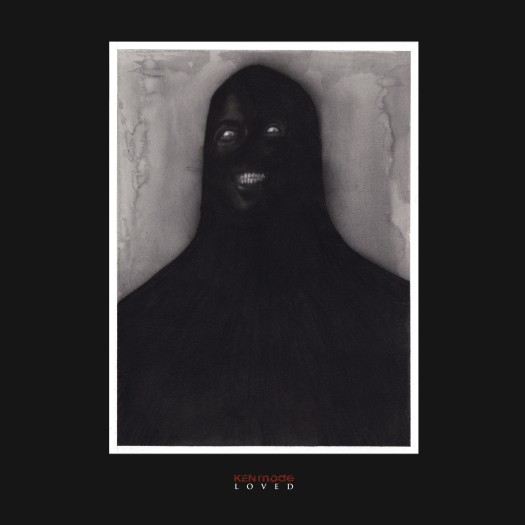
Artwork by Randy Ortiz.

I've been a long-time fan of KEN mode, but I have to make a confession: I never got into 2015's Success. The album struck out in a different direction from their previous work, and I found it a bit uncomfortable to listen to. Some quick research shows that I wasn't the only one with that opinion at the time, and it wasn't unusual to see the word "uncomfortable" come up. Sure, you say, but most of metal/hardcore is supposed to make you uncomfortable. That's true, but something about Success just didn't jibe with my particular sensibilities. But that happens. Sometimes bands and fans move in different directions.

One look at the album cover for Loved, though, and I was intrigued. What the hell is that smiling/grimacing/hooded figure doing? The artist, Randy Ortiz, really knocked it out of the park with this one, and it turns out that the art itself was an inspiration to the band throughout recording. Luckily, the insides of the album are as interesting as its outsides, and I was hooked on KEN mode all over again.

The noisy hardcore mix that the Matthewson brothers made their home is once again in full force here. Vocals alternate between bellowing, snarling, sneering, and even taunting, as the character in "Feathers & Lips" berates an unknown target with "Bully. Coward. I'm filled with this overwhelming instinct that I can break you." The lyric sheet reads like a tiny collection of short stories, not simplistic shouting like you might expect. (Although there are plenty of scream-along moments, too, like the repeating refrain of "Just because no one else is talking doesn't mean you need to be!" in "Learning to Be Too Cold.")

The riffing varies anywhere from straight-ahead bludgeoning in "The Illusion of Dignity," to the gentle, jazzy strains in "This Is a Love Test," a song that can't help but harken back to Rollins Band's "Liar." Not a surprise given that the band takes a line from Henry Rollins's memoir as their name.

And I'd be remiss if I didn't mention the wild sax, provided by Kathryn Kerr. It first rears its head in "The Illusion of Dignity," adding a bit of jazzy chaos to a song that shambles along like a drunken elephant parade. It comes back to keep things from getting too smooth in the aforementioned "This Is a Love Test." I know some of you will inevitably say, "Ugh...horns," but Kerr's contributions are so frantic and filthy that they sound perfectly at home.

I don't know if you'd call this album a "course correction" or "return to form" for the band. I hate saying things like that because it's almost always an oversimplification of what the band was trying to achieve. But if you, like me, drifted away, you owe it to yourself to give Loved a fair shake. It's only 36 minutes of your time, and you'll find that KEN mode is as fresh and vital as ever.

June 3, 2018

Cult of Occult - Anti Life

By Justin C. I wrote about Cult of Occult's last album, Five Degrees of Insanity back at the end of 2015, and at that time, I dubbed it "lava-core" because of its slow, smothering heaviness.
By Justin C.


I wrote about Cult of Occult's last album, Five Degrees of Insanity back at the end of 2015, and at that time, I dubbed it "lava-core" because of its slow, smothering heaviness. (And yes, I'm still trying to make "lava-core" a thing. Metal journalism needs to catch up with my inventive new micro-genre labels.) Their newest, Anti Life, doesn't radically change their sound, but as I said with their last album, I still find it strangely compelling.

If not lava-core, then call this funeral sludge rage. The tempos are achingly slow--better measured by an hourglass than a metronome--but the intensity is ratcheted up to 11 for each long, agonizing beat. This is the music you listen to when you go on a rampage in a steamroller. The songs are long (the shortest is still over 12 minutes) and punishing. That's not to say there's no variation--there's a nice stretch in "NI" when the roar-growl vocals go nearly a capella, accompanied only by the bass and the occasional drum strike before the guitar kicks back in--but by and large, this is an album that wants to grind you into submission with repetitive intensity. You could almost call it drone if it weren't so damn menacing. My cat is normally happy to listen to black metal with me, but this album made him hide in the other room. How Cult of Occult manage to make what, by most definitions, is pretty minimal music fascinating is a bit of a mystery (and maybe some black magic), but I'm once again ready and willing to be smothered by their brand of slow-motion sludge.

May 11, 2018

Chrch - Light Will Consume Us All

By Matt Hinch. It wasn't too long ago I was writing about Chrch. Their split with Fister last year was pretty good. Luckily the wait was short for the next release, Light Will Consume Us All. On this one we get three tracks ranging from
By Matt Hinch.


It wasn't too long ago I was writing about Chrch. Their split with Fister last year was pretty good. Luckily the wait was short for the next release, Light Will Consume Us All. On this one we get three tracks ranging from nine and a half to up over 20 minutes. So be prepared to invest some time.

“Infinite” starts with a long intro of lonesome guitar setting a longing mood with the percussion sitting in the distance. After a while the drums move up, the guitar moves back, and the vocals come into focus setting up a doomy dirge. Melodic lines weave throughout and vocals range from clean, Dorthia Cottrell-esque to absolutely vile. The passages of quiet and serene and those of outright heaviness show the two sides of the band can co-exist. But to be honest the haunting guitar/vocal part around the 3/4 mark was not expected. Luckily, the crushing volume and massive tone returns on the back of a beastly doom riff to finish things off.

Chrch at Northern Discomfort 2018. Photos by Krups Peredo / Abismo Blogzine.

“Portals” is a complex 14:49 that feels much darker than its predecessor. Slower, more pummelling, more doomed. At least when it wants to be. There are less intense moments on this one too. Eva Rose's clean vocals are ghostly. In fact, all the clean vocals on this are. The cleans really open things up to contrast the oppressiveness they can unleash at seemingly any moment. “Portals” cycles around with the heaviness and airiness eventually converging in the momentous way Chrch are fond of. This track demonstrates how sometimes the music doesn't necessarily take you from Point A to Point B. As the track shifts moods, vocal styles, and volumes - exploring sonic spaces - the listener feels rooted in place as all this happens around them. Powerless but to let the feelings, vibrations, and melodies simply flow through, one must then brace themselves.

Chrch at Northern Discomfort 2018. Photos by Krups Peredo / Abismo Blogzine.

Finally “Aether” wraps up the LP with the most Pallbearer-like feeling. (Maybe it's closer to Warning. I haven't heard them much. Maybe it's both.) For a while slothly doom “riffs” crawl towards what feels like inevitable doom. Rose's vocals softly add to a haunted, melancholic atmosphere amid cymbal crashes and heavy-handed crush. It does get quiet. Heartbreakingly so. Until almost out of nowhere fast and raging black metal fury sends everything else shattering into the void at the command of terrifyingly tortured vocals. The final minute or so of both the track and album strikes a balance between the fury and melancholy with superb atmosphere and a fitting fade to darkness.

For roughly 45 minutes Chrch (Rose, Chris Lemos (guitar/vocals), Ben Cathcart (bass), Adam Jennings (drums), and Karl Cordtz (guitar/vocals)) paint a rich sonic tapestry using light (that will consume us all) and darkness, melody and pure power, warmth and cold. It's textured and multi-layered. Doomed and despairing. Crawl out of your hole and let Chrch do the work of making you wish you had stayed in it. At least not without pulling Light Will Consume Us All back in with you.

April 8, 2018

Foehammer - Second Sight

By Matt Hinch. Technically Foehammer's self-titled release from three years ago (almost to the day) is considered an EP as it only has three tracks. Put them together and it breaches the 30-minute barrier. That sort of song length carries over
By Matt Hinch.

Artwork by Luciana Nedelea.

Technically Foehammer's self-titled release from three years ago (almost to the day) is considered an EP as it only has three tracks. Put them together and it breaches the 30-minute barrier. That sort of song length carries over to their debut LP, Second Sight. This time we get four songs encompassing a punishing 46 minutes with closer “The Seer” clocking in at 16:40. Heaving riffs and heavy tone lay a severe beating on the listener as the guttural vocals and heavy-handed percussion tie the sludgy doom package together.

Foehammer immediately set out to crush skulls with slow, plodding doom. Their amps give off a constant call for death with a pounding cadence that doesn't quit and rarely speeds up. It's far from boring though as some riffs come across as slightly off-kilter. Not easy to do at funereal speeds as that kind of thing can get trickier than you think.

Often time they throw in a little flair. An atypical lick here and there and usually a solo too. The solos reveal a soul behind a solid wall of nasty, downtuned distortion. They scream of ache, betraying a visage of muscularity and an m.o. of sonic destruction. Even the riffs contradict the anger factor with despair and pain.

They're not afraid to lighten things up though. At least temporarily. “Axis Mundi” starts with a nice acoustic passage before laying down some drone and a more epic feel reminiscent of Conan. Interestingly enough, Conan has a song called “Foehammer”. Common inspiration is likely not a coincidence.

Elsewhere, early Pallbearer shades the crawling, sprawling doom giving the listener something to hold on to during what could easily become an endurance test in less capable hands.

To be honest though, you come to Foehammer to have your head caved in by brutal, relentless, bone-shattering doom riddled with a dirty tone and enough volume to shake foundations. Second Sight delivers all that with the kind of heaviness that causes gravity wells powerful enough to bring down the sky. It's a bruising effort that methodically pulverizes while making you feel like a powerful (yet perhaps complex) tyrant at the same time. If Foehammer slipped by you those many moons ago then maybe it's time you take another look with Second Sight.

March 15, 2018

Slaves BC - Lo, and I Am Burning

By Matt Hinch. Let's get something out of the way before we get into it here. If you look at the tags on Slaves B.C.'s latest, Lo, and I Am Burning you'll notice one is “christian”. Looking at the song titles should make that obvious as well.
By Matt Hinch.

Artwork by Josh Thieler from Slaves BC.

Let's get something out of the way before we get into it here. If you look at the tags on Slaves BC's latest, Lo, and I Am Burning you'll notice one is “christian”. Looking at the song titles should make that obvious as well. But fear not, fellow unbelievers. You can barely understand what they're saying anyway. In a good way. Besides, there's some pretty dark stuff in the Bible too. As long as you like fearsome black metal hybridized with a handful of other genres, philosophy shouldn't be an issue. I probably shouldn't even have brought it up. I was just a little surprised is all. Even though I have a vinyl copy of their previous LP.

A telling example of their style hits you like a sledgehammer right away. Opener “Lo” is a flurry of black metal struck with a little discord. The vocals are positively shiver-inducing. You'll find a sludgy bit and you'll get pounded by some death metal. I'd hesitate to call it a formula but it's fairly indicative of what unravels throughout the album.

No matter where you find yourself within the nine tracks you can be sure to be consumed by darkness. Both the foundational elements of black and death metal strengthen this feeling. The black metal comes at you fast and tremulous incorporating atmosphere when needed and launching you into icy, windswept flight elsewhere. The death metal veers to the left of old school. It's got that edge of weird that seems to be all the rage right now, but they keep it within the range of normal comprehension while emphasizing an ominous nature.

On tracks like “We Are” and “XLV” the pace slows in places as the mood thickens. Pounding chugs more akin to deathly doom and hypnotic repetition move into dangerous sounding places where paranoia grows.

There's even a groovy sway guiding you to sink into despair but rise back up, lifted by off-kilter discord and black metal fury. Case in point; “Unclean”. The listener fights a doomy slog until cresting the peak and rumbling down the slope on an avalanche of anguish then continuing through the valley and across the plains while storm clouds gather to facilitate annihilation.

Slaves B.C.'s greatest asset is their ability to stitch together a multitude of styles and feelings into something seamless that makes you feel uncomfortable on a sliding scale yet constantly yearning to feel it harder. More pain! More darkness! More catharsis! All the while coarse, feral, vampiric screams twist your vertebrae as you're driven to throw your body headlong into the maelstrom.

Lo, and I Am Burning is a raucous steamroller of energy creating and releasing tension deep within. It's dynamic and noisy, frightening yet alluring. If you're looking for release, look no further than the cleansing fires Slaves B.C. have set ablaze. Amen.